


JAKARTA - Economic Observer from the Indonesia Strategic and Economic Action Institution (ISEKAI) Ronny P Sasmita assessed that the spirit of BUMN reform should aim to separate countries and governments as regulators, countries and governments as shareholders, and SOEs as business entities.
According to him, this is reflected in the formation of institutions such as Temasek in Singapore, SASAC in China, APE in France, or Khasana in Malaysia which is not only an entity in the form of an SWF, but also acts as an intermediary institution between the three functions.
"The state as a regulator, cannot act at the same time as a shareholder, especially as a perpetrator or operator, because it will make the position of the state as a regulator, because it must regulate itself," he explained in his statement, Monday, February 24.
Sasmita warned that the function of the state as a regulator must be neutralized with an intermediary institution called superholding and the like that of representing the state in share ownership in BUMN-BUMN.
Therefore, according to him, the state and the government not only mix their capacity as regulators as well as shareholders, but also as operators, because their ministers, who actually act as regulator representatives, also act as principals of shareholders as well as operators.
"It is no longer clear who the regulators, supervisors, shareholders, and operators are, have all been disbursed into one. Even though these three things should be separated individually, they should be put together in a round manner within the Danantara," he explained.
According to him, so that the state as a regulator will issue regulations that will benefit itself when Danantara decides to invest, and will make other market players marginalized.
"The market will be distorted in such a way, because the state will side with its business entities where the state is also the owner of its shares and operators," he explained.
Sasmita assessed that it was possible that Danantara would become a political instrument to get rid of market players who were considered to be in opposite positions with the government.
"Other means, fairness in the market will be lost, because countries with large assets and budgets intervene in the economy, which is equipped with regulatory and shareholder capacity," he said.
SEE ALSO:
-
 | EKONOMI
Kepala OIKN Basuki soal Peluncuran Danantara: Saya Harap Ada Secuil Dana untuk IKN
24 Februari 2025, 12:52 -
 | EKONOMI
Modal Awal Danatara Rp300 Triliun, Prabowo: Dana dari Inefisiensi Anggaran hingga Korupsi
24 Februari 2025, 12:29
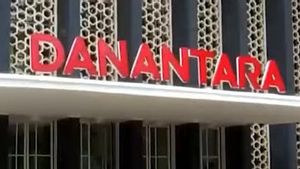
On the other hand, according to him, the Danantara will have a very high chance of experiencing distortion in the middle of the road, especially for political interests and government in the economic arena, which has the potential to disrupt the health of the national economy as a whole.
To note, Chairman of the Danantara Supervisory Board Erick Thohir, Deputy Chairperson of the Danantara Supervisory Board Muliaman Hadad, Chief Executive of Danantara Rosan Roeslani, Danantara Chief Operating Officer Dony Oskaria, and Danantara Chief Investment Officer (CIO) Pandu Sjahrir.
The English, Chinese, Japanese, Arabic, and French versions are automatically generated by the AI. So there may still be inaccuracies in translating, please always see Indonesian as our main language. (system supported by DigitalSiber.id)
Most Popular Tags
#Prabowo Subianto #donald trump #Febrie Adriansyah #8791 #giias 2026Popular


