

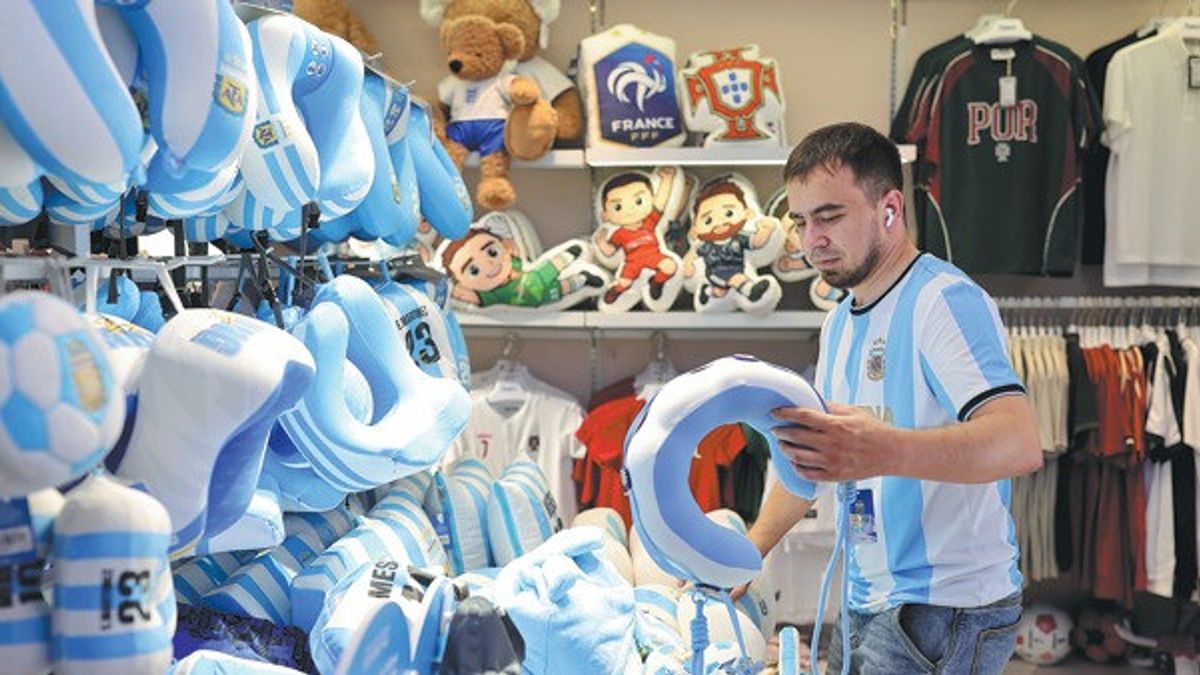


JAKARTA - The 2026 World Cup is starting to be a big stage for Chinese brands. Not only to put logos in stadiums, but also to introduce technology, grab the attention of digital audiences, and strengthen their position in the global market.
Citing a report by China Daily, Thursday, May 28, the tournament, which will be held in the United States, Canada, and Mexico from June 12 to July 20, 2026, is expected to attract more than 6 billion viewers worldwide.
Exposure to the 2026 World Cup is also projected to rise 20 percent compared to the previous edition, according to a survey of global advertising technology company The Trade Desk.
For Chinese companies, the World Cup is now more than just an advertising showcase. This event is a way to strengthen brand recognition through technology, streaming platforms, social media, and more targeted digital advertising.
"Top-level sports events help Chinese brands enter a more advanced stage of globalization," said Wang Xueli, director of the Tsinghua University Sports Industry Development Center.
According to Wang, Chinese companies used to use big events to build basic brand awareness. Now, the target is to move up in class: strengthen its position in the middle to high-end market and demonstrate technological capabilities.
The change in the way of watching also opens up new opportunities. The Trade Desk survey found that at least a third of viewers will follow the match through many channels, from television, sports applications, connected TVs, streaming platforms, to short videos.
In North America, 45 percent of U.S. respondents and 47 percent of Canadian respondents said they would use a sports app to follow the World Cup. More than 40 percent of respondents in both countries also plan to watch via connected TV and streaming platforms.
Ashley Wu, Senior Director of Business Development at The Trade Desk China, said the World Cup is no longer just a 90-minute match.
According to Ashley Wu, the tournament is now a long content ecosystem, ranging from pre-match warm-up, direct interaction, to post-match conversations.
This change gives small brands a place to be. Previously, the World Cup was more dominated by multinational sponsors with large funds for stadium billboards and naming rights.
Now, AI-based advertising, streaming platforms, and social media allow companies with smaller budgets to reach consumers more specifically.
"Sports marketing is no longer just about sponsoring a team or buying billboard space," said Wu. "Even brands without big budgets can now reach a very specific audience through multichannel campaigns."
Platforms such as TikTok and Instagram are also expanding the reach of football content. Their audience is no longer just the core football fans, but also young people and women.
The Trade Desk survey noted that women now account for almost half of the audience in a number of European markets. Meanwhile, Gen Z audiences in Spain and Italy show engagement rates above 90 percent.
Chinese big brands are also getting deeper into tournament operations. Hisense is the official screen technology partner for the video assistant referee system or VAR. The company will supply RGB Mini LED screens for FIFA's VAR center.
Lenovo also prepared more than 10,000 devices and more than 200 engineers across 16 match locations. The company brought AI-based digital twin technology, a technology that can create a virtual 3D replica of players and match situations.
According to China Daily, this pattern shows a change in the way Chinese companies enter the world sports arena. They are no longer just buying advertising space on the sidelines.
"Chinese companies are no longer just buying billboards around stadiums," Wang said. "They are becoming part of the technological infrastructure behind major international sporting events."
Amid uncertain global tariffs, geopolitical tensions, and economies, sports remain a relatively safe space to build a global image.
Wu said sports are still one of the positive global topics and have strong emotional ties.
For Chinese brands, the 2026 World Cup is not just about being seen by billions of viewers. This event is also a way to show that they are starting to get into the important part behind the organization of the tournament, especially through technology and digital services.
The English, Chinese, Japanese, Arabic, and French versions are automatically generated by the AI. So there may still be inaccuracies in translating, please always see Indonesian as our main language. (system supported by DigitalSiber.id)


