

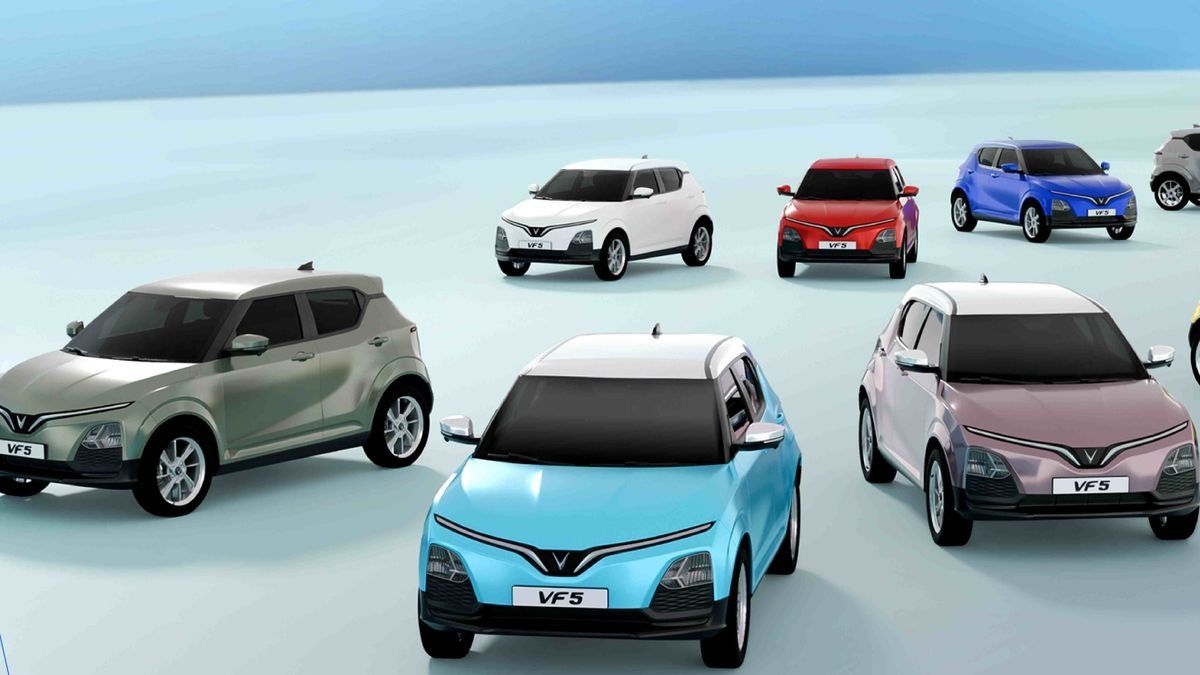


JAKARTA - Vietnamese electric car manufacturer VinFast is trying to ease its huge debt burden. The way, VinFast chooses to sell its manufacturing business while moving debt of around US$7 billion to another party. Assuming a rate of around Rp17,700 per US dollar, the value of US$7 billion is equivalent to approximately Rp124 trillion.
Reported by Kyodo News citing Reuters, Friday, May 22, this move sparked questions about business governance at the conglomerate Vingroup owned by Vietnamese billionaire Pham Nhat Vuong.
In the deal announced last week, VinFast will sell its manufacturing business in Vietnam for 13.3 trillion dong, or about US$506 million. The buyer investor will also take over debt of around US$6.9 billion.
Through this scheme, VinFast wants to change into a company with an "asset-light" model. This means that the company is more focused on researching and developing electric vehicles, while production affairs are handed over to other parties.
With the manufacturing unit out of the books, VinFast is said to be a nearly debt-free company.
However, this transaction structure is considered complicated. "From a strategic and financial perspective, this move makes sense. However, from a governance perspective, there are a number of warning signs and questions," said automotive industry analyst from YCP Singapore, Mehdi Jaouadi.
VinFast has been aggressively expanding. However, the company is also continuing to burn money. Last year, its losses reached US$3.9 billion or around Rp69 trillion. Since its inception in 2017, VinFast has never made a profit.
One of the analysts highlighted was the involvement of property entrepreneur Nguyen Hoai Nam. This month, Nam took over a company that will buy more than 95 percent of VinFast's manufacturing business.
A few days before the transaction was announced, Nam also controlled a company called Future Investment and Trading Development or FIRD. This company was previously associated with Vingroup and Vuong.
FIRD holds the patent for VinFast's early generation electric vehicles and has a registered capital of around US$4.6 billion. Almost 92 percent of the capital comes from Nam.
"It is not clear why FIRD has so quickly become the main buyer after this change of ownership," Jaouadi said.
The transaction structure is also layered. VinFast's manufacturing business will first be taken over by Vuong, FIRD, and another company named Ngoc Quy Investment and Trading Development before its ownership is changed again.
When the transaction is completed in September, only FIRD and Vuong will remain as owners. FIRD will hold 95.5 percent, while Vuong retains less than 5 percent.
Vuong was on both sides of the transaction: as a seller and a buyer.
Despite releasing the manufacturing business in Vietnam, VinFast still maintains its assembly plants in Indonesia and India, including their latest generation electric vehicle patents.
VinFast shares have fallen about 12 percent since the transaction plan was announced on May 12.
On the other hand, there are also those who see this move as a way to cut the cost of expensive electric vehicle production.
Automotive analyst Felipe Munoz said small electric car manufacturers such as VinFast could focus more on developing software and technology if the manufacturing process is outsourced.
This deal also brings back the name Foxconn, a Taiwanese contract manufacturer known as an iPhone assembler. In 2021, Foxconn approached Vingroup regarding VinFast's production line, but no agreement was reached.
"We have no plans to sell VinFast's manufacturing facilities in Vietnam to Foxconn or other manufacturers," Vingroup said, quoted by Kyodo from Reuters. Until the report was published, Foxconn had not commented.
The English, Chinese, Japanese, Arabic, and French versions are automatically generated by the AI. So there may still be inaccuracies in translating, please always see Indonesian as our main language. (system supported by DigitalSiber.id)
Popular


