



SURABAYA - The Ministry of Finance (Kemenkeu) continues to strive to encourage the growth of labor-intensive industries, one of which is through tax incentives.
This sector is considered strategic because it is able to create jobs while supporting economic equality.
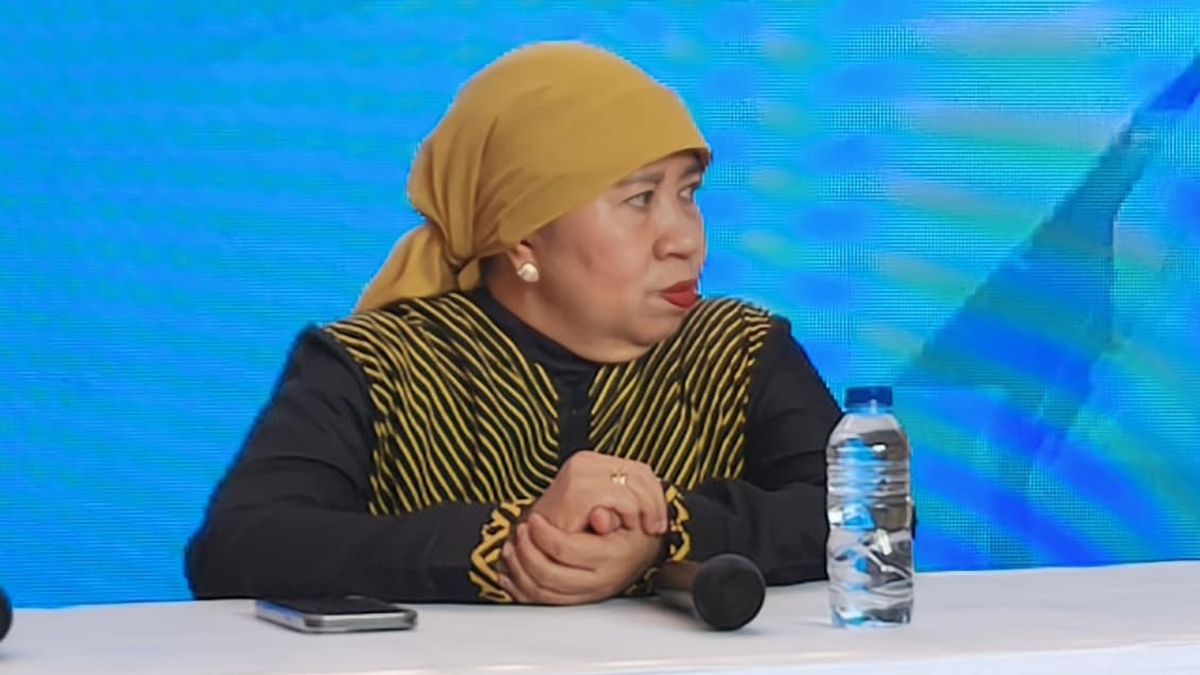
Director of Extension, Services and Public Relations (P2Humas) of the Ministry of Finance Inge Diana Rismawanti explained that incentives are one of the concrete steps of the government in strengthening the labor-intensive sector.
Meanwhile, the Government has set a policy of covering the Income Tax (PPh) Article 21 Government-Covered (DTP) for the entire year 2026 for workers in five specific labor-intensive sectors.
This policy is contained in the Minister of Finance Regulation (PMK) Number 105 of 2025 as part of the economic stimulus package for the 2026 fiscal year.
"Incentives are given to encourage economic growth and how the government is present to reduce poverty and unemployment," he said at the Ministry of Finance Site Visit and Media Briefing, quoted on Friday, April 17.
According to Inge, the incentive is aimed at encouraging economic growth, reducing poverty and unemployment, and maintaining people's purchasing power.
In addition, he added that this policy is expected to be able to maintain economic and social stability, as well as improve the welfare of workers, especially in sectors that absorb a lot of labor.
The five sectors that receive the Government-Covered Income Tax (DTP) facility include the footwear industry, textiles and ready-made clothing, furniture, leather and its derivatives, and tourism.
This facility covers all fixed and regular gross income during 2026, such as salaries, fixed allowances, and other rewards in accordance with labor agreements or company regulations.
The beneficiaries are certain permanent and non-permanent employees with an income of less than IDR 10 million per month, and for non-permanent workers with a daily, weekly, or bulk wage system, incentives are given if the average daily income does not exceed IDR 500 thousand
To obtain this facility, workers must have a Tax Identification Number (NPWP) or National Identification Number (NIK) that has been integrated with the Directorate General of Taxes system.
In addition, the recipient must not receive other PPh 21 DTP facilities in accordance with tax regulations.
Based on Article 5 of the PMK 105/2025, the PPh 21 deducted from employee income will be paid in cash by the employer in conjunction with the payment of salaries and this provision remains in force even if the company provides tax allowances or bears the PPh 21 of employees.
The payment of the 21% tax borne by the government is not counted as a tax object, and the employer is also required to make a proof of deduction and report it in the 21% tax period notification letter (SPT).
Inge added that the government would continue to evaluate various incentives that had been given to business actors.
According to him, this is important considering the global geopolitical conditions, including conflicts in the Middle East, which also affect the economy, especially the labor-intensive sector which is export-oriented.
In addition, the government is also preparing a new incentive scheme in the form of a tax holiday to attract investment, and currently, the draft regulation related to this has been harmonized and awaiting approval from the Minister of Finance.
On the other hand, the Ministry of Finance through the Indonesian Export Financing Agency (LPEI) is also trying to strengthen the capital of the labor-intensive sector which is export-oriented.
Head of the Nia & Strategic Assignment Division of LPEI Berlianto Wibowo said this sector has a significant development impact.
He emphasized that working capital investment in the labor-intensive sector not only creates economic value, but also provides broad benefits for the community.
"Working capital investment is created and produces benefits. This is an important point, we are trying from the Ministry of Finance for programs that are created continuously," he said.
One of the companies that felt the positive impact of this incentive was PT Mitra Saruta Indonesia, which is engaged in the textile industry with glove products.
Director of PT Mitra Saruta Indonesia Hoo Yanto Andrian said that the labor-intensive sector has high complexity with a large number of workers, namely around 1,700 employees in his company.
"This tax incentive is quite helpful. We also hope to contribute and continue to contribute to our exports," he said.
He also admitted that the current global geopolitical conditions also affect the export market, and his company is diversifying the market by expanding its reach, including penetrating the South African market.
"Our marketing team is more aggressive in targeting a more comprehensive market, the last one we got from South Africa," he said.
The English, Chinese, Japanese, Arabic, and French versions are automatically generated by the AI. So there may still be inaccuracies in translating, please always see Indonesian as our main language. (system supported by DigitalSiber.id)
Most Popular Tags
#Prabowo Subianto #donald trump #Febrie Adriansyah #8791 #giias 2026Popular


