

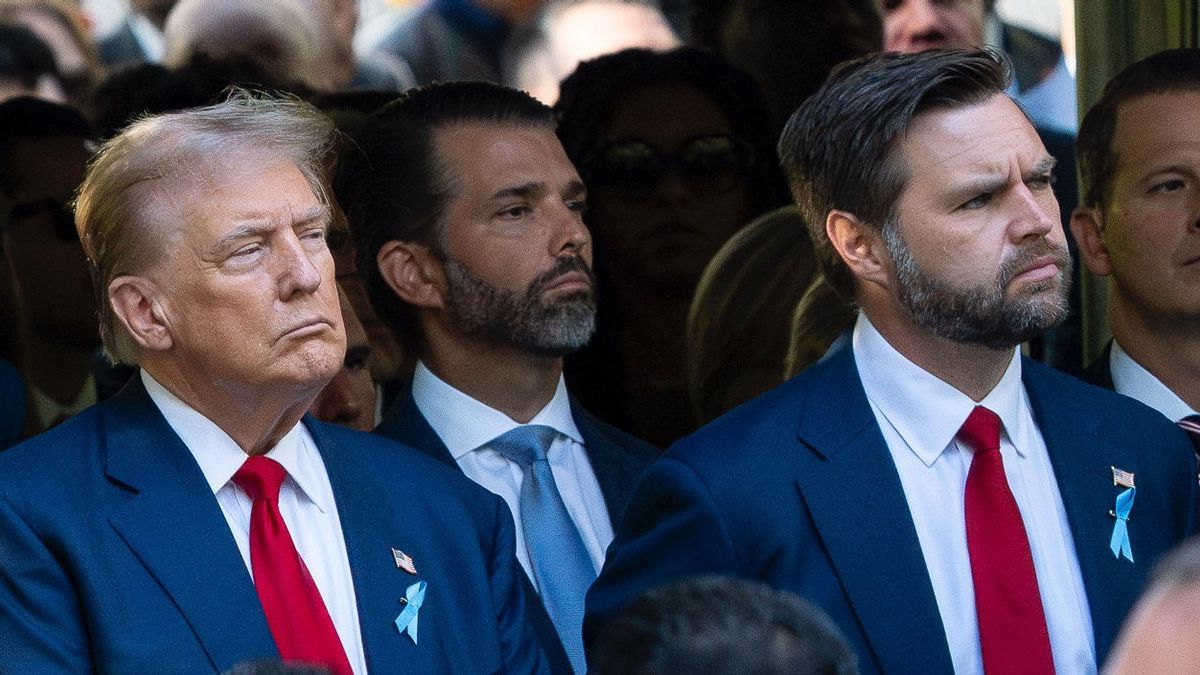


JAKARTA - Vice President of the United States JD Vance's remarks about the possibility of continuing negotiations with Iran were immediately read by the market as a signal that the diplomatic track was not closed. Citing a CNBC report, Tuesday, April 14, this sentiment also pressured world oil prices on Tuesday's trade, even though the US at the same time began imposing a blockade on Iranian ports in the Persian Gulf.
U.S. crude futures for May delivery fell more than 2% to $96.91 a barrel. Meanwhile, Brent for June delivery was down 1.88% at $97.49 a barrel.
This movement shows that the market has not only calculated the risk of conflict, but also weighed the opportunities for negotiations. Market participants focus on Vance's statement after last weekend's negotiations did not produce a breakthrough.
"Whether there will be further talks, whether we ultimately reach an agreement, I think it's up to Iran, because we've offered a lot," Vance said in an interview with Fox News, as quoted by CNBC.
Vance added that the deal could still benefit both parties as long as Iran met the conditions put forward by Washington, especially regarding its nuclear program. The statement gave room for hope amid a situation that was not really calm.
On the ground, the pressure remains real. The US began carrying out a "blockade" on Iran's ports on Monday. A day earlier, President Donald Trump said the US would blockade the strait, marking an escalation of tensions after a two-week ceasefire.
Later, the US Central Command confirmed that the restrictions only apply to ships entering or leaving ports and coastal areas of Iran.
Commonwealth Bank of Australia analyst Vivek Dhar said the move immediately threatened Iranian oil exports through the Strait of Hormuz, which last month was recorded at around 1.7 million barrels per day. "Therefore, the blockade is tightening the physical supply of oil and refined products in the market," said Dhar, quoted by CNBC.
For the market, the message that emerges is now branching. From Washington, there are statements that are still opening the door to negotiations. However, restrictions on Iran's oil exports are already underway. Oil prices have also fallen, although market participants are not yet brave enough to be too relieved.
The English, Chinese, Japanese, Arabic, and French versions are automatically generated by the AI. So there may still be inaccuracies in translating, please always see Indonesian as our main language. (system supported by DigitalSiber.id)
Popular


