

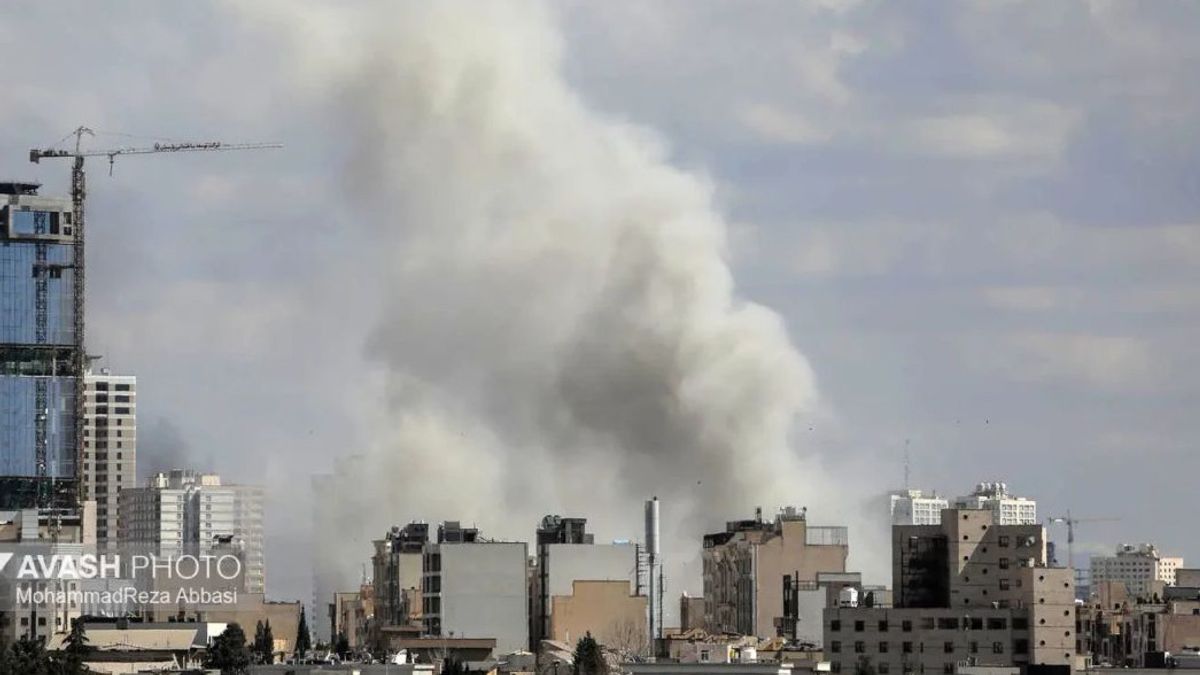


JAKARTA - The war in the Middle East is no longer just about the region. The International Monetary Fund or IMF reminded that conflicts that continue to disrupt the flow of oil, gas, and fertilizer from the Gulf are at risk of pushing prices up and suppressing global economic growth.
In an analysis cited by The Guardian, which was quoted on Tuesday, March 31, the IMF assessed that the impact of the war would be widespread, from energy costs to food prices. The pressure, according to the IMF, could hit world economic growth this year and leave a longer-lasting impact.
The Guardian reported that in a blog post by the heads of the IMF's main departments, including chief economist Pierre-Olivier Gourinchas, the IMF said governments with high levels of debt would also have limited access to funds that could be used to mitigate the worst effects of the crisis.
"Although the war can shape the global economy in various ways, all roads still lead to higher prices and slower growth," the IMF wrote.
Energy exporting countries such as the United States could benefit from the spike in oil and gas prices. But for many other countries, especially importers, the rise in gasoline, diesel, gas, and food prices will directly suppress people's purchasing power.
The pressure could also spread to businesses. When costs rise, companies tend to raise selling prices. If that happens, central banks in many countries could face pressure again to keep interest rates high to curb inflation.
The IMF also highlighted the limited fiscal space of many countries. Governments with large debts are considered to be increasingly difficult to prepare cushions to mitigate the impact of the crisis.
Another risk comes from the fertilizer supply line. About a third of the world's fertilizer production passes through the Strait of Hormuz. If the crisis continues, global food prices are expected to be pushed. FAO projections show that global prices in the first half of 2026 could be on average 15 percent to 20 percent higher.
In Europe, the pressure is starting to be felt. As reported by The Guardian, gas prices in the UK have reportedly jumped more than doubled since December. Meanwhile, the price of Brent oil, which was around $60 per barrel before the conflict, had reached $116 before falling again to $112.
According to MF, if the war expands and lasts a long time, the world will not only face expensive energy, but also difficult to reduce inflation and slowing growth.
The English, Chinese, Japanese, Arabic, and French versions are automatically generated by the AI. So there may still be inaccuracies in translating, please always see Indonesian as our main language. (system supported by DigitalSiber.id)


