



JAKARTA - Disruptions in the Strait of Hormuz have begun to threaten the world's fertilizer supply. The sea route, which is the lifeline of global energy and fertilizer raw materials, is quoted from Anadolu Agency, Wednesday, March 25, is estimated to cut the global fertilizer supply chain by 33 percent, amid a surge in gas prices, shipping delays, and the closure of a number of factories.
Based on the Anadolu Agency (AA) report, the disruption in the vital line hit about 38 percent of the world's nitrate-based fertilizer supply and 20 percent of phosphate fertilizers. This situation is considered a direct risk to food production, especially when the planting season in the northern hemisphere begins.
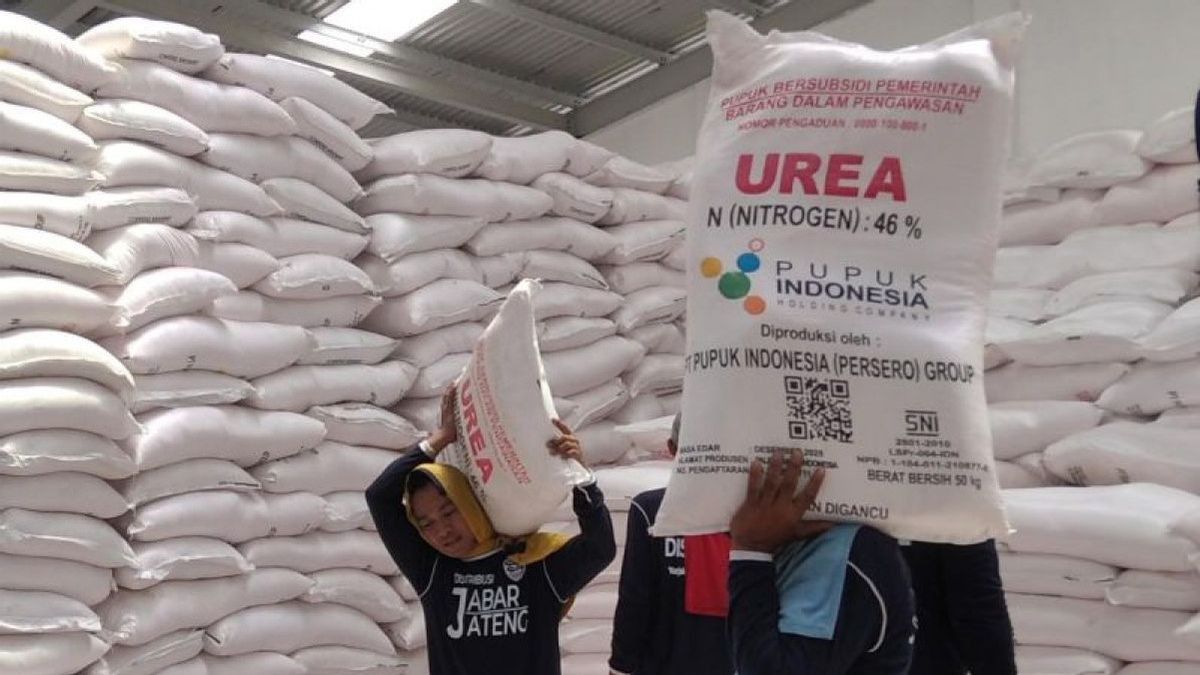
The conflict in the Middle East exacerbated the pressure. Tehran imposed control over the Strait of Hormuz, an important route for energy and commodity supplies to Asia. The impact was immediately felt in the fertilizer market. Urea exports from the Gulf region, which reach 22 million tons per year, were halted, even though about 46 percent of the world's urea supply comes from that region.
Kpler and CRU data, still referring to AA's report, show that almost half of the urea stock of more than 2.1 million tons failed to be loaded onto ships due to logistical disruptions. These obstacles pose a risk of disruption in the global harvest season and increase the threat to food security.
Pressure is also coming from soaring energy prices. Natural gas, which accounts for about 80 percent of the cost of producing nitrogen fertilizer, has risen sharply. Urea prices jumped from 482.5 US dollars per ton on February 27 to 720 US dollars per ton in mid-March, or about 50 percent. Ammonia prices in the Middle East have also risen 24 percent to close to 600 US dollars per ton.
The United Nations Food and Agriculture Organization (FAO) notes that world agriculture relies on more than 190 million tons of plant nutrients each year. Of that amount, 110 million tons are nitrogen fertilizers, the type that is now most vulnerable because it is highly dependent on natural gas.
Disruption has been felt in a number of countries. Still quoting AA's report, India lost about 800,000 tons of monthly urea production due to gas supply restrictions. China restricted exports. Australia estimates that its urea stocks will be exhausted by mid-April. In Qatar, QAFCO closed a urea plant with a capacity of 5.6 million tons per year, while major producers in Pakistan and Bangladesh also stopped production.
Fitch Ratings has even raised its 2026 ammonia and urea price forecasts by about 25 percent. FAO chief economist Maximo Torero said the loss of exports from the Gulf region directly created a global supply shortage without a quick replacement.
This crisis is the second major disruption for the world fertilizer market since the Russian-Ukrainian war in 2022, with the Strait of Hormuz now a new pressure point for global energy, fertilizer, and food supplies.
The English, Chinese, Japanese, Arabic, and French versions are automatically generated by the AI. So there may still be inaccuracies in translating, please always see Indonesian as our main language. (system supported by DigitalSiber.id)


