
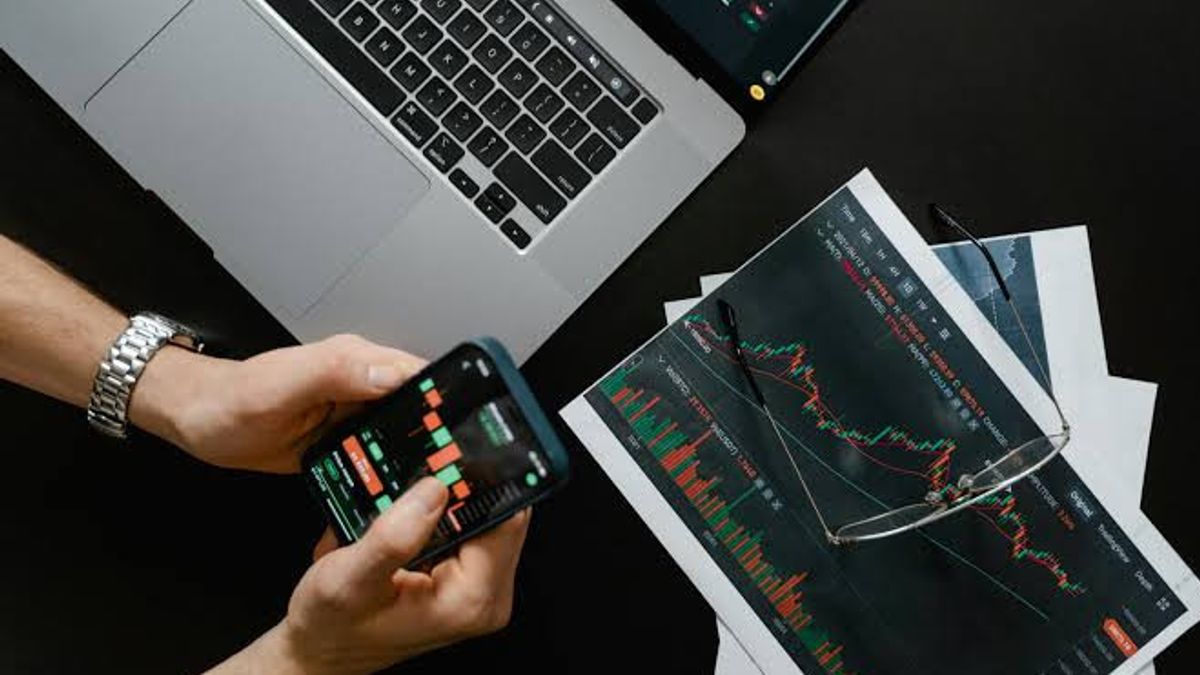


JAKARTA - The exchange rate of the Indonesian rupiah has fluctuated sharply in recent years in line with global exchange rate shifts, commodity demand, and capital flows. For many households, it is no longer just a disruption, but affects prices and savings.
So, it's no surprise that more and more Indonesians are now looking at foreign exchange not just for potential profits, but also as a way to read and respond to the world.
Why ignore a storm if you can follow the direction of the wind? Imagine the market like the rainy season, coming quickly, then disappearing. You will start to notice the pattern.
Understand what is forex tradingForex, or foreign exchange, is the business of buying and selling currencies to capture price fluctuations. For Indonesians, this usually means monitoring the movement of the rupiah against the US dollar, the euro, and the currencies of neighboring countries such as the Malaysian ringgit or the Singapore dollar. Why is this important right now? Because as global pressures increase, forex gives you a direct picture of the same forces that shape Indonesia's prospects.
Imagine driving a small boat on the Java Sea: you don't control the current, but you can read it. And if you're new and wondering what forex trading is practically, start small, then only increase when your plan proves successful.
1. Sensitivity of the Rupiah to the Global Market
Indonesian currency lives and breathes in the midst of global demand for exports such as palm oil, coal, and nickel. When commodity prices weaken or US interest rates rise, funds can switch to stronger currencies and the rupiah tends to weaken. Why does it happen so quickly? Markets move like the tide, initially calm, then suddenly. A miner in Kalimantan feels it when the coal contract weakens, and you will see USD/IDR strengthening on your screen.
Indonesian traders have adapted. They monitor exchange rate movements and central bank signals, then make plans. And when policy statements come out, prices can soar before lunch in Jakarta. You may find that a calm checklist beats any impulse.
2. Forex as a Window of Indonesian Economic Strength
The currency acts like a live scoreboard for growth, inflation, and trade. When the rupiah strengthens, it often reflects stronger sentiment. When the rupiah weakens, it can indicate capital outflows or increased uncertainty. So, what should you pay attention to? Think of the exchange rate as a thermometer, not the disease itself. An electronics exporter in Batam feels the weakening of the rupiah as a risk as well as an opportunity.
When the US Federal Reserve raises interest rates, money can move from emerging markets to the US. This can put pressure on the rupiah in the short term. And this creates a situation for traders who map the relationship between policy and price. You may notice that short-term fluctuations can still follow longer trends.
3. Why Forex Trading is Growing in Indonesia
Mobile platforms are turning the global market into something you can access from a bus in Bandung. With a mobile phone and adequate internet, you can trade major currency pairs in minutes. Why is this track exploding? Convenience, low barriers, and constant liquidity. Imagine forex as Jakarta traffic during rush hour, which is always moving even though the route changes.
Young traders in Jakarta and Surabaya love the 24-hour schedule. They study after work, then trade overlapping when Tokyo meets London or London meets New York. And local communities on social apps share tips in real time. You'll see how quickly knowledge spreads when the screen flashes green.
4. Risk and Reward: The Two-Eyed Nature of Forex
Forex offers opportunities, but it can be two-way. Prices can soar during major news, then reverse. Are you ready for that speed? Imagine holding a kite on a windy beach in Bali. The kite flies, then jerks. Comments on surprising prices can have a similar impact on your profit and loss.
Risk rules prevail. Set stop losses. Reduce position size. And avoid revenge trading after losses. You may prefer survival to partying. Consistency is better than overthinking, especially in weeks full of policy news.
5. Practical Ways to Protect Yourself from Currency Pressure (With Important Points)
For Indonesian people who are facing pressure on the rupiah exchange rate, small habits can have a big impact. What helps when the market reverses? Think of a device, not a magic trick. You definitely want a repeatable process.
• Follow the development of Bank Indonesia's policies and press conferences, then watch how USD/IDR reacts in the first hour.
• Monitor trends in palm oil, coal, and nickel, as fluctuations in exports often affect the currency.
• Diversify currencies other than USD/IDR by adding several major currencies or cross currencies to reduce risk.
• Practice on the demo market first, then make funding gradually after your rules apply.
• Use a reliable economic calendar and plan in advance for high-impact events.
6. How Forex Education Forms Better Traders
Knowledge is the best hedge against uncertainty. Many Indonesians are now learning the basics before risking money. Why start with the foundations? Because the logic of central banks and technical signals form the map. Think of education as tuning an instrument before a concert. You'll hear the wrong notes sooner.
Workshops in Jakarta, online academies, and meetings in Surabaya and Medan focus on strategy and psychology. And that mix is important. Traders learn to compose entries, manage exits, and recognize biases. You may find that a written plan changes everything.
7. The Future of Foreign Exchange Trading in Indonesia
The role of the Indonesian market continues to expand as the world is connected. Government support for digital finance and better internet access has opened the door for more participants. Where is it going? Imagine a wider highway, not just bigger cars. A trader in Makassar can now use the same recording tool as a table in Singapore.
However, discipline will determine the outcome. Treat forex as a skill, not a gamble. And keep sharpening it. You can focus on developing skills so that the pressure on the rupiah becomes a test that you can pass, not a surprise that you fear.
Final ThoughtsTrading forex in uncertain times is more than just chasing profits. It's about reading the driving forces of Indonesia's economy, then adjusting them carefully. Why get involved directly? Because the movement of the rupiah reflects local resilience and global tides. Think of it as studying the currents, not fighting the ocean.
For Indonesian traders, forex offers a way to build awareness and independence. And with the right mindset, education, and structure, the pressure that used to feel scary can become an opportunity to learn and grow in a fast-changing landscape. You can start small, then develop good habits.
The English, Chinese, Japanese, Arabic, and French versions are automatically generated by the AI. So there may still be inaccuracies in translating, please always see Indonesian as our main language. (system supported by DigitalSiber.id)


