

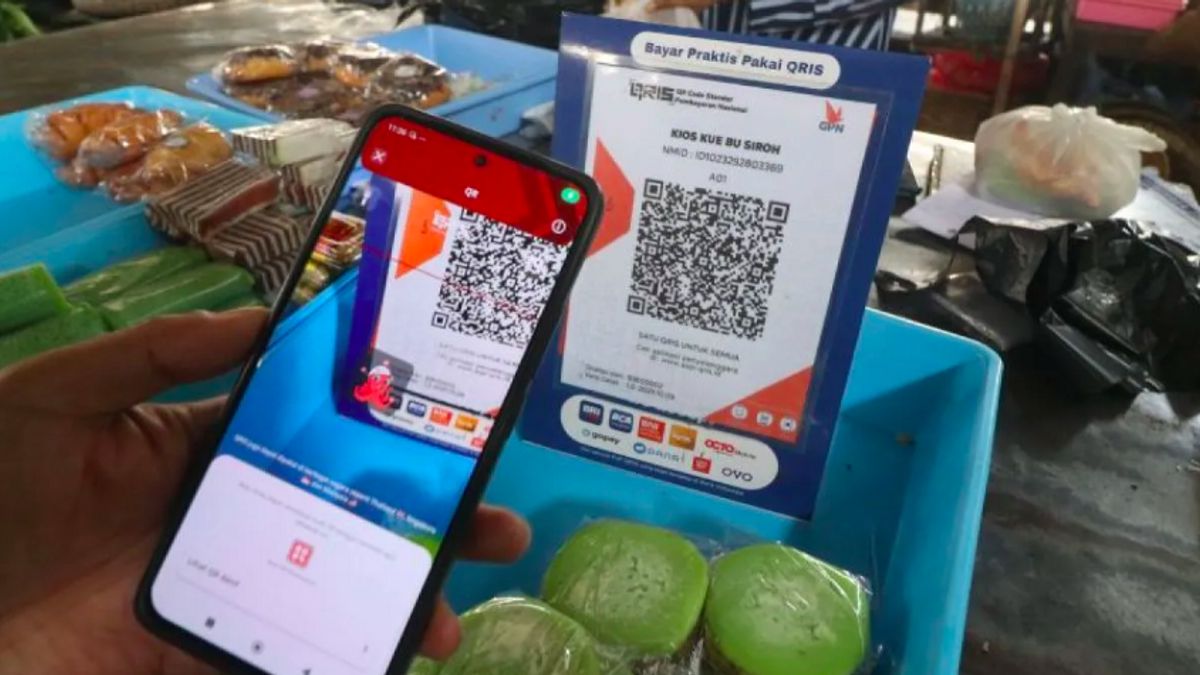


JAKARTA - A video widely circulated on social media showed a Roti O employee refusing to pay in cash from an elderly woman and in the video's narration it was mentioned that the bakery only served non-cash transactions, such as through QRIS.
In the viral footage, a man seemed to protest the store's policy after seeing the grandmother fail to make a purchase because she wanted to pay with cash, because the grandmother was known to not have and not understand how to use digital payment methods.
The upload also attracted the attention of netizens and triggered public discussions regarding the implementation of non-cash transaction policies at a number of business locations.
Responding to the viral video, Bank Indonesia (BI) emphasized that business actors or merchants must accept cash as a valid means of payment.
Bank Indonesia Communication Department Executive Director Ramdan Denny Prakoso reminded that the provision was regulated in Article 33 paragraph (2) of Law Number 7 of 2011 concerning Currency, which prohibits any party from refusing to accept rupiah in transactions.
He explained that the regulation states that everyone is prohibited from refusing the rupiah used for payment, settlement of obligations, or other financial transactions in the territory of the Unitary State of the Republic of Indonesia (NKRI).
"Article 33 paragraph (2) of Law Number 7 of 2011 concerning Currency stipulates that every person is prohibited from refusing to accept rupiah whose delivery is intended as payment or to settle obligations that must be fulfilled with rupiah and/or for other financial transactions in the territory of the Unitary State of the Republic of Indonesia (NKRI)," he told VOI, Sunday, December 21.
Denny said the exception only applies if there is doubt about the authenticity of the rupiah used.
"Except because there is doubt about the authenticity of the Rupiah. With this, what is regulated is the use of the Rupiah currency in transactions in Indonesia," he continued.
Furthermore, Denny said that the use of the rupiah in the payment system can be done both in cash and non-cash, according to the convenience and agreement of the parties involved in the transaction.
He added that BI continues to encourage the use of non-cash payments because it is considered faster, practical, efficient, safe, and reliable, and can minimize the risk of counterfeit money circulation.
"The use of non-cash payments can protect people from the risk of counterfeit money. However, Indonesia's demographic diversity and geographical and technological challenges mean that cash is still very necessary and used in transactions in various regions," he concluded.
The English, Chinese, Japanese, Arabic, and French versions are automatically generated by the AI. So there may still be inaccuracies in translating, please always see Indonesian as our main language. (system supported by DigitalSiber.id)
Most Popular Tags
#Prabowo Subianto #donald trump #Febrie Adriansyah #8791 #giias 2026Popular


