


JAKARTA - The Indonesian Chamber of Commerce and Industry (Kadin) proposed five priority strategies to be discussed at the 2025 National Leadership Meeting (Rapimnas) on December 1-2, 2025.
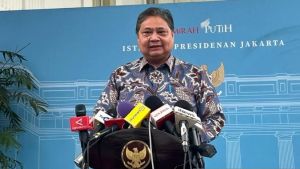
Chairman of the Indonesian Chamber of Commerce and Industry Anindya Bakrie said the recommendation was still initial and open to strengthening before the final was determined.
All of them will be discussed in more detail in the 2025 Kadin Rapimnas which will be held on December 1-2 2025 in Jakarta, with a series of pre-events on November 30.
"So what is the policy recommendation, only five are designed. Later, please change it, replace it, add it, or reduce it," said Anindya as reported by ANTARA, Friday, November 28.
The first recommendation focuses on creating new jobs and improving people's welfare.
Kadin paid special attention to two government programs, namely Free Nutrition Food (MBG) and the construction of 3 million houses.
In its implementation, Kadin wants to strengthen the local supply chain through the involvement of MSMEs in the MBG program, as well as encourage licensing reforms and expansion of informal access to financing for the 3 million house project.
Vocational reform is also part of this recommendation. Kadin proposed a national labor planning based on industrial needs, as well as the establishment of industrial advisory boards in each university and vocational school to overcome the mismatch of the workforce.
The second recommendation, Kadin assessed productivity as a prerequisite for Indonesia to be globally competitive.
"For example, negotiating tariffs with the US. Unlike neighbors, we (the tariff) is 19 percent, others are 1, 2, 3, 4 percent higher. But what does it mean if, for example, our productivity is low, then the cost of logistics is high and regulations are not supportive," said Anindya.
In addition, Kadin encourages the implementation of a national productivity master plan and a review of the wage system so that the minimum wage arrangement is associated with productivity, not just inflation.
He views this step as important to maintain the sustainability of labor-intensive industries and prevent a wave of layoffs.
The third recommendation, Kadin encourages an applicative research collaboration between BRIN and the business world, adjustments to LPDP-supported study programs with industrial needs, and simplification of the super tax deduction claim process for research and development activities (R&D) to make it more accessible to the industry.
The fourth recommendation, to attract more investment, Kadin assessed the need for system-based (system-based) OSS system synchronization, not individual-based (person-based) is one of the main recommendations to increase business certainty.
Then the fifth recommendation, Kadin supports the strict steps taken by the illegal import task force and the application of trade remedies such as anti-dumping or safeguarding policies against fraudulent trading practices.
To expand market access, Kadin encourages the promotion of Indonesian products, assistance in the use of free trade agreements (FTA) and CEPA for MSMEs, as well as the involvement of Kadin in government diplomacy and trade negotiations.
"We certainly know that in Kadin, the President (Prabowo Subianto) opened good market (access) in Canada, the European Union, Peru, and others to be able to trade," he explained.
However, Kadin also highlighted the three main obstacles that still overshadow the business world.
First, investment barriers, including the high-incremental capital output ratio (ICOR).
"Because that's our ICOR, if the language is sophisticated, it's high. But in short, the 6.3 (ICOR) is high, it takes (investment) 6 dollars to generate 1 dollar (output)," he explained.
The second obstacle is the high unemployment rate for young people which reaches around 17 percent.
"This is not easy because the big z cake (population) gene is in Indonesia. This cannot be allowed," he explained.
SEE ALSO:
-
 | EKONOMI
PIS Siagakan 332 Kapal Tanker untuk Pasok BBM dan LPG Selama Periode Natal dan Tahun Baru
28 November 2025, 21:05

Serta ketiga, melemahnya peran industri manufaktur yang kini hanya berkontribusi sekitar 19 persen terhadap produk domestik bruto (PDB).
Dia menegaskan, jika Indonesia ingin tumbuh 5-8 persen dan keluar dari jebakan negara berpendapatan menengah, hambatan struktural ini harus diatasi melalui kebijakan yang terukur dan konsisten.
SEE ALSO:
-
| EKONOMI
PIS Siagakan 332 Kapal Tanker untuk Pasok BBM dan LPG Selama Periode Natal dan Tahun Baru
28 November 2025, 21:05
And third, the weakening role of the manufacturing industry which now only contributes about 19 percent to gross domestic product (GDP).
He emphasized that if Indonesia wants to grow 5-8 percent and get out of the trap of middle-income countries, this structural obstacle must be overcome through measurable and consistent policies.
The English, Chinese, Japanese, Arabic, and French versions are automatically generated by the AI. So there may still be inaccuracies in translating, please always see Indonesian as our main language. (system supported by DigitalSiber.id)


