

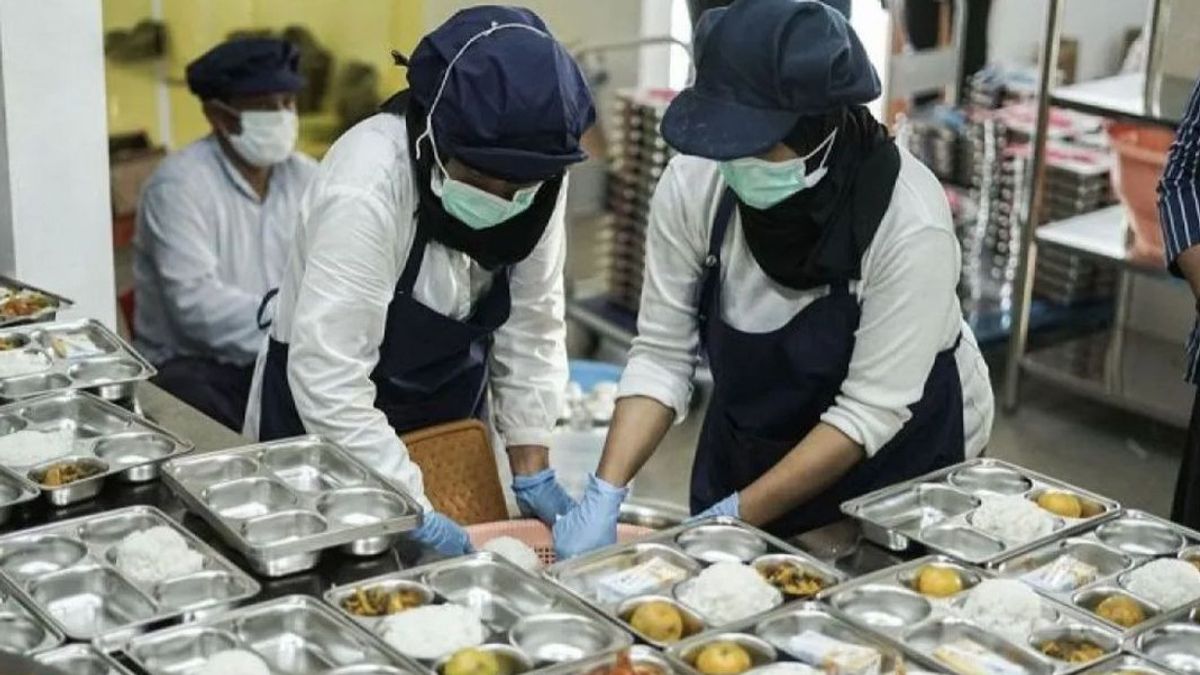


YOGYAKARTA - The Free Nutrition Food Program (MBG) launched by the Indonesian government aims to prioritize improving the nutritional quality of the community, especially school-age children. Although it focuses on improving nutrition, this policy also has a significant impact on the agricultural sector, especially those related to the impact of MBG on the exchange rate of farmers and the production of food commodities in Indonesia. This policy has the potential to change the dynamics in the agricultural sector, which is the main source of food for the community.
This article will explore in-depth how MBG affects farmers' welfare, both in terms of increasing their income through higher commodity prices, as well as its impact on food commodity production throughout Indonesia. The focus of the discussion will include changes that occur in farmers' exchange rates and how this policy affects national food supply.
1. Increased Farmer's Exchange Rate (NTP)
Launching from the website of the Indonesian Central Statistics Agency, one of the main indicators for measuring farmers' welfare is the Farmer's Exchange Rate (NTP), which shows a comparison between the price received by farmers and the price paid for production needs. The data show that after MBG implementation, NTP has increased significantly. For example, in January 2025, NTP reached 123.68, up 0.73% compared to the previous month. This increase reflects that the selling price of agricultural products is increasing, providing more profits for farmers.
Research also shows that MBG has a strong positive correlation with farmers' welfare, with a correlation value of 58.7%. Increased demand for foodstuffs as part of this program encourages the price of agricultural products to increase, which in turn increases farmers' income. In addition, better nutrition for farmers and their families increases health and work energy, which has the potential to increase work productivity and agricultural products. Did you know, AEI Reveals that the MBG Program is at risk of Triggering an Increase in Food Prices
2. Impact on Food Commodity Production
The implementation of MBG also affects the dynamics of food commodity production in Indonesia. With the guarantee of absorption of production products through this program, farmers have market certainty, which encourages them to increase production. This is in line with data showing an increase in national rice production by 2025, which is estimated to reach 33 million tons by the end of December 2025.
However, increasing food demand can also pose challenges, such as the potential for food inflation if it is not balanced with an adequate increase in production capacity. Therefore, it is important for the government to ensure that MBG policies are followed by support for the agricultural sector, such as the provision of adequate production facilities and strengthening food distribution infrastructure.
Challenges And Opportunities In The Future
Although MBG has a positive impact on farmers' welfare and food production, there are several challenges that need to be faced. One of them is the need to increase local food production capacity in order to meet the increasing demand. In addition, it is important to maintain stable food prices so that inflation does not harm consumers and small farmers.
On the other hand, MBG also opens opportunities for agricultural sector development, such as increasing productivity through modern agricultural technology and diversifying food products. With the right approach, MBG can be a driving force for the transformation of the agricultural sector towards a more sustainable and inclusive food system.
So basically, the impact of MBG on the exchange rate of farmers and food commodity production in Indonesia shows that this policy has great potential to improve farmers' welfare and strengthen national food security. However, to achieve optimal results, a synergy is needed between MBG policies and support for the agricultural sector, including increasing production capacity and food distribution infrastructure. Thus, MBG can be a strategic step in realizing a sustainable and inclusive food system in Indonesia.
So after knowing the impact of MBG on the exchange rate of farmers and the production of food commodities in Indonesia, see other interesting news on VOI.ID, it's time to revolutionize news!
The English, Chinese, Japanese, Arabic, and French versions are automatically generated by the AI. So there may still be inaccuracies in translating, please always see Indonesian as our main language. (system supported by DigitalSiber.id)
Most Popular Tags
#Prabowo Subianto #donald trump #Febrie Adriansyah #8791 #giias 2026Popular


