
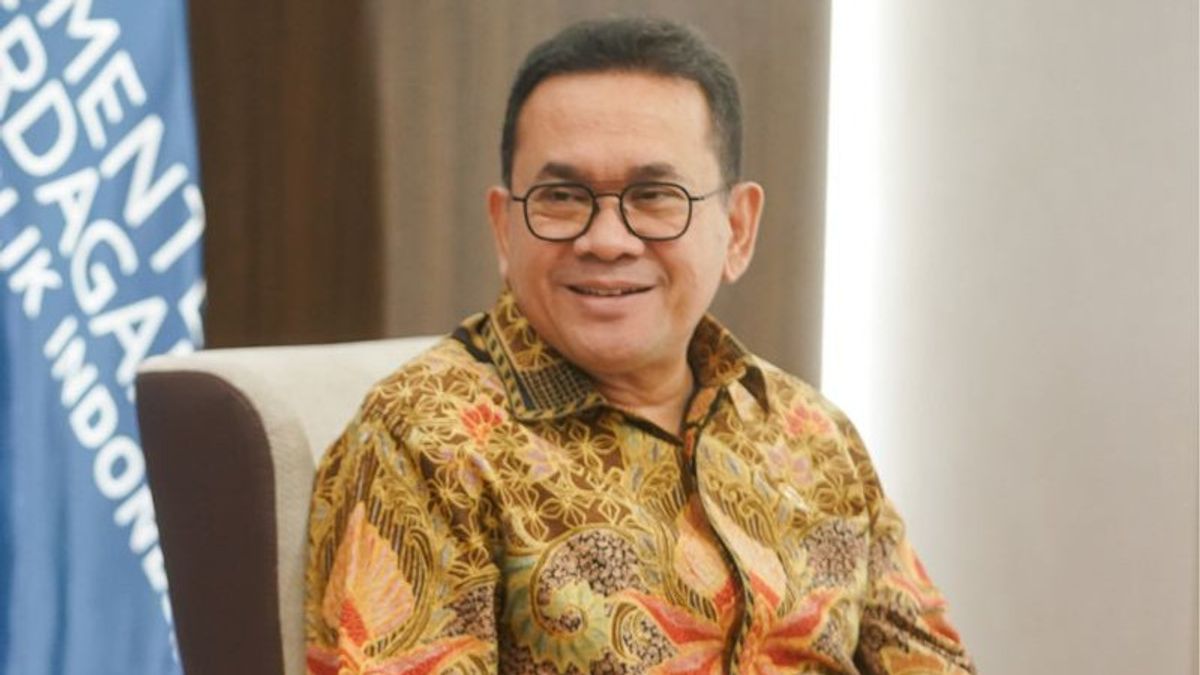


JAKARTA - The Minister of Trade (Mendag) Budi Santoso issued two new Minister of Trade Regulations (Permendag) aimed at regulating and limiting the import of wood sweet potatoes and their derivative products and ethanol.
This policy is a follow-up to President Prabowo Subianto's direction to maintain the availability of industrial raw materials, protect domestic farmers and ensure strategic supplies.
"The issuance of the two Permendag is carried out in accordance with the direction of the President. The goal is to maintain industrial needs, protect domestic farmers, as well as maintain certainty of the supply of national strategic raw materials," Budi said as quoted by ANTARA, Friday, September 19.
The two Permendag are the Minister of Trade Regulation 31 of 2025 concerning Amendments to the Regulation of the Minister of Trade Number 18 of 2025 concerning Policies and Regulations for Importing Agricultural and Livestock Goods.
This Permendag regulates the import of wood sweet potatoes and their derivative products.
Furthermore, Permendag 32 of 2025 concerning Amendments to the Regulation of the Minister of Trade Number 20 of 2025 concerning Policy and Regulation of Imports of Chemicals, Hazardous Materials and Mining Materials.
This Permendag regulates ethanol imports.
The two Permendag will take effect within 14 (fourteen) days from the date of promulgation.
Budi explained that one of the main arrangements in the Minister of Trade Regulation 31/2025 is the adjustment of the policy of importing cassava / cassava and derivative products such as tapioka flour.
The import regulation instrument is determined through an Import Approval (PI) mechanism which can only be given to importers of the Producer Import Recognition Rate (API-P).
The import requirements are in the form of Technical Recommendations from the Ministry of Industry or Commodity Balance (NK) if they are available and supervision is carried out in customs.
The Ministry of Trade encourages wood / cassava sweet potatoes and their derivative products to be included in the commodity balance in the future.
Meanwhile, Permendag 32/2025 was issued to respond to proposals from various ministries and associations so that some other fuel commodities, especially ethanol, were again subject to the provisions of the Import Approval (PI).
According to Budi, this step was taken to maintain the stability of the molasses price (cane drop) which became the main raw material for the ethanol industry.
This step is also to protect the income of sugarcane farmers and the sustainability of the national sugar industry.
This policy is also in line with the government's program in accelerating national sugar self-sufficiency, energy self-sufficiency, and economic development.
green.
SEE ALSO:
-
 | EKONOMI
Kemenkeu Kerap jadi Kambing Hitam, Purbaya Ungkap Tak Mau Disalahkan
19 September 2025, 21:43 -
 | EKONOMI
Erick Thohir Sebut Dony Oskaria Figur yang Tepat jadi Menteri BUMN
19 September 2025, 21:31
Dia mengatakan, semula etanol bebas diimpor, kini dikembalikan pengaturannya sebagaimana sebelumnya.
"Tujuannya, agar tidak mengganggu penyerapan tetes tebu lokal. Etanol ini sangat penting bagi industri, tetapi juga harus dipastikan tidak merugikan petani tebu yang selama ini memasok bahan baku," terang Budi.
Permendag 32/2025 juga mengakomodasi kebutuhan industri farmasi, obat tradisional, kosmetik dan pangan olahan terkait bahan berbahaya (B2).
Sebelumnya, impor B2 oleh Importir Terdaftar (IT-B2) hanya dapat disalurkan ke pengguna akhir di luar sektor tersebut.
Peraturan ini memungkinkan IT-B2, khususnya Badan Usaha Milik Negara (BUMN) pemilik Angka Pengenal Importir Umum (API-U), untuk mendistribusikan bahan berbahaya kepada sektor- sektor tertentu.
Ia pun menegaskan, syarat utamanya adalah rekomendasi dari lembaga pemerintah yang berwenang di bidang pengawasan obat dan makanan, dalam hal ini Badan Pengawas Obat dan Makanan (BPOM).
Rekomendasi tersebut wajib dipenuhi jika bahan berbahaya akan digunakan untuk kebutuhan industri farmasi, industri obat tradisional, industri kosmetik, maupun industri pangan olahan dan Bahan Tambahan Pangan (BTP).
"Dengan Permendag ini, pemerintah memastikan bahwa distribusi bahan berbahaya tetap terkendali, namun pada saat yang sama memberikan kemudahan bagi sektor-sektor strategis agar tetap memperoleh pasokan bahan baku yang dibutuhkan secara aman, legal, dan sesuai ketentuan," imbuhnya.
SEE ALSO:
-
| EKONOMI
Kemenkeu Kerap jadi Kambing Hitam, Purbaya Ungkap Tak Mau Disalahkan
19 September 2025, 21:43 -
| EKONOMI
Erick Thohir Sebut Dony Oskaria Figur yang Tepat jadi Menteri BUMN
19 September 2025, 21:31
He said that initially ethanol was free to be imported, now the arrangements are returned as before.
"The goal is not to interfere with the absorption of local sugar cane drops. Ethanol is very important for the industry, but it must also be ensured that it does not harm sugarcane farmers who have been supplying raw materials," explained Budi.
Permendag 32/2025 also accommodates the needs of the pharmaceutical industry, traditional medicines, cosmetics and processed foods related to hazardous materials (B2).
Previously, imports of B2 by Registered Importers (IT-B2) could only be distributed to end users outside the sector.
This regulation allows IT-B2, especially State-Owned Enterprises (BUMN) owners of the General Importer Recognition Rate (API-U), to distribute hazardous materials to certain sectors.
He also emphasized that the main requirement is recommendations from government agencies authorized in the field of drug and food supervision, in this case the Food and Drug Supervisory Agency (BPOM).
These recommendations must be fulfilled if hazardous materials will be used for the needs of the pharmaceutical industry, traditional medicine industry, the cosmetics industry, as well as the processed food and supplementary food (BTP) industry.
"With this Permendag, the government ensures that the distribution of hazardous materials remains under control, but at the same time it provides convenience for strategic sectors to continue to obtain the supply of raw materials needed safely, legally, and in accordance with the provisions," he added.
The English, Chinese, Japanese, Arabic, and French versions are automatically generated by the AI. So there may still be inaccuracies in translating, please always see Indonesian as our main language. (system supported by DigitalSiber.id)
Most Popular Tags
#Prabowo Subianto #donald trump #Febrie Adriansyah #8791 #giias 2026Popular


