


JAKARTA The Central Statistics Agency (BPS) reported that national rice production until October 2025 is estimated to reach 31.04 million tons, with a consumption requirement of 27.3 million tons.
This means that Indonesia recorded a rice surplus of around 3.7 million tons.
Researcher from the Center of Reform on Economics (Core) Indonesia, Eliza Mardian, believes that this achievement in Indonesia can still be said to be self-sufficient because the majority of rice needs come from domestic production.
"Actually, we are still said to be self-sufficient because the majority are still fulfilled from within the country and the production surplus is still thin. For example, El Nino in 2023 has decreased production. But when compared to consumption, there is still a surplus, but it is thin at around 400,000 tons," Eliza told VOI, Tuesday, September 2.
According to Eliza, ideally food reserves are at least 10 percent of total consumption or about 3 million tons.
In previous years, most of these reserves were filled with imports.
However, in 2025, he continued, the government is committed to stopping rice imports.
"In 2025, rice imports do not exist because the government is committed to stopping imports and being translated into a strategy to adjust the price of harvested dry unhulled rice to Rp6,500 per kilogram and Bulog pick up the ball absorbing grain to farmers. The Bulog building is full. The government's (rice) reserves are usually mostly met from imports, now to June 100 percent from within the country," he explained.
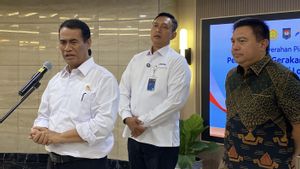
Previously, Minister of Agriculture (Mentan) Andi Amran Sulaiman was optimistic that the positive trend in achieving rice production released by BPS would continue so that the ideals of realizing food self-sufficiency could be achieved in the near future.
"God willing, four months later, hopefully there will be no shocks, we can fight self-sufficiency as quickly as possible," Amran hoped.
SEE ALSO:
-
 | EKONOMI
Beras Premium Kosong di Ritel Modern, Mentan Bantah Karena Kelangkaan
02 September 2025, 21:08

Mentan menyebut bahwa capaian tersebut merupakan bukti nyata dari keberhasilan strategi optimalisasi lahan yang selama ini dijalankan pemerintah.
Selain strategi lahan, lanjut Amran, kondisi iklim yang lebih bersahabat pada tahun ini juga mendukung produktivitas petani. Panen raya yang berlangsung serentak di sentra-sentra produksi utama seperti Jawa, Sumatera, dan Sulawesi semakin memperkuat capaian surplus beras hingga Oktober 2025.
SEE ALSO:
-
| EKONOMI
Beras Premium Kosong di Ritel Modern, Mentan Bantah Karena Kelangkaan
02 September 2025, 21:08
The Minister of Agriculture said that this achievement is clear evidence of the success of the land optimization strategy that has been carried out by the government.
In addition to the land strategy, Amran continued, more friendly climate conditions this year also support farmers' productivity. The main production centers such as Java, Sumatra, and Sulawesi have further strengthened the achievement of the rice surplus until October 2025.
The English, Chinese, Japanese, Arabic, and French versions are automatically generated by the AI. So there may still be inaccuracies in translating, please always see Indonesian as our main language. (system supported by DigitalSiber.id)
Most Popular Tags
#Prabowo Subianto #donald trump #Febrie Adriansyah #8791 #giias 2026Popular


