


JAKARTA - The Ministry of Industry (Kemenperin) is finalizing a number of derivative regulations from Government Regulation (PP) Number 20 of Industrial Regulations. It is hoped that this regulation can encourage the role of industrial estates in equitable development and economic growth.
The Ministry of Industry noted that currently there are 170 industrial estates spread throughout Indonesia, with the occupancy rate reaching 58.39 percent. In the last five years, there has been significant growth with the addition of 52 new industrial areas.
"Strengthening regulations such as in the form of laws governing industrial estates is considered important to provide stronger legal certainty for investors and regional managers," said the Director General of Resilience, Region and International Industrial Access (KPAII) Kemeperin Tri Supondy as quoted from his written statement, Monday, July 28.
In this effort, the Ministry of Industry is currently drafting and finalizing various derivative regulations from PP Number 20 of 2024 concerning Industrial Regions.
Some of them are the preparation of the Minister of Industry Regulation (Permenperin) on the Standards of Industrial Estates and the revision of Permenperin Number 1 of 2020 concerning the Environment Management Plan and the In detail Environmental Monitoring Plan (RKL-RPL).
"Some regulations have been harmonized and others are entering the stage of the request for harmonization across the relevant ministries," he said.
Furthermore, the Ministry of Industry also proposes that the exploration of alternative regulations is more comprehensive, including strengthening institutional aspects; licensing; land acquisition; spatial planning; facilities and ease of investment; waste management to community empowerment and determination of the Indonesian National Vital Object (OVNI).
The proposal, Tri said, includes the push to form a stronger legal framework, such as laws specifically regulating industrial estates, in order to provide legal certainty for investors and regional managers.
SEE ALSO:

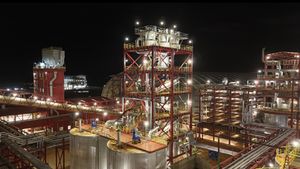
In addition to the regulatory aspect, according to Tri, the development of industrial estates is also directed to become the center of a sustainable industrialization ecosystem.
This transformation relies on high technology adoption, large-scale job creation, integration with vocational education and strengthening of natural resource-based downstreaming.
Industrial areas are also expected to be a pioneer in the application of green industry, digital integration and development of new economic growth centers in various parts of Indonesia.
"That way, industrial estates no longer only function as production sites, but become an important part of progressive and resilient national development against the dynamics of change," he concluded.
The English, Chinese, Japanese, Arabic, and French versions are automatically generated by the AI. So there may still be inaccuracies in translating, please always see Indonesian as our main language. (system supported by DigitalSiber.id)


