
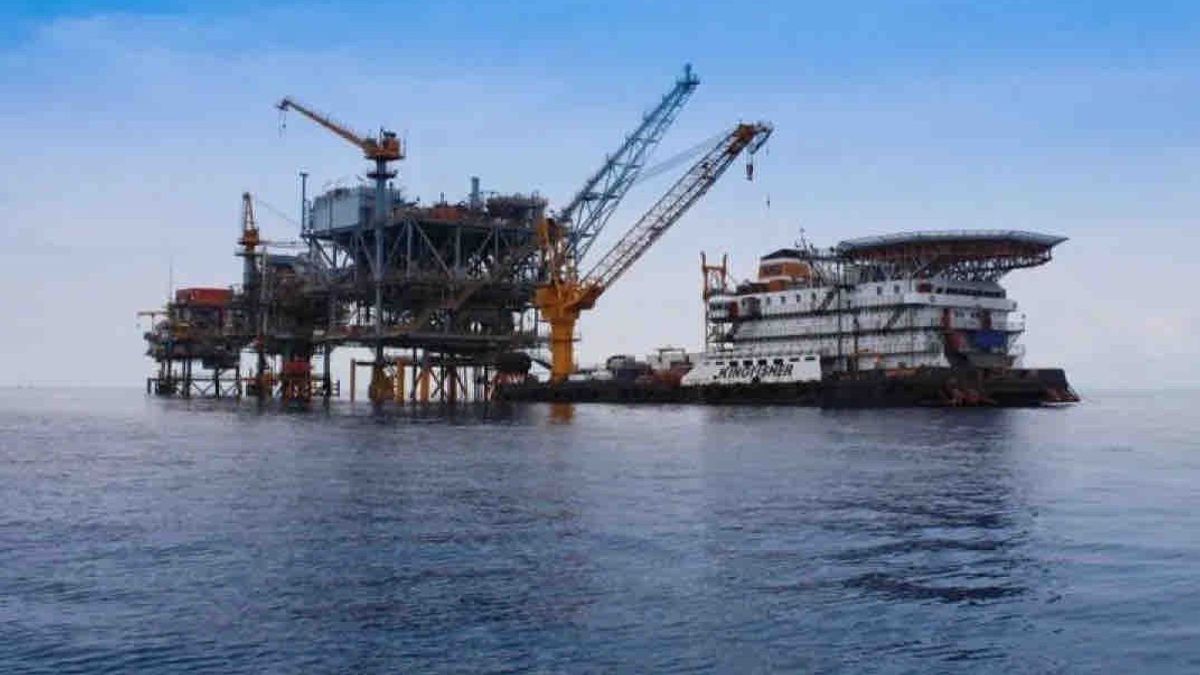


JAKARTA - Minister of Energy and Mineral Resources (ESDM) Bahlil Lahadalia emphasized the urgency of achieving the energy self-sufficiency target and downstreaming in national development.
According to him, in a statement quoted by Antara, in Jakarta, Saturday, July 19, the implementation of downstreaming not only increased added value, but also strengthened Indonesia's energy resilience.
"As Minister of Energy and Mineral Resources, I would like to emphasize that today's national energy development carries a big mission, namely self-sufficiency in energy and downstreaming. For this reason, the government continues to encourage the reactivation of oil and gas idle wells, construction of gas infrastructure, and downstreaming of the mineral and coal sector, as well as accelerating energy transitions through the development of EBT and technological innovation," said Bahlil at the inauguration of Oil and Gas Corner at the Rectorate Building of the Ten November Institute of Technology (ITS) Surabaya, East Java, Thursday, July 17.
Furthermore, the Minister of Energy and Mineral Resources highlighted the important role of campuses and students in realizing the program.
"The role of campuses and students is very important in this process, because students are part of the agents of change towards energy independence and natural resource sovereignty," he said.
Basically, continued Bahlil, downstreaming means processing raw materials into finished goods, so that there are no more exports of raw materials because the entire process is in the country.
"Don't send raw materials anymore, the added value is abroad, we just play exports of raw materials. If that's the case, what's the difference between us and the VOC era. The VOC is 390 years old sending raw materials that make other countries addicted to our resources," said Bahlil.
He added that so far other countries have received supplies of raw materials from Indonesia to meet the needs of their factories.
Therefore, it is time for Indonesia to fully implement the downstream program, process commodities to become finished products in the country.
SEE ALSO:

For concrete examples, Bahlil said that the battery ecosystem for electric cars in Indonesia, with an investment value of up to 20 billion US dollars, has placed the Republic of Indonesia as the second largest battery producer in the world after China.
"Later, in November there will be an investment of 100 billion US dollars. We will also build again from China and Korea, which is about USD 8 billion, which is also one of the largest in processing nickel raw materials into cell batteries. In fact, President Prabowo asked to become an electric car," added Minister Bahlil.
The English, Chinese, Japanese, Arabic, and French versions are automatically generated by the AI. So there may still be inaccuracies in translating, please always see Indonesian as our main language. (system supported by DigitalSiber.id)
Most Popular Tags
#Prabowo Subianto #donald trump #Febrie Adriansyah #8791 #giias 2026Popular


