



The Ministry of Industry (Kemenperin) encourages the production of sugar palm oil palm stems produced by ex-replanting, as an effort to strengthen the downstreaming of the palm oil sector, thereby improving the people's economy.
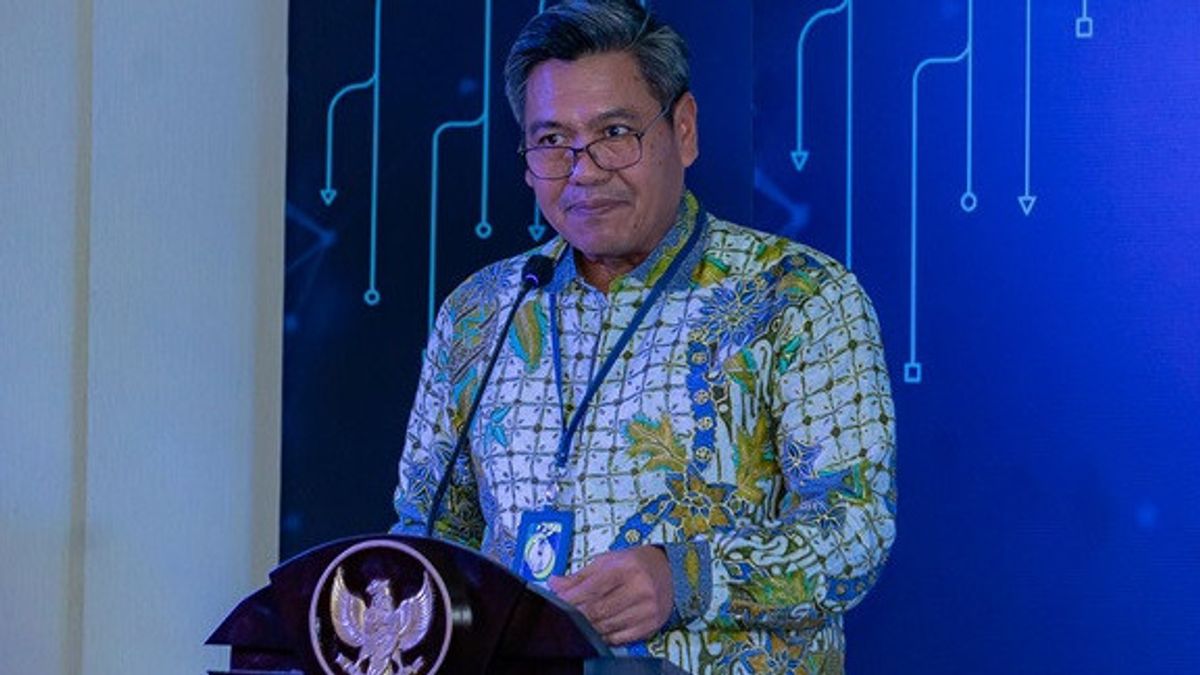
The Director General of Agro Industry at the Ministry of Industry, Putu Juli Ardika, stated that these efforts were needed in the pilot project for the production of palm oil as a result of cooperation between PTPN IV/Palmco and the Produsen Gerak Nusantara Sejahtera (KPGNS).
The pilot project is a concrete step initiative in implementing the policy of accelerating downstream oil palm industry and optimizing the potential for alternative raw materials for old palm oil ex-replanting stems that have not been utilized.
"The use of old palm oil stems in the production of palm sugar nira is not only industrial innovation, but is also a sustainable solution for the people's economic empowerment, especially in the early days of replanting, where replanting plants have not produced for the last three years," Putu said as quoted from his written statement, Wednesday, June 25.
According to calculations, one hectare of palm oil consisting of 25-30 old trees is capable of producing 5,000 to 6,000 liters of Nira per month.
If multiplied by a replanting target of 300,000 hectares per year, the potential production of palm sugar can reach around 1.5 to 1.9 million kiloliters per year, with a market value of around IDR 3 trillion.
This huge potential is very significant for growing people's businesses based on community empowerment around plantation sites.
"Red sugar products produced from palm sugar have a very prospective market as raw material for the soy sauce, traditional sirop and liquid sugar industries that are ready for consumption," he said.
Putu assessed that the processing technology into brown sugar has developed rapidly and for the safety of use as consumption sugar has been supported by the standard SNI 01-6237-2000 of brown sugar.
Therefore, the involvement of oil palm plantation companies, cooperatives and micro, small and medium enterprises is expected to create synergies that benefit both parties while strengthening the economic sustainability of the community in the replanting area.
BACA JUGA:



"This is the main basis for cooperation between parties with MoU and PKS documents that have been signed together at the PTPN IV/Palmco Adolina office some time ago," he said.
The PKS signing event was also attended by members of Commission VII DPR RI who provided full support for the program and encouraged the development of pilot projects in several other main provinces.
The Ministry of Industry also hopes for support from all parties so that the implementation of the pilot project for the production of palm sugar from the old palm oil ex-replanting stem can run smoothly and provide economic benefits for the community.
The English, Chinese, Japanese, Arabic, and French versions are automatically generated by the AI. So there may still be inaccuracies in translating, please always see Indonesian as our main language. (system supported by DigitalSiber.id)


