



JAKARTA The Indonesian economy is entering 2025 with solid resilience amid challenging global dynamics.
Bank Mandiri Chief Economist Andry Asmoro assessed the slowdown in the first quarter of 2025 reflects the normalization phase towards a healthier and more balanced growth pattern.
According to him, this can be seen from Gross Domestic Product (GDP) growing by 4.87 percent (yoy) in the first quarter of 2025, slightly lower than the previous quarter which recorded 5.02 percent.
Based on the research results of the Bank Mandiri Economist Team, this condition is influenced by the high-based effects in 2024 as well as the initial signal of the slowdown in post-election domestic investment.
Andry said that external pressure was increasing as US trade policies tended to be aggressive through reciprocal rates.
He added that this uncertainty triggered financial market turmoil and affected the projected global growth that the IMF lowered from 3.3 percent to 2.8 percent.
Nevertheless, he said household consumption continued to grow 4.89 percent (yoy) even though it was slightly lower than the fourth quarter of 2024.
In addition, according to Andry, the momentum of Eid al-Fitr 2025 remains a driving force, although people are starting to show a tendency to increase the allocation for savings.
Andry said that at the same time, annual inflation until April 2025 was recorded at 1.95 percent, reflecting controlled price conditions.
According to Andry, the normalization of electricity rates after the subsidy program became the main contributor to the limited increase.
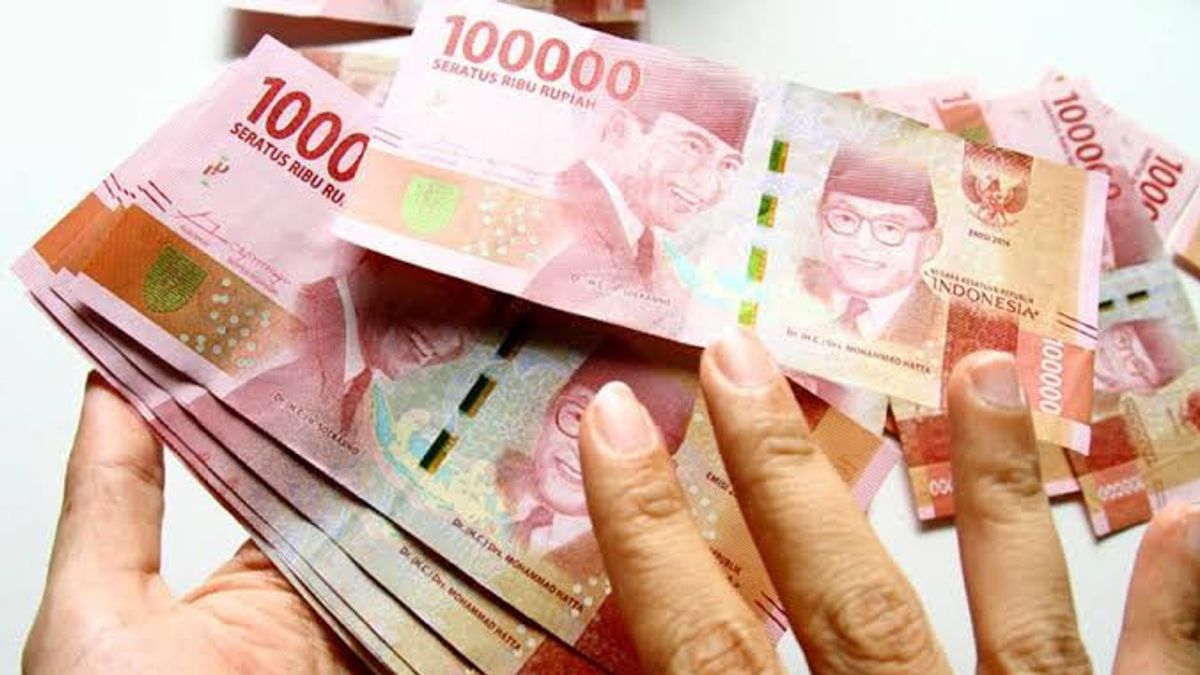
Even so, the rate of the rupiah exchange rate faced considerable pressure throughout 2025 due to increasing geopolitical tensions and strengthening the US dollar.
This fluctuation needs to be responded to with a measurable and coordinated stabilization policy. Bank Mandiri projects that Indonesia's economic growth will be in the range of 4.93 percent throughout 2025," said Andry at the Mandiri Economic Outlook Q2 2025 entitled Building Resilience in the Midst of Global Turbulence, Monday, May 19.
Andry added that the opportunity for acceleration remains open through effective fiscal and monetary policy synergies in maintaining purchasing power and encouraging investment so that this can be measured through the agricultural sector which shows impressive performance, driven by intensification programs such as pumping and fertilizer distribution.
He said increased productivity was also expected through extensification measures, including the planned opening of new land.
Mobility-related sectors, such as transportation, hospitality, information and communication, and entertainment, continue to support growth. The shift in lifestyle to experience-based consumption encourages economic turnover in the service sector," he said.
He also assessed that commodity prices that were still relatively high still had a positive contribution to the company's exports and revenues.
"Despite price corrections, margins are still at a reasonable level and support external sector stability," added Andry.
According to the analysis of the Bank Mandiri Economist Team, Bank Indonesia's monetary policy is estimated to remain accommodative throughout 2025, with an open easing room as long as price stability and exchange rates are maintained.
On the other hand, he said accelerating the realization of government spending would be an important cushion for global uncertainty.
Furthermore, in terms of purchasing power, research on Mandiri Sharing Index (MSI) until May 11, 2025, recorded a level of 257.9 points, reflecting the recovery of post-Eid public spending. Labor and Vesak Holidays are one of the factors driving the increase in public consumption, especially in the transportation and travel categories.
"People's spending was recorded to have increased significantly in early May, although it later experienced normalization. The provinces of tourist destinations such as DIY, Central Java, and East Java recorded the highest increase during the long holiday period," he added.
Meanwhile, until the first quarter of 2025, the banking intermediation function showed moderation with credit growth of 9.16 percent (yoy) in March 2025 in an industry. However, liquidity became tighter with the growth of Third Party Funds (DPK) of 4.75 percent and LDR which rose to 88 percent.
On the other hand, Bank Mandiri continues to record solid performance, with consolidated loans reaching Rp1,672 trillion or growing 16.5 percent (yoy). The focus of financing is directed to the construction, energy, food and beverage sector, as well as the labor-intensive sector that is resilient.
Digital transformation continues to be the main driver of growth. Livin' by Mandiri users reached 30.7 million, with a transaction frequency of 1.1 billion and a transaction value of IDR 1,070 trillion, an increase of 30 percent and 16 percent (YoY), respectively. Kopra by Mandiri recorded a transaction volume of 349 million with a value of IDR 6,000 trillion, growing 23 percent (YoY).
Bank Mandiri's total digital transaction volume reached IDR 7,066 trillion as of March 2025, up 21.9 percent (YoY). Operating efficiency also increased, with the cost-to-income ratio (CIR) maintained at the level of 38.2 percent.
SEE ALSO:


The digitalization and operational efficiency strategy has succeeded in supporting positive performance amid external challenges. As a result, Bank Mandiri managed to record an increase in non-interest income by 17.3 percent (YoY) to Rp11.24 trillion, which came from digital transaction growth, trade finance services, treasury, and fund management.
This also supports Bank Mandiri's funding side which recorded that the total consolidated Third Party Funds (DPK) grew 11.2 percent (YoY) to Rp1,748 trillion, with low-cost funds (CASA) increasing 8.89 percent (YoY) and CASA composition only reaching 77.1 percent.
The quality of assets is maintained, with a non-performing loan (NPL) ratio at the level of only 1.01 percent as of March 2025. This has an impact on reducing credit costs (Cost of Credit/CoC) to 0.71 percent, from 0.99 percent in the same period the previous year.
The English, Chinese, Japanese, Arabic, and French versions are automatically generated by the AI. So there may still be inaccuracies in translating, please always see Indonesian as our main language. (system supported by DigitalSiber.id)
Most Popular Tags
#Prabowo Subianto #donald trump #2026 World Cup #venezuela #konflik timur tengahPopular


