


JAKARTA In the midst of global uncertainty, the Indonesian economy in the first quarter of 2025 grew 4.87 percent on an annual basis or year on year (yoy).
Minister of Finance Sri Mulyani Indrawati said that household consumption was maintained by various incentives from the state budget and affordable food prices.
While on the expenditure side, he said that the APBN was able to support the implementation of priority programs during the transition period of the new government.
According to him, in the midst of the challenges of economic slowdown and global uncertainty, the Indonesian economy still shows a fairly resilient performance.
"Optimism continues to be maintained, supported by the Government's commitment by ensuring that the State Budget works optimally in protecting the community, including ensuring that the economy grows sustainably," he said in his statement, Tuesday, April 6.
Based on the expenditure component, household consumption grew 4.89 percent, supported by increased community mobility in line with the New Year holidays and the shift in the Ramadan and Eid holidays to the first quarter.
Sri Mulyani conveyed that the purchasing power of the people who are maintained is supported by various government incentives through the provision of THR and various fiscal stimuli, such as discounted electricity rates and toll rates, property DTP VAT, and PPh 21 DTP labor-intensive sectors.
The government has also succeeded in maintaining affordable food prices by optimizing Bulog's role in price stability.
Meanwhile, Gross Fixed Capital Formation (PMTB) or limited investment grew at 2.12 percent, mainly influenced by building investments that grew slowly as reflected in the performance of the construction sector which grew limited, while non-vehicle engine investment also slowed.
In addition, Government Consumption contracted 1.38 percent due to high-end expenditure effects in the first quarter of 2024 along with the accelerated implementation of elections and social assistance spending for the mitigation of Elnino's impact. However, Government spending increased rapidly at the end of the first quarter in the midst of a transitional period.
Then exports grew stable 6.78 percent, supported by exports of palm oil (HS15) and steel (HS72) which grew by 36.0 percent and 6.6 percent, respectively.
In terms of production, the Agricultural sector grew very significantly by 10.52 percent supported by an increase in rice production at the main harvest and demand for food at the Ramadan moment.
"The increase in productivity is supported by the distribution of subsidized fertilizers that are getting better," explained Sri Mulyani.
In the January-February 2025 period, national rice production increased by more than 60 percent (yoy) with rice stocks in Bulog reaching 2.5 million tons.
Rice Outlook data April 2025 shows that Indonesia's rice production in the 2024/2025 planting season is the highest in ASEAN and rice production is estimated at 34.6 million tons or growing 4.8 percent (yoy).
The processing industry, which contributed 19.3 percent to the economy, grew by 4.55 percent, supported by downstreaming activities.
The trade sector, which contributed 13.2 percent, was able to grow 5.03 percent and the transportation and warehousing sector as well as accommodation and food and drink grew 9.01 percent and 5.75 percent, respectively, indicating strong mobility and purchasing power of the people.
According to him, this is supported by the provision of VAT DTP for airplane tickets and discounted toll rates and, the electricity procurement sector grew 5.11 percent supported by electricity price discounts.
Sri Mulyani said that the mining sector experienced a contraction in line with the decline in global commodity prices caused by the decline in demand. On the other hand, downstreaming continues and supports the growth of the manufacturing sector.
The construction sector grew by a limited 2.18 percent influenced by wait and see investor sentiment. The information and communication services sector grew by 7.72 percent, with digital transformation and adoption of Artificial Intelligent (AI) in more and stronger sectors.
According to him, this development increases data traffic and encourages data center development.
In addition, education and health services grew strongly by 5.03 percent and 5.78 percent, respectively.
He conveyed that the growth of these two sectors was supported by state spending in the education sector which included Teacher Income Allowance (TPG), the realization of the payment for the Indonesia Smart Program (PIP), and the Indonesia Smart Lecture Card (KIPK).
Meanwhile, he added that in the health sector, the government has also launched Free Health Check (PKG) and National Health Insurance (JKN) services.
Sri Mulyani said that in the midst of the challenges faced, economic activity continued to have a positive impact on people's welfare. The unemployment rate fell from 4.82 percent in 2024 to 4.76 percent this year.
Meanwhile, job creation in 2025 reached 3.59 million people, an increase from the previous 3.55 million people in 2024. Development in the labor market helped strengthen people's purchasing power in the future as the main support for economic activity.
Sri Mulyani said that in the future, the dynamics of the global economy is still very challenging and not easy, so periodic monitoring and mitigation efforts are needed for the impact of uncertainty, including through deregulation, the establishment of a labor task force, as well as a strategy to mitigate risks to maintain economic stability, as well as protect the business world and maintain people's purchasing power.
In addition, he said that the government had also carried out bilateral negotiations early and encouraged cooperation in various multilateral forums to jointly overcome global geopolitical challenges.
"This has been initiated, among others, in the Spring Meeting and G20 Meeting last April as well as the ADB Annual Session and the ASEAN+3 Finance Ministers' and Central Bank Governors' Meeting in early May 2025. The mapping of superior products for the ASEAN+3, European Union, and BRICS markets is also carried out to open new export markets," he said.
SEE ALSO:

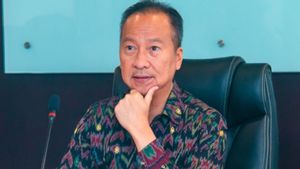

From an internal point of view, Sri Mulyani said that this global challenge is a momentum for the Government through all Ministries/Agencies (K/L) to be more coordinative and supportive, jointly carrying out deregulations to overcome obstacles in trade and investment, especially globally.
According to him, this includes collaboration to encourage performance and open market opportunities for sectors with higher added value and potential for strengthening Indonesia's position in the global value chain.
Sri Mulyani conveyed that the realization of absorption, according to the reconstruction of more productive State Expenditures, will be accelerated. The implementation of priority programs has higher added value, such as eating free nutritious food (MBG) and continuing to expand its coverage.
"Similarly, with support for the housing sector through tax incentives, including the expansion of the housing target through the Housing Financing Liquidity Facility (FLPP), it is higher than the previous 220 thousand," he concluded.
The English, Chinese, Japanese, Arabic, and French versions are automatically generated by the AI. So there may still be inaccuracies in translating, please always see Indonesian as our main language. (system supported by DigitalSiber.id)


