

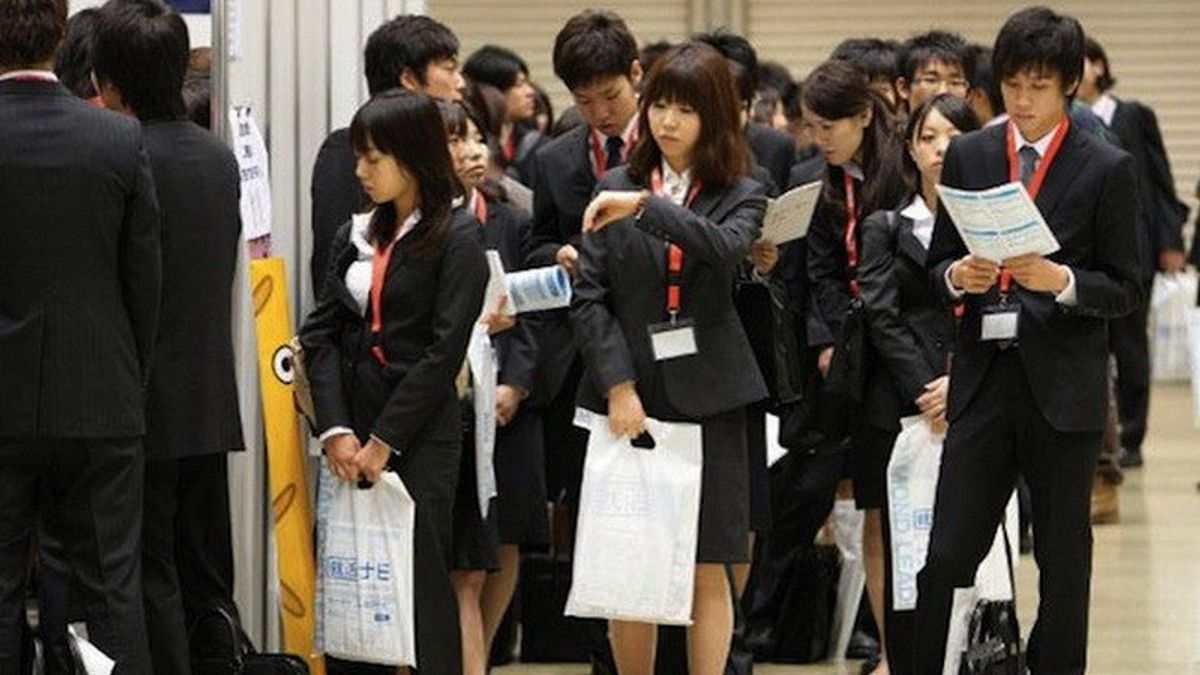


JAKARTA - Companies in Japan have agreed to increase wages by an average of more than 5% this year, recording the biggest increase in more than three decades. The Japanese company's move brings relief to many workers, although it is still uncertain whether this increase will trigger a significant spike in consumer spending.
Over the end of annual labor negotiations, a number of Japanese companies announced that they had fulfilled the union's demands completely. Several Japanese companies, such as electronic conglomerate Hitachi, even offer record-breaking salary increases.
However, not all sectors are involved, and it remains to be seen how the impact will be on workers in small companies.
This significant salary increase is considered a crucial step to offset the surge in living costs due to inflation. Many Japanese companies are driven by profit records due to the weakening yen also want to maintain their workforce amid an increasing labor crisis.
Broadly speaking, policymakers have long encouraged Japanese companies to raise salaries so that people can get out of their decades-long deflationary mindset, which makes them tend to be reluctant to shop confidently.
According to preliminary data from Rengo, a union with 7 million members, this year's average wage increase reached 5.46%, marking the biggest increase in 34 years. This figure is higher than last year's 5.28% recorded before it was revised to 5.1%. Final revisions are usually lower as agreements with small companies are only taken into account later.
Despite this substantial increase in wages, economists remain skeptical about its impact on increasing consumer spending. Major consumer inflation, including fresh food prices, has reached 4% in January which is the highest level in two years.
Nana Nagayama, 51, who is visiting Tokyo from Hokkaido to attend her daughter's graduation, said her husband had not expected a large raise in salary and expected fixed expenses to be controlled.
"For example, on this trip, my husband did not come to save on expenses," he said.
Meanwhile, Prime Minister Shigeru Ishiba this week ordered authorities to seek solutions to increase the salaries of truck drivers. He also stated that the government is considering policies that allow small companies to increase the price of their services in order to pay workers better.
The Rengo member union targets an average wage increase of 6.09% by 2025, up from 5.85% by 2024. This is the first time in 32 years that they demand an increase of more than 6 percent.
SEE ALSO:
-
 | BERITA
Prabowo Beri Hormat ke Mentan Amran Berhasil Jalankan Program Swasembada Pangan
16 Maret 2025, 00:15 -
 | EKONOMI
Menteri PKP Sebut Desain Rumah Lippo Group Cocok Untuk Hunian Subsidi
16 Maret 2025, 01:16

This year, Rengo focuses on efforts to increase workers' salaries in small companies.
"The average raise in small companies has reached its highest point in 33 years, but there is still a huge gap with big companies. Since salary negotiations at small companies are still ongoing until April and May, we will continue to support them," said Rengo President Tomoko Yoshino, at a press conference on the increase in Japanese company wages.
The English, Chinese, Japanese, Arabic, and French versions are automatically generated by the AI. So there may still be inaccuracies in translating, please always see Indonesian as our main language. (system supported by DigitalSiber.id)


