
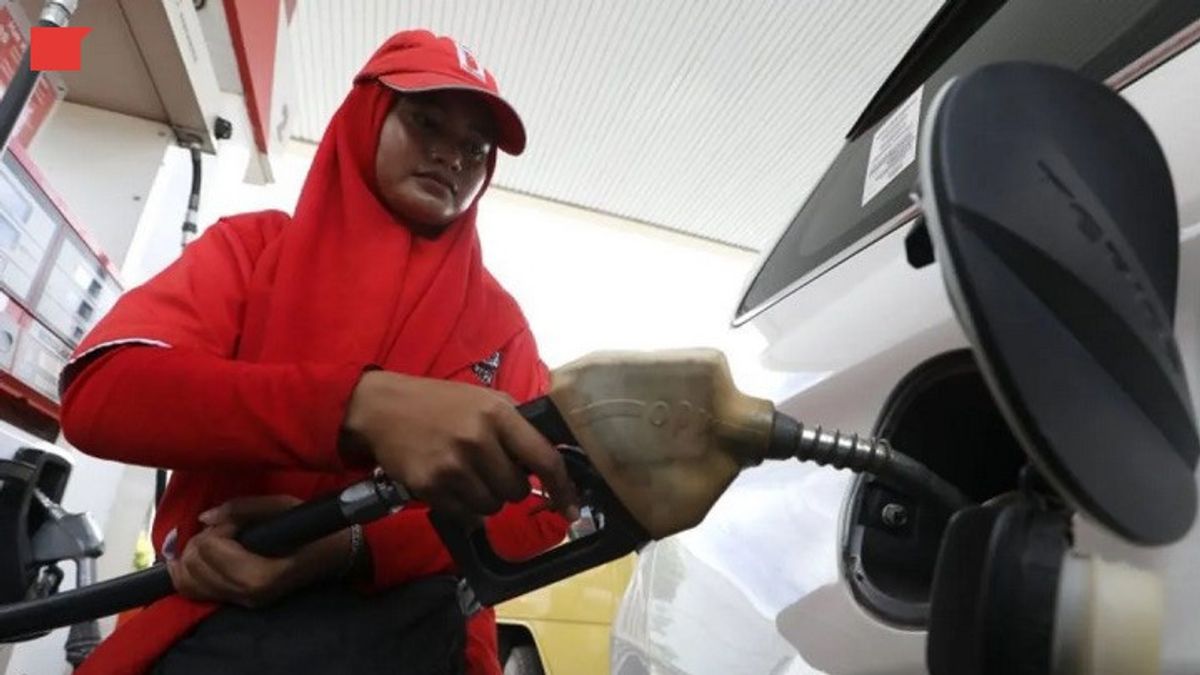


JAKARTA - The increase in the price of non-subsidized Liquefied Petroleum Gas (LPG) in the midst of a spike in the price of non-subsidized fuel oil (BBM) and other basic necessities has made the middle class community increasingly squeezed.
Not long after the increase in the price of non-subsidized fuel, the government announced an increase in LPG. Before the increase, Bright Gas 12 kg at the distributor level was sold for around Rp. 192,000 per tube. Tap now the price has risen to Rp. 228,000 per tube for Central Java, DKI Jakarta, to East Java.
Meanwhile, for the Aceh, North Sumatra, and Jambi regions, the price is slightly higher, namely Rp230,000 per tube.
According to a number of economic observers, it is not impossible that there will be a massive shift from non-subsidized goods to subsidies, which could have an impact on scarcity if the situation is prolonged. In addition, the middle class community group is increasingly squeezed by the current situation.
The government decided to raise the price of fuel and LPG in the near future, and suddenly. Since April 18, 2026, the increase in the price of non-subsidized fuel applies to Pertamax Turbo, Dexlite, and Pertamina Dex. The average increase is 60 percent.
The Minister of Energy and Mineral Resources (ESDM) Bahlil Lahadalia explained that the increase in several non-subsidized fuel prices was due to the soaring global oil prices due to geopolitical tensions in the Middle East.
Until now, the prices of Pertamax and Pertamax Green have not increased, but Bahlil has given a signal that the prices of the two types of gasoline will be adjusted to follow the world oil prices.
At the same time, PT Pertamina also raised the price of non-subsidized LPG 5.5 kg and 12 kg with an average increase of 19 percent. Meanwhile, subsidized LPG 3 kg did not experience an increase and will continue to be distributed to the right target.
Research Director of the Bright Institute, Muhammad Andri Perdana, said that the prospective middle and upper middle class community is the group most burdened by the increase in the price of non-subsidized fuel and LPG. He said, the group of people with an income equivalent to the Provincial Minimum Wage (UMP) is not poor enough to access subsidized fuel and LPG. On the other hand, they also cannot be said to be rich to enjoy non-subsidized fuel and LPG.
In the midst of a drastic increase in the price of subsidized and non-subsidized fuel and LPG, Andri estimates that residents of the middle and upper middle classes will find a way to survive. One of them, flocking to move from those who previously did not buy non-subsidized goods, finally chose to subsidize products.
Similarly, the Executive Director of the Center of Reform on Economics (CORE) Mohammad Faisal assessed that the surge in prices, especially non-subsidized LPG, was felt by the middle class, because it was used by the majority of households in this group.
The increase, said Faisal, immediately impacted the daily spending of the middle class. Meanwhile, the increase in non-subsidized fuel has a relatively limited impact on the middle class because the type of fuel that has experienced a significant increase is fuel with high specifications, which is usually consumed by the upper class.
In addition, the increase in jet fuel prices also has the potential to have an impact through the increase in airfare prices, which also affects the mobility and spending of this group of people.
Government AssistanceFaisal emphasized that the increase in energy prices in general would put pressure on the purchasing power of the middle class and have an impact on the production sector. This is because the consumption of the middle group is the main support for economic activity.
In the short term, Faisal emphasized the importance of maintaining food price stability so that pressure on the middle class is not getting heavier. He also assessed that the government's policy of not raising subsidized fuel prices was right to hold back the inflation rate, especially in the food sector.
Meanwhile, for the medium to long term, he said the government needs to focus on strengthening the income side of the community, especially through the creation of formal jobs. The middle class, according to Faisal, has been under pressure in recent years, even tends to shrink since the pandemic.
"Government programs need to target job creation, especially formal ones, because that is what most affects the purchasing power of the middle class," he said.
Another opinion was expressed by the Director of the Energy Shift Institute, Putra Adhiguna. He said that direct cash subsidy assistance could be one effective solution to withstand pressure from the energy side.
"Direct cash subsidies are one of the best solutions considering that poor households receive lower subsidies than more capable groups, control of subsidy distribution is also important," he said.
He also emphasized that controlling the distribution of subsidies was the key to ensuring that assistance was targeted and actually received by the groups in need.
The distribution control mechanism, including the use of technology such as biometrics, must be carried out consistently. So far, he said, various control efforts have often been hampered by political interests.
"In the distribution of energy subsidies, the key is consistency. It has repeatedly been a control effort that goes back and forth because of political attraction. Currently, it must be ensured that it does not disappear into a momentary project, while it continues to be improved," he said.
The English, Chinese, Japanese, Arabic, and French versions are automatically generated by the AI. So there may still be inaccuracies in translating, please always see Indonesian as our main language. (system supported by DigitalSiber.id)
Most Popular Tags
#Prabowo Subianto #donald trump #firearm #8791 #giias 2026Popular


