


JAKARTA The wave of demonstrations that occurred in various regions in Indonesia last week caused many people to feel anxious and afraid.
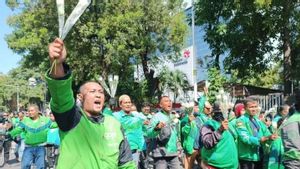
The demonstration that has occurred since August 25 has spread to various regions. The situation is getting hotter after causing the death toll of Affan Kurniawan, an online motorcycle taxi driver who was run over by a Brimob tactical vehicle in Jakarta on August 28.
Since that incident, the situation in a number of areas has heated up, and even looting has occurred at the homes of DPR members Ahmad Sahroni, Eko Patrio, and Uya Kuya, as well as Finance Minister Sri Mulyani.
Almost all national media and social media reported on conditions that could be said to be quite scary for some people. Many are afraid to leave the house, even schools in vulnerable areas are instructed to impose distance learning (PJJ).
Following the conditions that occurred in Indonesia, many people feel anxious. Clinical and forensic psychologist Kasandra Putranto said that broadcasts and reports about demonstrations, both formal media maupn social media, have the potential to have a negative impact on psychological conditions and people as a whole.
The condition of a country filled with uncertainty can indeed affect the psychological condition of its people. Anxiety, stress, and even depression can increase when individuals continue to consume information related to conflict, unrest, or political instability.
The World Health Organization (WHO) said mental health is closely adhered to by social, economic and environmental factors. The WHO also emphasizes that socio-economic, political, and environmental conditions that are unstable can increase the risk of mental disorders, including depression and anxiety.
Returning to Indonesia's current situation, rampant political demonstrations and tensions can trigger feelings of fear, anxiety, and uncertainty. Especially, those who work directly with the demonstration area or those who actively follow the development of political news.
Professor of psychiatric EDpimiology at Harvard TH Chan School of Public Health, Dr. Karestan Koenan, explained that exposure to news of violence, protests, or social conflict continuously can cause chronic stress.
SEE ALSO:
-
 | BERNAS
Kerusakan Fasilitas Publik saat Demonstrasi adalah Cermin Kerapuhan Relasi Negara dan Warga
05 September 2025, 17:00 -
 | BERNAS
Retorika Antek Asing Presiden Prabowo Subianto Bisa Picu Kemarahan Publik
05 September 2025, 12:00 -
 | BERNAS
Gejolak Demonstrasi Mereda, Masyarakat Butuh Transparansi dan Empati
04 September 2025, 07:00 -
 | BERNAS
Rencana Kenaikan Pangkat Luar Biasa Bagi Polisi Bukti Pemerintah Tidak Peka
03 September 2025, 12:00
"If it lasts a long time, this condition can weaken mental health, especially for those who already have previous vulnerabilities," said Koenan.
A study published by The Lancet Psychiatry (2019) also examined the impact of political instability on the mental health of the Hong Kong people. The results show an increase in cases of depression and anxiety disorders during the mass protest period. According to the study, the prevalence rate for depression rose from 1.9 percent to 11.2 percent within a year.
For information, since June-September 2019 there has been a massive demonstration in Hong Kong that led to violence and made the local situation chaotic. Millions of people have reportedly taken to the streets for several months to voice opinions. This massive demonstration was sparked when the Hong Kong government discussed the draft extradition law. The bill allows Hong Kong prisoners including foreigners to be extradited to China.
Meanwhile, Clinical and Forensic Psychologist Kasandra Putranto said that broadcasts and reports about demonstrations, both formal media and social media, have the potential to have a negative impact on psychological conditions and community behavior as a whole.
"This brings discomfort, fear and anxiety, carried away by anger and provoked emotions to imitate the aggressive behavior observed or experienced," said Kasandra.
He cited primitive theories and cultivating theories that explain the risks of the formation of violent attitudes and behavior as a result of exposure to television and social media, both in individuals and society, who believe the world is unsafe and threatening, requiring support and active engagement to maintain the struggle.
Some observers agree that the series of demonstrations that took place late last month was an accumulation of people's disappointment with the government's performance. Starting from a series of policies that are considered not pro-people, non-rempati state administrators, rampant layoffs, high unemployment rates, down purchasing power, and so on.
For this reason, said Kasandra, it is necessary for the full awareness and responsibility of all Indonesian people to convey their aspirations in a healthy manner with a peaceful message. But on the other hand, it is still necessary for the awareness and responsibility of the parliament and the government to accept aspirations and consider the demands of the people, assisted by the great figures of this country.
To avoid excessive anxiety, it doesn't hurt not to take a break from participating in demonstration reports, including not opening social media too often.
"People are tired of all forms of abuse, corruption, arrogance of public officials, and policies that benefit certain groups that harm the people," said Kasandra.
"The task of the government is to ensure that the people's needs for clothing, food, and boards are met in order to achieve the welfare of the people, of course, it must be supported by a clean parliament with policies that prioritize the interests of the people," said Kasandra.
The English, Chinese, Japanese, Arabic, and French versions are automatically generated by the AI. So there may still be inaccuracies in translating, please always see Indonesian as our main language. (system supported by DigitalSiber.id)
Most Popular Tags
#Prabowo Subianto #donald trump #2026 World Cup #Febrie Adriansyah #8791Popular


