


JAKARTA – The Executive Director of the Center of Economic and Law Studies (CELIOS), Bhima Yudhistira, predicts that at least 30 regencies will follow Pati's example before the end of 2025.
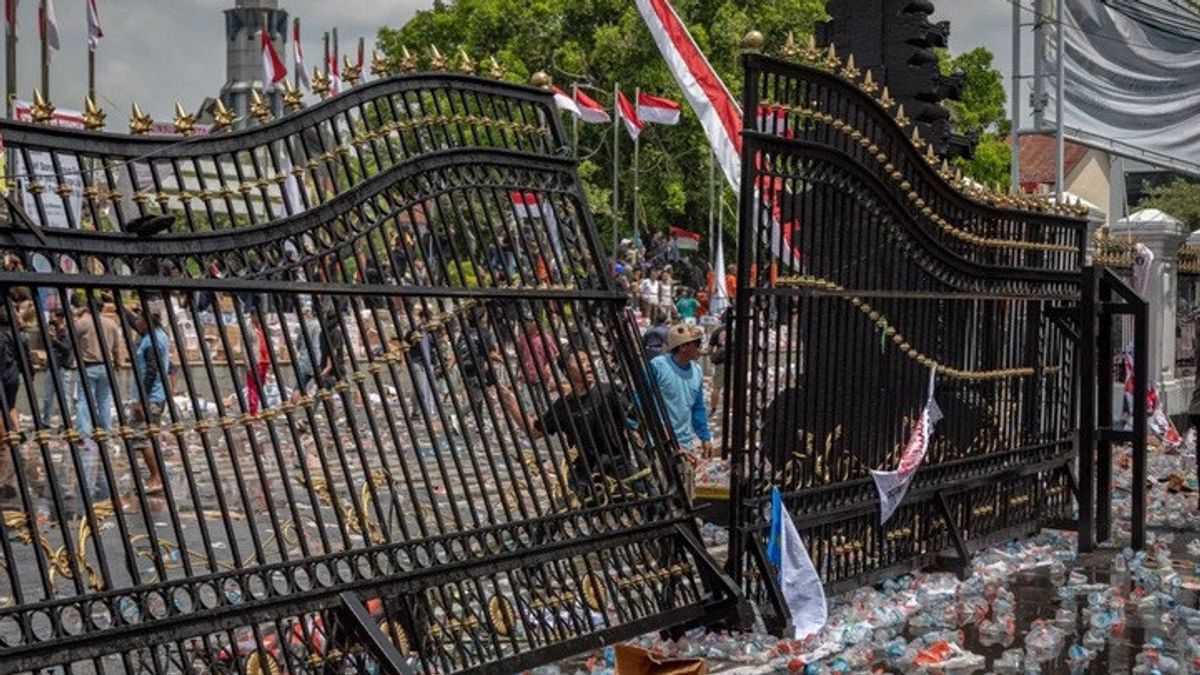
Thousands of Pati residents staged a large-scale demonstration in front of the Pati Regent's office on Wednesday (August 13, 2025). They demanded the resignation of Regent Sudewo following the 250 percent increase in Rural and Urban Land and Building Tax (PBB-P2), although the increase was ultimately rescinded.
Pati is not the only region to significantly increase its PBB. Cirebon City, Jombang Regency, Semarang Regency, and Bone Regency also witnessed demonstrations.
Several observers agree that the increase in PBB-P2 in several regions is due to the central government's budget efficiency policy. However, the central government has denied this.
Head of the Presidential Office, Hasan Nasbi, emphasized that the PBB-P2 increase policy is solely the responsibility of regional governments, not the result of the central government's budget efficiency program.

Double Efficiency Effect
However, CELIOS Executive Director Bhima Yudhistira disagreed with Hasan Nasbi's claim. He stated that the increase in PBB-P2 in several regions, including Pati, was clearly due to budget tightening implemented by the central government. This budget efficiency has actually resulted in local governments experiencing a double whammy.
The first impact is due to a reduction in Regional Transfer Funds (TKD). For information, Pati Regency was initially scheduled to receive IDR2.1 trillion in transfer funds (TKD), consisting of IDR49.3 billion in special allocation funds (DAK) and IDR9.8 billion in general allocation funds (DAU) for general development. However, the central government reduced the TKD allocation by IDR59 billion. For regions like Pati, the IDR59 billion reduction in TKD from the central government will be significantly impacted.
Second, the central government's recommendation to reduce unnecessary activities, such as meetings in hotels or restaurants, has actually led to a decrease in revenue from these two sources. According to Bhima, hotel and restaurant taxes are one of the largest sources of revenue for the region.
Unfortunately, amidst the budget tightening mandated by the central government, including reducing regional allowances (TKD), several ministries and institutions have instead proposed budget increases. These include the Indonesian National Police (Polri), which requested an additional budget of IDR 63.7 trillion; the Attorney General's Office (AGO), which requested an additional budget of IDR 18.5 trillion; and the Ministry of Communication and Digital (Kominfo), which requested an additional budget of IDR 12.6 trillion.
This, according to Bhima, indicates that the budget efficiency policy is blunt at the top but sharp at the bottom. "It's blunt at the top because many ministries are asking the government to unblock budgets, while there are still many restrictions at the bottom, such as on meetings and other matters," Bhima explained.
30 Regencies Follow in Pati's Footsteps
Unfortunately, the increase in PBB-P2 implemented by Pati, Cirebon, Bone, and several other regions is predicted to be imitated by other regions. Bhima even predicted that at least 30 regencies would follow Pati's lead in increasing PBB-P2 to boost regional revenue.
He said signs pointing to this possibility are already visible. These include delays in civil servant salary payments in several regions, and the failure of local governments to pay the rental fees for 72 vehicles, including the regent's official car, due to financial difficulties.
This also serves as a warning that there is a correlation between budget efficiency by the central government and regional tax allocations (TKD), which then forces regions to raise taxes.

Therefore, Bhima suggested that the central government evaluate budget efficiency. Flagship projects such as the Free Nutritious Meals (MBG) have so far failed to stimulate the regional economy, as previously promised.
According to Bhima, only seven percent of the IDR 71 trillion budget allocated for the initial MBG program has actually been spent on President Prabowo Subianto's flagship program. Rather than implementing the MBG program, the government's budget tightening is suspected of being used to finance maturing state debt payments.
For information, the debt maturing in June 2025 is IDR 178.9 trillion, out of this year's total debt of IDR 800.33 trillion. This year's total debt consists of IDR 705.5 trillion in Government Securities (SBN) and IDR 94.83 trillion in loans.
The English, Chinese, Japanese, Arabic, and French versions are automatically generated by the AI. So there may still be inaccuracies in translating, please always see Indonesian as our main language. (system supported by DigitalSiber.id)
Most Popular Tags
#Prabowo Subianto #donald trump #2026 World Cup #Febrie Adriansyah #8791Popular


