



JAKARTA - The controversy regarding the coded envelope that emerged in the hearing on the alleged bribery of the import of goods in the Directorate General of Customs and Excise (DJBC) must not lead to conclusions before all facts are tested. The construction of the case must be built carefully and can be proven by law enforcement officers, namely the Corruption Eradication Commission.
"Don't stop at 'black sheep'. If the allegations in this case are true and proven, then investigators should not be satisfied with only imprisoning mid-level officials or field witnesses who distribute envelopes that have been given special codes," said Lecturer of Criminal Law at Trisakti University, Azmi Syahputra to reporters quoted Saturday, May 30.
Azmi explained that in a major case such as the alleged corruption in the customs sector, the public must obtain information that is proportional between the initial narrative of the investigation and the facts that are actually revealed at the trial.
He assessed that the difference between the narratives that developed in the public space and the facts that emerged in the trial had the potential to cause confusion and reduce public confidence in the law enforcement process.
Moreover, in the last trial, there was information from the Blue Ray Cargo legal team that doubted whether the envelope with a certain code really reached the party mentioned in the list of recipients.
"In criminal law, it is regulated regarding the offense of participation to expand and attract criminal liability as well as being the best tool to unravel the network of organized corruption," explained Azmi.
Azmi further asked investigators not to hesitate to complete the case if they had difficulty proving the physical act of giving an envelope.
According to him, criminal law has a mechanism to trace the parties suspected of knowing, controlling, or enjoying the results of criminal acts. "So investigators don't need to hesitate or justify the difficulty of proving the physical act of giving an envelope," he said.
The mechanism in question is using the follow the money approach and the application of the money laundering crime (TPPU). This method can actually be used from the beginning to test the position of the perpetrators.
"In this case, is the position of subordinates conditioned to stand up as a 'black sheep'. Therefore, follow the money flow (Follow the Money) and use TPPU from the beginning of the investigation," he said.
The application of the money laundering article, continued Azmi, can be considered as a main tool to help dismantle the wider construction of alleged corruption. So, its use should not only be as an additional instrument at the end of the case.
"Don't make TPPU the final appendix, but make this a tool for dismantling."
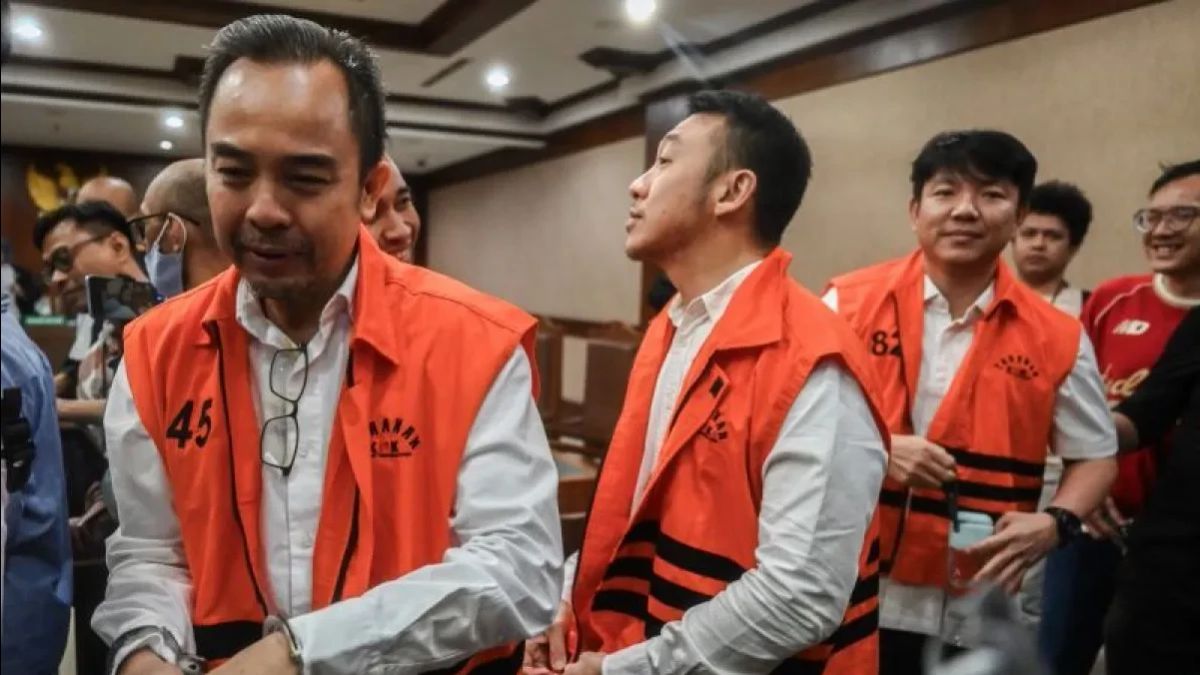
As previously reported, the case of alleged bribery of PT Blueray Cargo imports is currently still rolling at the Jakarta Corruption Court. PT Blueray Cargo's senior officials are accused of receiving and providing money and luxury facilities to officials at the Directorate General of Customs and Excise to facilitate the conditioning of the import route for goods.
This case is known to have started with a hand-in-hand operation (OTT) on February 4. Six people were then named as suspects, one of whom was the Director of Enforcement and Investigation of the Directorate General of Customs and Excise (P2 DJBC) for the period 2024-2026, Rizal.
Meanwhile, the other five suspects are Sisprian Subiaksono (SIS) as Head of the Sub Directorate of Intelligence, Enforcement and Investigation of the Directorate General of Customs and Excise (Kasubdit Intel P2 DJBC); Orlando Hamonangan (ORL) as Head of the Intelligence Section of the Directorate General of Customs and Excise (Kasi Intel DJBC); John Field (JF) as owner of PT Blueray (BR); Andri as Head of the Import Documents Team of PT BR; and Dedy Kurniawan as Operational Manager of PT BR.
The KPK suspects that this case began in October 2025 when Orlando Hamonangan and Sisprian Subiaksono together with John Field, Andri, and Dedy Kurniawan committed a conspiracy. They arranged the planning of the import route of goods that would enter Indonesia.
Furthermore, the KPK announced the Head of the Tax Intelligence Section for Enforcement and Investigation (P2) of the Directorate General of Customs (DJBC) Budiman Bayu Prasojo (BBP) as a new suspect in the case of alleged gratification related to the import of goods. The announcement was made after the arrest was made at the DJBC headquarters in East Jakarta on Thursday, February 26.
Budiman was arrested for allegedly receiving and managing money from entrepreneurs whose products were subject to taxes and importers since November 2024. As a result of his actions, he is suspected of violating Article 12 B of Law No. 31 of 1999 jo. UU No. 20 of 2001 jo. Article 20 letter c of Law Number 1 of 2023 concerning the Criminal Code (KUHP).
The English, Chinese, Japanese, Arabic, and French versions are automatically generated by the AI. So there may still be inaccuracies in translating, please always see Indonesian as our main language. (system supported by DigitalSiber.id)
Most Popular Tags
#Prabowo Subianto #donald trump #2026 World Cup #venezuela #konflik timur tengahPopular


