

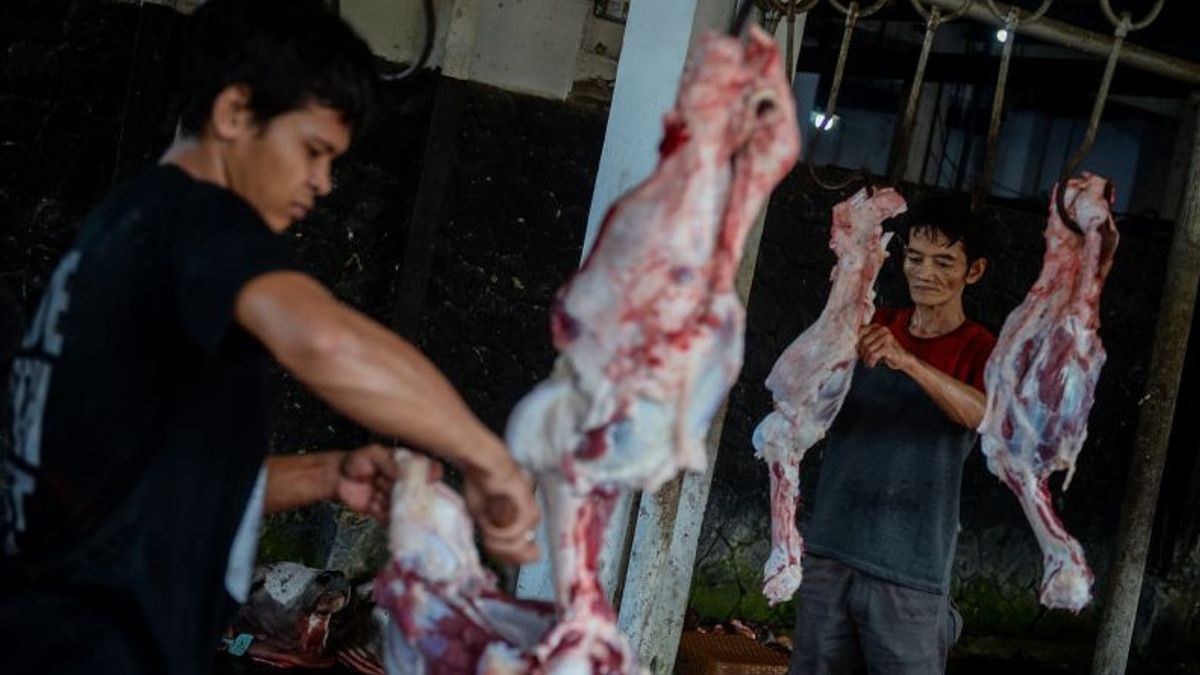


JAKARTA - Dermatologist dr. Arini Astasari Widodo, SM, Sp.DVE, FINSDV said that people who are tasked with slaughtering sacrificial animals and cutting the meat on Eid al-Adha should implement protection efforts to prevent skin problems and infection risks.
"Use protective equipment such as waterproof gloves or appropriate work gloves, boots, long-sleeved clothing, and avoid direct contact with blood and body fluids of animals with open skin," he said via a message service to Antara on Friday, May 22.
"If there is a small wound on the hand, it should be covered first with a waterproof plaster before working," added the University of Indonesia graduate.
He said that exposure to dirt, blood, or fluids from slaughtered animals can trigger skin irritation.
If you don't take care of the cleanliness of the skin when handling sacrificial animals, according to him, bacterial infections on the skin such as impetigo, cellulitis, folliculitis, and skin abscesses can occur.
"Although rare, there is also a risk of zoonosis or diseases transmitted from animals to humans, especially if there are open wounds on the skin and hygiene is not well maintained," he said.
According to dr. Arini, certain individuals are more prone to infection when they are active in a humid and less hygienic environment.
Therefore, he said, it is good for people who are in charge of slaughtering and handling sacrificial animals to get tetanus vaccination before carrying out their duties to increase protection.
He also advised people who are tasked with slaughtering and handling sacrificial animal meat to avoid touching the face, eyes, or mouth while working to minimize the risk of infection.
After the slaughter and cutting of sacrificial animals are completed, he advised officers to immediately wash their hands and clean the dirty parts of the body.
If you experience skin irritation due to exposure to blood or animal feces, he said, then you should immediately clean the affected area using running water and a mild soap for several minutes, then dry and apply moisturizer to the area to help calm the skin.
"If irritation of the dissertation appears in the form of redness, itching, or a fairly heavy pain, a mild anti-inflammatory cream can be given according to the doctor's advice," he said.
If you experience a knife wound, he continued, you should press the injured part with a clean gauze or cloth for several minutes to stop the bleeding, then clean the wound with running water and mild antiseptic if necessary and cover it with a sterile bandage.
If the wound is deep and the bleeding is difficult to stop or there are signs of infection such as swelling, pus, severe pain, or fever, Dr. Arinimeny menyampaikan, then the person concerned should immediately consult a health facility.
The English, Chinese, Japanese, Arabic, and French versions are automatically generated by the AI. So there may still be inaccuracies in translating, please always see Indonesian as our main language. (system supported by DigitalSiber.id)


