

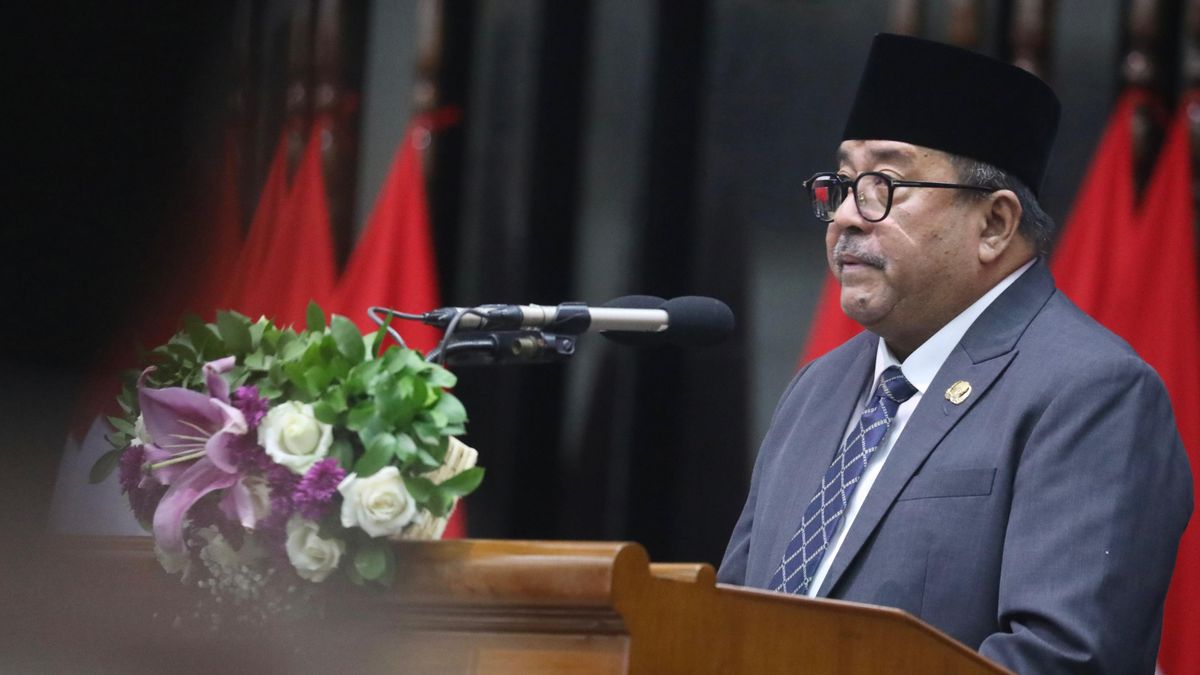


JAKARTA - The number of violence against women in DKI Jakarta has actually increased in recent years. This condition encourages the DKI Provincial Government to submit a Regional Regulation Draft (Ranperda) on the Implementation of Women's Protection to the DPRD.
Deputy Governor of DKI Jakarta Rano Karno explained that the trend of increasing cases was seen from various data, including the Survey of Women's Living Experience in the Region (SPHPD). The percentage of women aged 15-64 years who have experienced violence throughout their lives has increased from 18.91 percent to 19.24 percent.
Meanwhile, violence in the past year has also increased, from 3.78 percent to 4.15 percent. Protection service data also shows a spike in the number of victims from year to year.
In the last three years, the number of victims was recorded at 1,682 people in 2023, increasing to 2,041 people in 2024, and again rising to 2,269 people in 2025.
Rano assessed that this condition shows that protection for women is still not optimal, both in terms of prevention and handling of victims.
"The direction of regulation in this Ranperda includes prevention, victim protection, protection in special conditions, and provision of integrated services," said Rano in a plenary meeting at the DKI Jakarta DPRD building, Monday, May 4.
This regional regulation is expected to become a stronger legal umbrella to reduce the number of violence, as well as ensure that victims get easily accessible services and are on their side.
"Protection of women is an important prerequisite in realizing Jakarta as a global city that benefits all its citizens," said Rano.
Apart from the issue of violence against women, the DKI Provincial Government also submitted a Ranperda amendment to Regional Regulation Number 4 of 2009 concerning the Regional Health System. The old regulation is considered irrelevant to the dynamics of the current health sector.
"This change is important to adapt to Law Number 17 of 2023 concerning Health and its subsidiary regulations, so that there is no disharmony in regulations that have an impact on health services in Jakarta," he said.
According to Rano, Jakarta is facing increasingly complex health challenges, ranging from the increase in non-communicable diseases, high infectious diseases, to the threat of new outbreaks. Urban environmental conditions such as air pollution and population density also worsen the situation.
"Jakarta needs a more modern, integrated, responsive, and equitable regional health system to be able to respond to current challenges while anticipating future needs," he said.
He added that the update of the health system is also part of the human resource development strategy, as well as strengthening regional resilience in the face of health crises. Rano hopes that the two Ranperdas that he has submitted can be immediately discussed and approved by the DPRD to become regional regulations.
The English, Chinese, Japanese, Arabic, and French versions are automatically generated by the AI. So there may still be inaccuracies in translating, please always see Indonesian as our main language. (system supported by DigitalSiber.id)
Most Popular Tags
#Prabowo Subianto #donald trump #2026 World Cup #Febrie Adriansyah #8791Popular


