

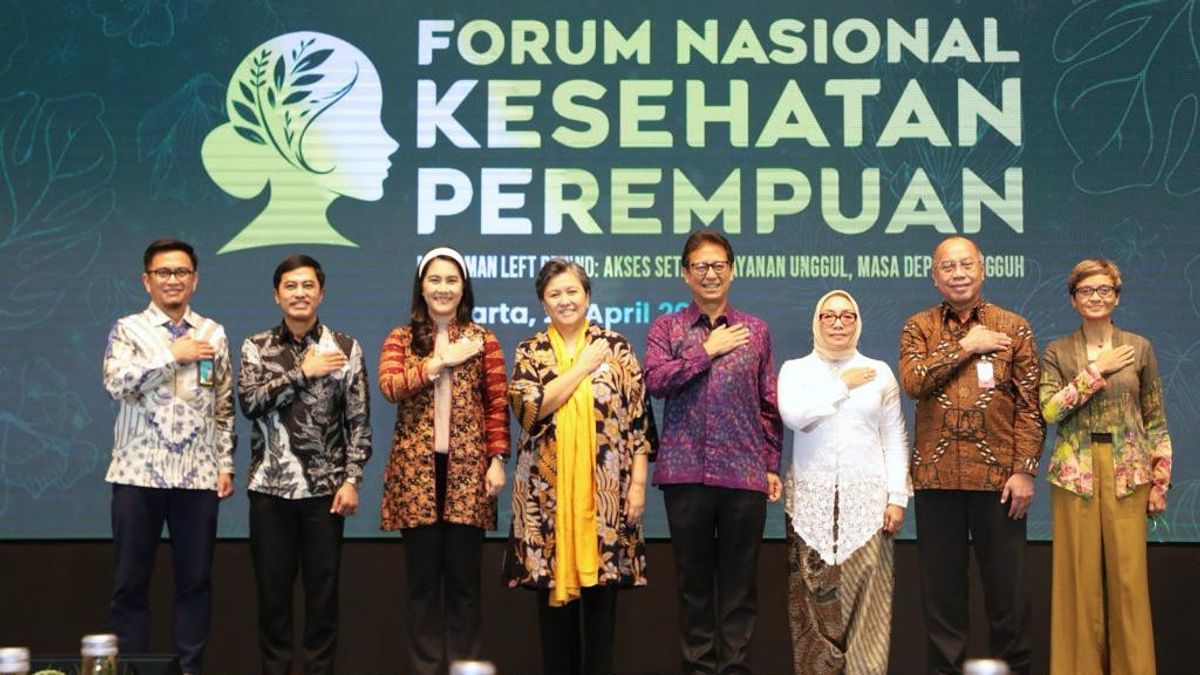


JAKARTA - The Ministry of Population and Family Development (Kemendukbangga/BKKBN) has reaffirmed its commitment to strengthening the quality of human resources through women's health. This is in line with the 4th Asta Cita mission of the President of the Republic of Indonesia which focuses on gender equality and women's empowerment.
The statement was delivered by the Deputy Minister for Population and Family Development, Ratu Ayu Isyana Bagoes Oka, at the 2026 Indonesian Women's National Forum with the theme "No Woman Left Behind: Equal Access, Superior Services, Resilient Future" in Jakarta, Wednesday (29/04/2026).
"Women who are physically and mentally healthy will give birth to a generation of quality. If women are healthy, families will be strong. And when families are strong, Indonesia will advance," said Deputy Minister Isyana.
Reducing Maternal Mortality (AKI) Through KBPP
One of the major challenges faced is the Maternal Mortality Rate (MMR). Based on the 2020 Long Form Population Census Data, MMR in Indonesia is still at 189. To reduce this figure, the government prioritizes Postpartum Family Planning (KBPP) services.
KBPP services provided up to 42 days after childbirth are aimed at:
Arrange the ideal birth spacing. Plan a safe pregnancy. Prevent 4T pregnancy (Too Young, Too Old, Too Close, and Too Much). Reduce Infant Mortality Rate (AKB).Life Cycle Strategy: From Content to the Elderly
The Ministry of Finance/BKKBN implements a life-cycle-based approach to ensure women's health protection at every stage of life:
Pregnant & Breastfeeding Mothers: Free Nutritional Meal Program (MBG 3B). Toddler Phase: Strengthening through Toddler Family Development (BKB) and Taman Asuh Sayang Anak (TAMASYA). Adolescent Phase: Education through Generation Planning (GenRe) and Adolescent Family Development (BKR). Elderly Phase: Elderly School to maintain independence and quality of life.The Minister of Health, Budi Gunadi Sadikin, who was also present at the forum, invited all parties to carry out a collective movement that starts from the household. By involving about 74 million women in the family, it is hoped that the national health status can be significantly improved.
The English, Chinese, Japanese, Arabic, and French versions are automatically generated by the AI. So there may still be inaccuracies in translating, please always see Indonesian as our main language. (system supported by DigitalSiber.id)


