



JAKARTA - The Japanese government announced a revision to the regulations on the export of defense equipment, to open up opportunities to sell weapons abroad to increase security cooperation with partner countries.
The policy has been approved by the Cabinet and the National Security Council under the government of Japanese Prime Minister (PM) Sanae Takaichi as an effort to strengthen the defense industry amid increasing security challenges.
According to the Japanese government, the security situation in the Sakura State is currently the most serious since the end of World War II.
The revision to the three principles on the transfer of defense equipment and technology and its implementation guidelines removes the previous regulation which limits exports to only five non-combat categories, namely rescue, transportation, warning, surveillance, and mine clearance.
Although the new regulation in principle prohibits the export of weapons to countries in conflict, the revision allows for exceptions under special conditions by taking into account Japan's security needs and the United States' military operations in the Indo-Pacific region.
In the new policy, defense equipment will be divided into weapon and non-weapon categories based on the lethal capability of the equipment.
Exports of non-weapon defense equipment, such as warning radars and control systems, are not restricted; while the export of weapons, such as destroyers and missiles, is only allowed to countries with an agreement on the protection of confidential information with Japan.
The change in regulations, which state that parliament will only be informed of arms exports after obtaining government approval, is likely to draw criticism from opposition parties.
They argue that parliament must give its approval first to avoid Japan's involvement in aggravating the conflict or triggering an arms race.
The National Security Council will examine and decide whether to approve arms exports; while the next-generation fighter jet, which is being developed jointly with Britain and Italy, will be an exception requiring Cabinet approval.
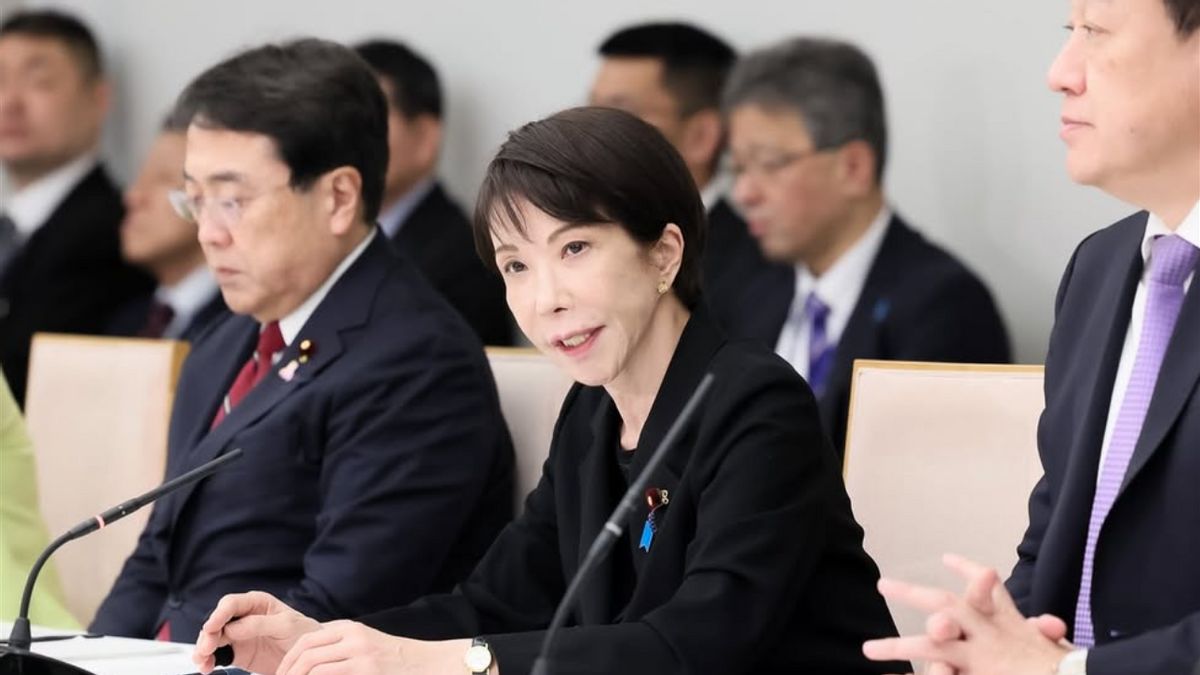
The decision was made after a meeting of the National Security Council, which was attended by a number of high-ranking officials, including Prime Minister Takaichi, Chief Cabinet Secretary Minoru Kihara, Foreign Minister Toshimitsu Motegi, and Defense Minister Shinjiro Koizumi.
The English, Chinese, Japanese, Arabic, and French versions are automatically generated by the AI. So there may still be inaccuracies in translating, please always see Indonesian as our main language. (system supported by DigitalSiber.id)
Popular


