

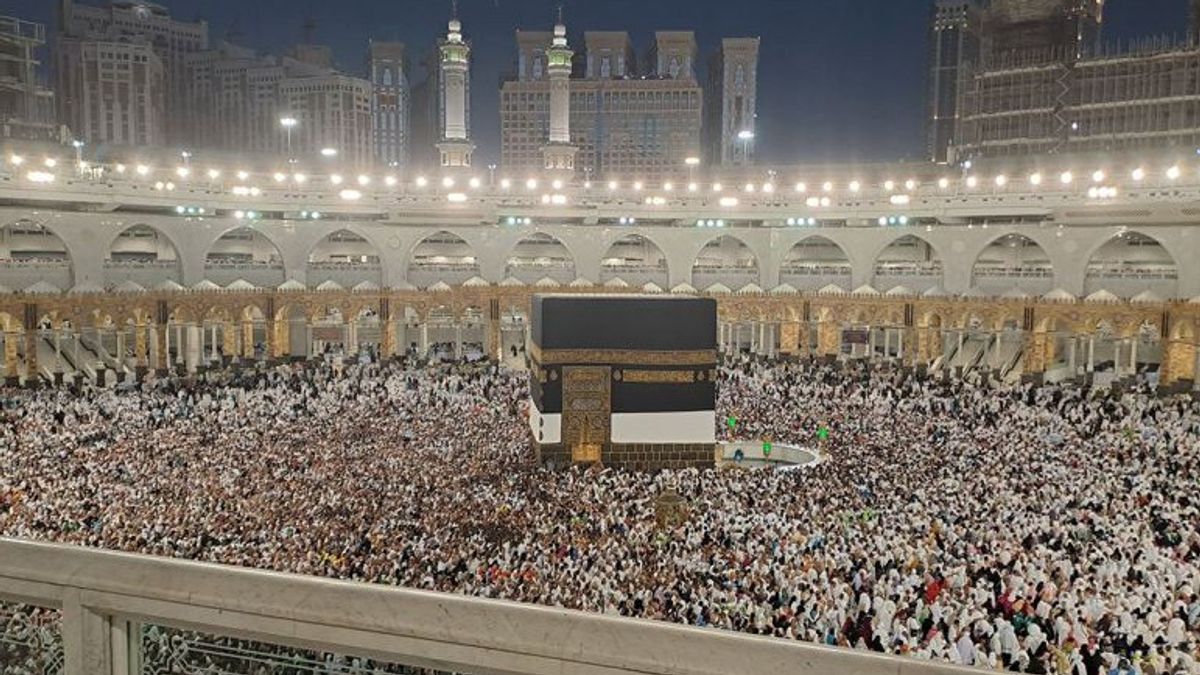


JAKARTA - Deputy Minister of Hajj and Umrah (Wamenhaj) Dahnil Anzar Simanjuntak explained the mechanism of the war ticket scheme in the implementation of the hajj, although it is currently still in the study phase or merely a discourse.
Wamenhaj Dahnil explained that the scheme is projected to run alongside the existing hajj queue mechanism.
"In the future, if Saudi Arabia opens its quota in large quantities, we will open two schemes. The first is the queue scheme that already exists. The second scheme is the scheme that the Minister (Irfan Yusuf) uses the term is a war ticket," said Wamenhaj Dahnil as reported by ANTARA, Friday, April 10.
Wamenhaj Dahnil said the term war ticketini emerged as a formula for the transformation of hajj so that the government could shorten the waiting period for hajj, which is currently an average of 26.4 years.
He explained that the government together with the DPR RI will later determine the amount of the Hajj Service Fee (BPIH) based on real calculations without subsidies from the Hajj financial management fund.
"For example, it is set at Rp200 million per person, so it becomes the full cost paid by the pilgrims who choose this scheme (war ticket)," said WamenhajDahnil.
As for pilgrims who choose the queue line, he said, they will still receive subsidies or benefits. He emphasized that the determination of prices is within the authority of the state, so that there is no liberalization or free market mechanism in the implementation of the hajj.
According to him, the quota used in the ticket scheme can come from two sources. First, from the additional quota given by the Saudi Arabian Government, not from the regular quota given by Saudi Arabia every year.
Second, based on the Saudi Vision 2030 project. The royal authority targets an increase in the world's hajj quota from around two million to more than five million people by 2030.
The increase in the quota is considered to have a major impact on the need for Hajj financing. At this time, with around 203 thousand regular Hajj candidates, the total funds for the implementation of Hajj reached Rp. 18.2 trillion.
If the number of prospective Hajj participants increases to 500 thousand people, then the need for funds is estimated to exceed Rp. 40 trillion.
"The amount of that is likely not to be fully supported by the current Hajj finances (managed by BPKH)," said Deputy Minister of Hajj Dahnil.
In order to ease the burden of financing, the ticketini is one of the options, in addition to the hope that it can shorten the haj queue in Indonesia.
Furthermore, the additional quota will be managed through a system designed to be transparent and accountable which was built by the Ministry of Manpower.
Jamaah who meet the conditions of istitaah, both financially, physically, and mentally, can directly take the quota without having to wait in long lines.
Unlike regular hajj, he said, this scheme does not use subsidies from the value of the benefits of the haj management fund. All costs are borne directly by the pilgrims in accordance with the actual value of the implementation or haj costs set by the government.
"All are paid in full by the pilgrims, without any benefit value as in the regular scheme," said WamenhajDahnil.
On the other hand, regular pilgrims who have been put on the waiting list can also take the war ticket scheme, but later they will also have to pay the ril Hajj fee without subsidy from the value of the benefits managed by the Hajj Finance Management Agency (BPKH).
The English, Chinese, Japanese, Arabic, and French versions are automatically generated by the AI. So there may still be inaccuracies in translating, please always see Indonesian as our main language. (system supported by DigitalSiber.id)
Most Popular Tags
#Prabowo Subianto #donald trump #2026 World Cup #venezuela #konflik timur tengahPopular


