



JAKARTA - The increase in jet fuel prices has begun to put pressure on flight costs. However, the government ensures that the burden will not fall on the pilgrims. Additional costs due to the surge in jet fuel were decided to be borne by the state through the state budget.
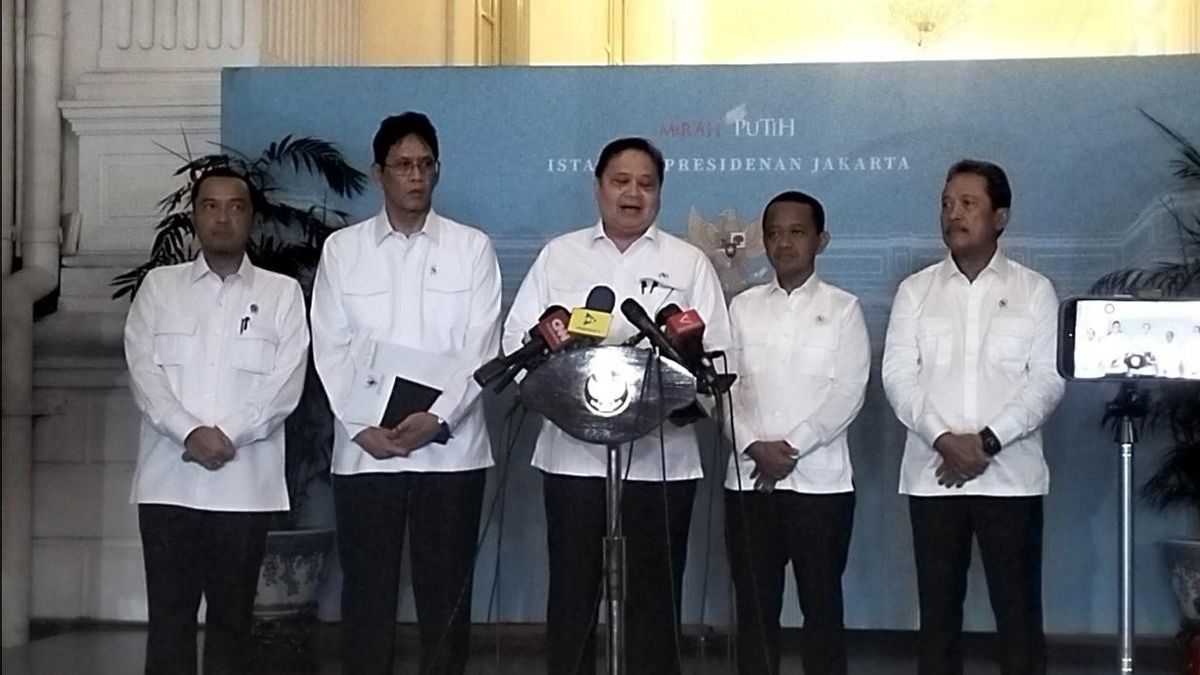
Coordinating Minister for the Economy Airlangga Hartarto said that the cost of the hajj would not increase, even the reduction of the cost of the hajj by Rp2 million per pilgrim would still apply. The increase in costs due to avtur, he said, was absorbed by the government for 220,000 pilgrims with a budget of around Rp1.77 trillion.
"There is no increase in the cost of the hajj and this is absorbed for 220,000 pilgrims," Airlangga told reporters at the Presidential Palace complex in Jakarta, Wednesday, April 8.
Airlangga explained that the adjustment of the price of jet fuel that has been followed by the VAT policy is borne by the government, making the increase in general flight tickets in the range of 9 to 13 percent. But for the implementation of the hajj, the government chose to hold the impact in the state budget.
In the working meeting attended by ministers, deputy ministers, officials at the I echelon, and directors of SOEs, Airlangga also explained the condition of the national economy which was said to be still maintained. He said Indonesia's economic growth in the fourth quarter reached 5.39 percent, the second highest among G20 countries after India.
In the midst of the development of the Middle East conflict and the opportunity for a two-week pause, world oil prices have also started to move down. Airlangga noted that WTI prices were at 96.7 and Brent 95.23. Palm oil prices also fell slightly, although they still remained at 1,192.
The government also assesses that food security remains strong. Rice production in 2025 is said to reach 34.7, while Bulog stocks are at 4.6 million tons. In terms of energy, the government ensures that the B50 policy is in effect starting July 1 and is claimed to save up to Rp. 158 trillion.
Airlangga added, the President asked that the debt ratio be maintained at 40 percent and the budget deficit remain at 3 percent until the end of the year. So, when energy prices fluctuate, the government wants the cost of the hajj not to go up.
The English, Chinese, Japanese, Arabic, and French versions are automatically generated by the AI. So there may still be inaccuracies in translating, please always see Indonesian as our main language. (system supported by DigitalSiber.id)


