

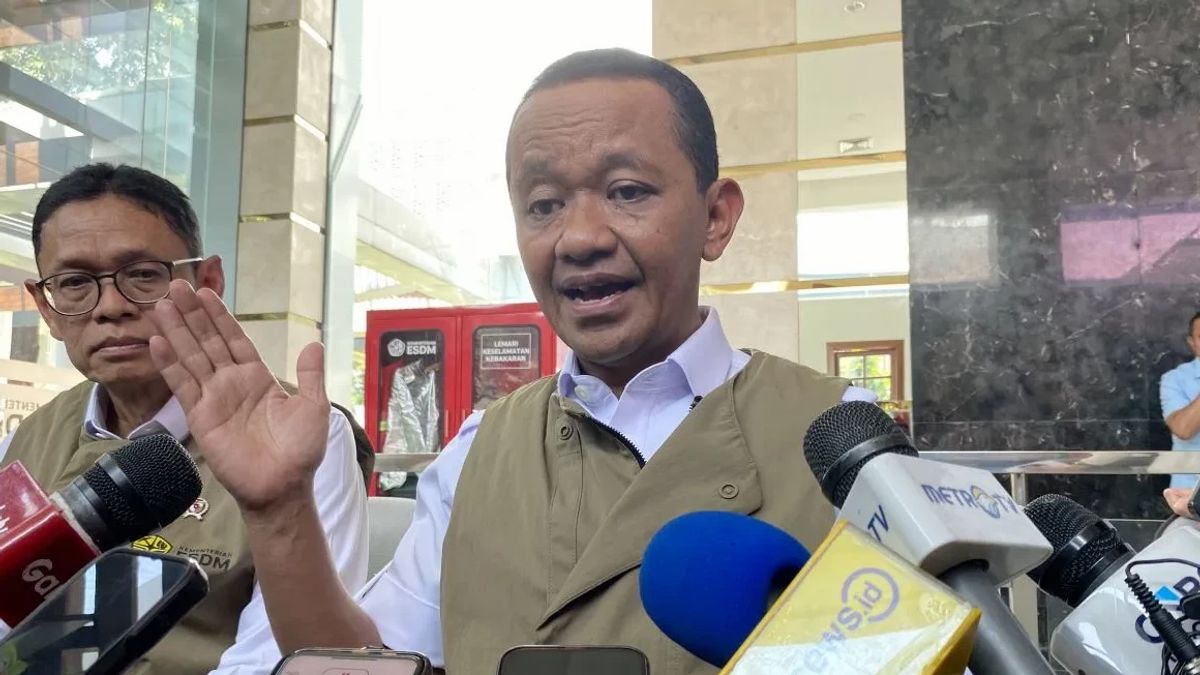


JAKARTA - The economist of the State University of Surabaya (UNESA) Hendry Cahyono appreciates the energy diplomacy of the Minister of Energy and Mineral Resources (ESDM) Bahlil Lahadalia regarding cooperation between Indonesia and Japan in the energy and critical mineral sectors. He assessed that this is a strategic step in encouraging a green energy transition while strengthening national energy resilience.
The collaboration includes the development of nuclear energy, LNG exports, to Waste Power Plant (PLTSa). Hendry assessed that this agreement is a positive signal that Indonesia is increasingly serious in developing clean energy based on advanced technology.
"From a technical and economic perspective, Indonesia actually has plans to develop nuclear power plants since the 1960s. This MoU shows that there is a step forward, although the road to its realization is still long," said Hendry when contacted by reporters, Tuesday, March 17, 2026.
This cooperation is contained in a Memorandum of Cooperation (MoC) signed by Minister of Energy and Mineral Resources Bahlil Lahadalia together with the Minister of Economy, Trade and Industry of Japan Ryosei Akazawa.
According to him, cooperation with Japan provides a great opportunity for Indonesia to accelerate the mastery of new energy technologies, including nuclear which has been hampered by investment costs and technology transfer. Hendry emphasized that the potential benefits of this cooperation are also very large if associated with the wealth of Indonesia's abundant mineral resources, especially to support a clean energy ecosystem.
"Indonesia has about 43 percent of the world's nickel reserves, as well as bauxite, tin, copper, and rare earth metal reserves. This is a strong capital for the downstream and development of the green energy industry," he said.
He added that this cooperation is not only about energy supply, but also has the potential to create a layered economic impact for Indonesia. Starting from increasing production efficiency to creating jobs.
"It is hoped that there will be a multiplier effect for national production efficiency, increased income, and labor absorption," said Hendry.
Furthermore, Hendry said that in the midst of uncertain global geopolitical situations, Indonesia's move to strengthen energy cooperation was considered a right and visionary decision.
"This step is a rational response to geopolitical disruption. Indonesia's current position is actually in a very good window of opportunity," he said.
However, Hendry reminded the importance of ensuring that the implementation of cooperation runs optimally, especially in the aspect of technology transfer so that Indonesia does not only become a market. Although Indonesia is relatively behind compared to developed countries in the development of nuclear energy, Hendry said that this condition actually has its own advantages.
"Indonesia can learn from the experiences of other countries, including from the Fukushima case, so that it can immediately adopt safer technology without repeating past mistakes," he concluded.
Previously, the signing of this energy MoU was carried out by Bahlil and Akazawa in a bilateral meeting which took place on the sidelines of the Indo Pacific Energy Security Ministerial and Business Forum in Tokyo, Japan, Sunday, March 15.
Cooperation in the field of nuclear energy is focused on technology development while prioritizing high safety standards. Through this cooperation, Indonesia has the opportunity to utilize Japanese experience and technology to develop low-carbon energy.
The English, Chinese, Japanese, Arabic, and French versions are automatically generated by the AI. So there may still be inaccuracies in translating, please always see Indonesian as our main language. (system supported by DigitalSiber.id)


