
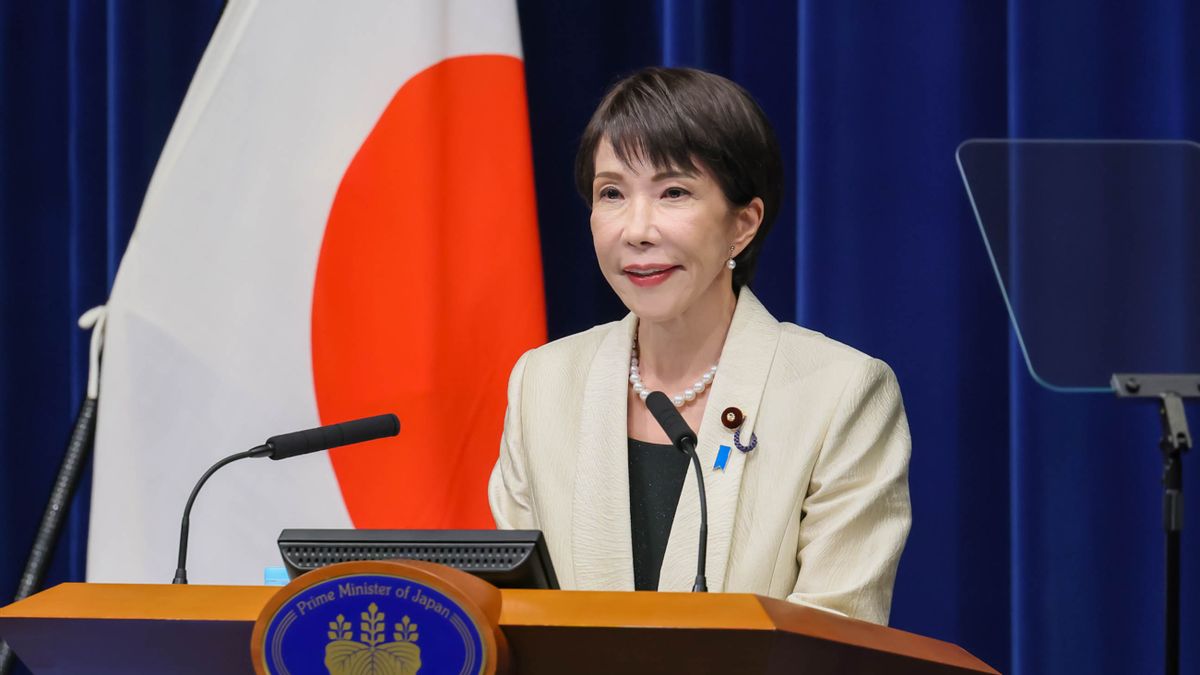


Japanese Prime Minister Sanae Takaichi said on Monday it was "difficult to answer" about sending Japanese warships to the Strait of Hormuz, noting that Tokyo had not received a request from the United States in this regard.
"Currently we are considering what we can do to protect ships related to Japan and the lives of their crew within the scope of Japanese law," PM Takaichi told Parliament, launching Anadolu (16/3).
Previously, US President Donald Trump called on countries, including Japan, to deploy their warships along with US naval forces to help secure the strategic waterway.
The Strait of Hormuz has been the center of attention for the energy market, since the Iranian Revolutionary Guard Corps (IRGC) announced its closure to most ships amid the US-Israeli attack on Iran that began on February 28.
Before the war, about 20 million barrels of oil passed through the strait every day. The disruption has led to higher oil prices.
The US-Israeli attacks on Iran have so far killed about 1,300 people, including former Supreme Leader Ayatollah Ali Khamenei.
Iran has retaliated with drone and missile attacks targeting Israel, Jordan, Iraq and Gulf states hosting US military assets.
Tehran has also effectively tightened the Strait of Hormuz since March 1. This narrow waterway transports around 20 million barrels of oil per day and about 20 percent of global liquefied natural gas trade.
Most recently, the new Supreme Leader of Iran, Mojtaba Khamenei, in a statement read by a presenter on state television on Thursday said Iranian forces must keep the strategic Strait of Hormuz closed, as quoted by Al Arabiya and AFP.
The English, Chinese, Japanese, Arabic, and French versions are automatically generated by the AI. So there may still be inaccuracies in translating, please always see Indonesian as our main language. (system supported by DigitalSiber.id)


