
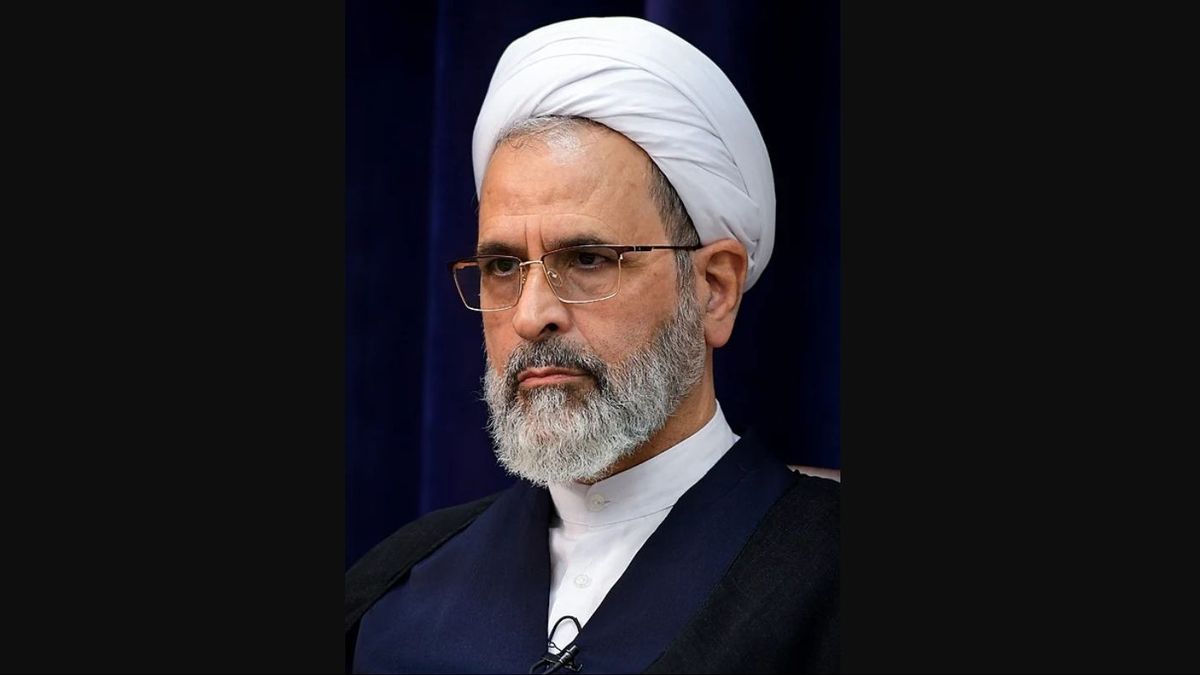


YOGYAKARTA - The profile of Ayatollah Alireza Arafi suddenly became a concern after the shocking news came from Tehran. He was said to have just been appointed as the interim leader before he was reported to have died in a new wave of attacks.
The news was made by General Mike Flynn, as reported by the Indian Times website. If this news is true, it means that Arafi's death is only a few hours after his appointment was announced.
Alireza's leadership was a short chapter. Based on reports circulating, the appointment was made after the death of Ali Khamenei on February 28.
Profile of Ayatollah Alireza ArafiDilansir VOI dari laman Palestine Chronicle, berikut ini beberapa hal menarik mengenai Ayatollah Alireza Arafi:
Background and EducationSheikh Alireza Arafi was born in 1959 in Meybod, Yazd Province. He grew up in a family of scholars who had a strong network in Iran's religious circles.
His father, Mohammad Ibrahim Arafi, was known as a preacher and scholar who had close ties to the revolutionary network around Ruhollah Khomeini.
Since he was young, Arafi moved to Qom to study religious sciences. This city is not just a center of Islamic studies. Qom is the ideological heart of the Islamic Republic of Iran.
There, Arafi studied advanced fiqh, philosophy, and religious sciences. He then reached the degree of mujtahid, a title that indicates high authority in interpreting Islamic law.
It is worth noting that not all scholars reach this level. And not all have an institutional track as strong as his.
Early Career and Role as Friday Prayer ImamArafi's public career strengthened in the 1990s when he was appointed as a Friday prayer imam in his hometown. This position is not just symbolic.
The Friday prayer imam is often chosen from a figure who is fully trusted by the national leadership.
In 2015, Arafi was entrusted to be the imam for Friday prayers in Qom. This position is much more strategic. Friday sermons in Qom have national, even international resonance. He is not only an orator but also an administrator.
Read also the article discussing the History of Iran Turns Out It's Not That Simple, Here's the Facts You Need to Know
Strategic Role in Education and Religious StructureArafi long led Al-Mustafa International University, an institution that educates foreign students in Shiite studies and expands Iran's intellectual influence to various countries.
His role did not stop there. In 2016, Arafi was appointed head of Iran's national hauzah network. This means that he oversees the religious education system throughout the country.
Arafi's Important PositionIn the constitutional structure, he also sits as a legal member of the Guardian Council, an institution that selects election candidates and reviews laws to be in line with sharia and the constitution.
In 2022, Arafi was elected as a member of the Assembly of Experts. This institution has the authority to appoint or dismiss the Supreme Leader.
Then in 2024, Arafinaik became the Second Vice Chairman of the assembly. An increase that shows institutional confidence.
Appointment as Interim LeaderAfter the death of Ali Khamenei, Iran activated Article 111 of the constitution. A temporary leadership council was formed, consisting of the president, the chief of justice, and a jurist chosen by the Council of Guardians.
The appointment reflects continuity, not drastic change. He is known not to be a populist figure or an open political maneuver. He is a representation of the establishment of ulama, namely calm, institutional, and structured.
However, the latest report says he was targeted in a follow-up attack in Tehran just hours after taking office. If the news is true, then his leadership record will be the shortest in the history of the Islamic Republic.
The Figure of Continuity in the Iranian Ulama SystemLooking at Ayatollah Alireza Arafi's profile in full, it is clear that his strength lies in structure, not rhetoric. He is shaped by institutions. Raised by the system. And trusted by the hierarchy.
In Iranian politics, continuity is often more valuable than popularity. Arafi is a symbol of that continuity.
Getting to know the profile of Ayatollah Alireza Arafi, then shows how power in Iran rests on the established ulama structure. Although his leadership was short-lived, his institutional influence remains an important part of the dynamics of the Islamic Republic.
The English, Chinese, Japanese, Arabic, and French versions are automatically generated by the AI. So there may still be inaccuracies in translating, please always see Indonesian as our main language. (system supported by DigitalSiber.id)
Most Popular Tags
#Prabowo Subianto #donald trump #Febrie Adriansyah #8791 #giias 2026Popular


