

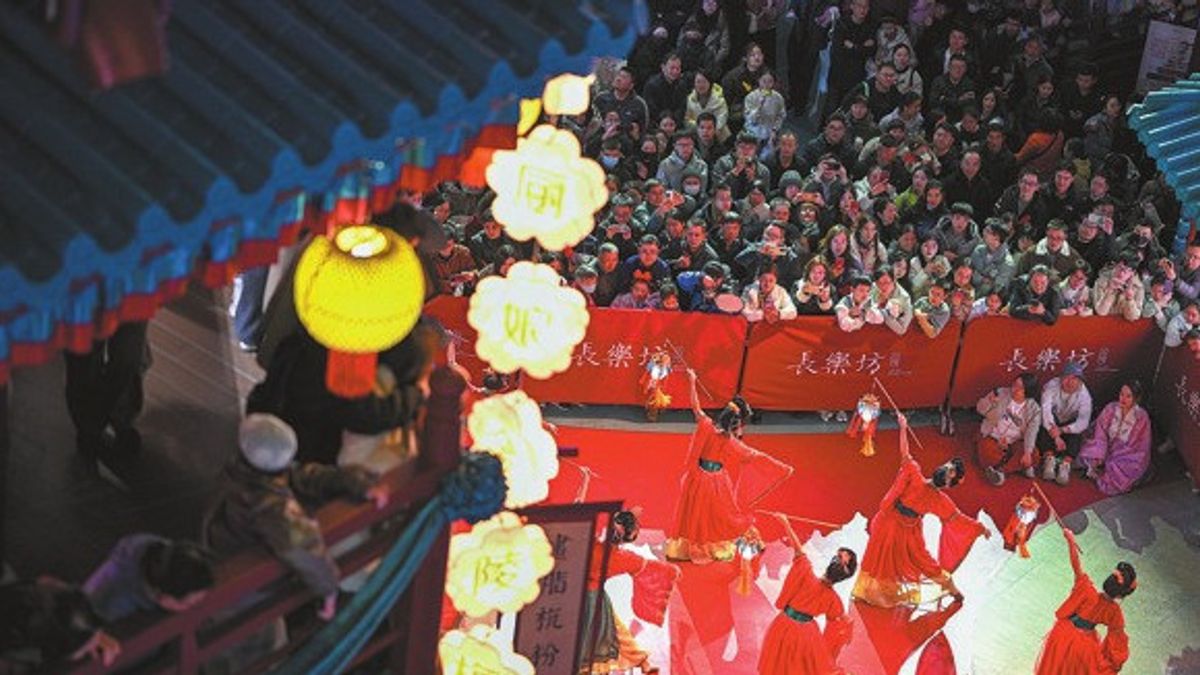


JAKARTA - Long holidays are often synonymous with full hotels, crowded restaurants, and crowded shopping centers. But the consumption data of the 2026 Spring Festival (Chinese New Year) in China has an interesting thing. It turns out, museums and art can also "harvest". Not just as a tourist background, but actually a destination.
The lifestyle service unit of the short video platform Douyin, as quoted by China Daily, Thursday, February 9, released data on consumption of the 2026 Spring Festival for the period of February 14-22. One of the prominent trends is the "intangible cultural heritage" experience. Group purchase sales for services that combine cultural heritage and local markets jumped 764 percent compared to last year. Cultural performances even soared faster. Group purchases for lantern parades and waist drum performances jumped around 1,500 percent. Folk performances such as iron fireworks, dragon dance, and Sichuan opera also rose - up to 87 percent, 49 percent, and 46 percent, respectively.
The increase is seen in places that sell experiences, not just goods. The Longfusi commercial area in Beijing - which displays local cultural works, snacks, and performances - recorded 850,000 visitors from February 15-23. Sales exceeded 10 million yuan, or around Rp. 24.61 billion based on the BI Selling exchange rate.
Most striking, still referring to the same source, museums are also a holiday magnet. The report said that art museums are increasingly chosen as destinations. The Shandong Art Museum, for example, held an exhibition "Qi Baishi and his disciples from Shandong" which combined Qi Baishi's iconic works with the theme of the Year of the Horse. The effect was immediate. Sales of horse-themed cultural-creative products increased, with revenue of nearly 380,000 yuan, or around Rp935.07 million. Products inspired by Qi Baishi's cultural elements became the most popular - almost 150,000 yuan, or around Rp369.11 million.
Outside of art, consumption is also on the rise. Family dinner packages are up 61 percent and jumped 245 percent on Chinese New Year's Eve; group purchases of hotels and homestays grew 94 percent and 88 percent; foot massage, spa, and supermarket shopping coupons rose by more than 60 percent. The sports trend is also strong. Badminton is 132 percent, swimming is 89 percent, and tennis court rentals are 71 percent. Major cities such as Shanghai, Zhengzhou, Beijing, and Chengdu dominate shopping.
If read from an Indonesian perspective, this can be one lesson that museums, arts and culture have a great opportunity to be maximized and generate economic impact if managed well.
The English, Chinese, Japanese, Arabic, and French versions are automatically generated by the AI. So there may still be inaccuracies in translating, please always see Indonesian as our main language. (system supported by DigitalSiber.id)


