

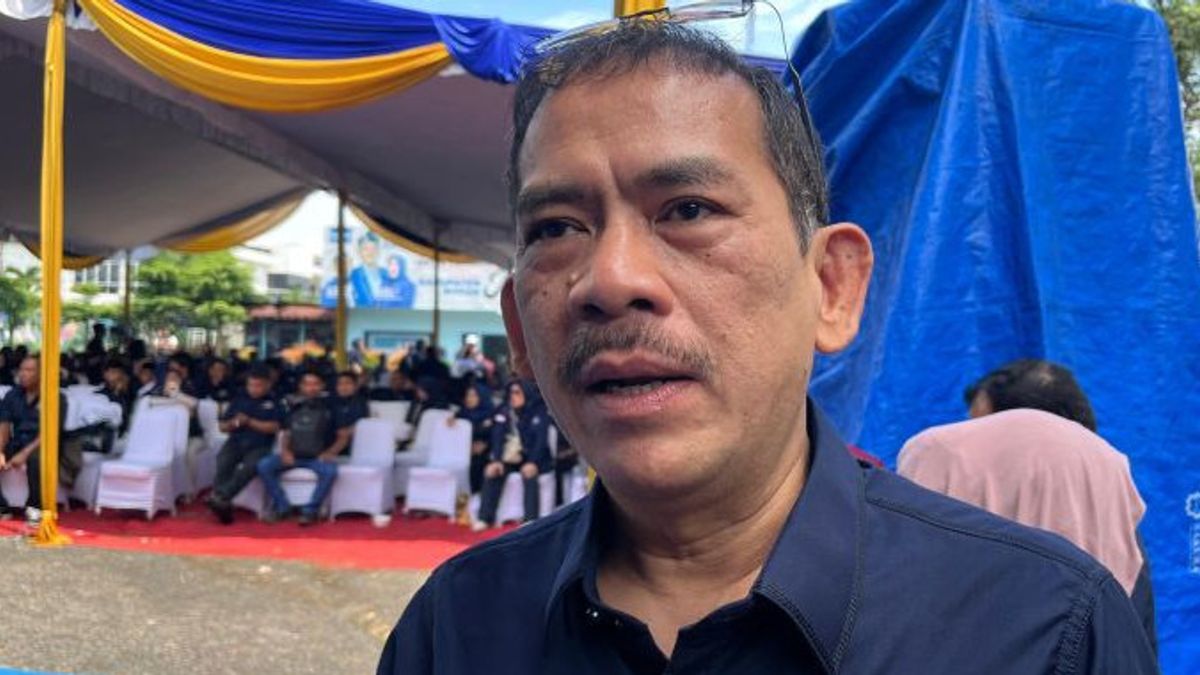


BOGOR - Member of Commission VI of the Nasdem Party Faction of the Indonesian House of Representatives, Asep Wahyuwijaya, assessed that streamlining and arranging State-Owned Enterprises (BUMN) have the potential to create efficiency of up to Rp. 50 trillion per year without terminating employment (PHK) of workers.
Asep, who was met in Bogor, West Java, on Sunday, said that this efficiency could be achieved through streamlining or reducing the number of SOEs as well as refining business clusters to match their respective core businesses.
He explained that currently the number of SOEs and their subsidiaries reaches more than 1,000 entities, although ideally the number can be reduced to around 200 to a maximum of 300 companies.
According to Asep, the swelling of the number of SOEs over decades has caused significant losses, both directly and indirectly, which are estimated to reach Rp. 50 trillion per year.
"Direct losses for operations are around Rp. 20 trillion and indirect losses are around Rp. 30 trillion. This is because many SOEs are out of their core business," said the legislator from the West Java V (Bogor Regency) electoral district as reported by Antara.
He gave an example of state-owned enterprises (BUMN) still entering sectors that should be business space for MSMEs and the private sector, thus triggering inefficiency and distortion of competition.
However, Asep emphasized that the downsizing policy would not be accompanied by layoffs. The government, he said, would still pay workers with a budget requirement of around Rp. 2 trillion per year.
"There is no layoff. Employees are still paid and still working, but the company is being cleaned up," he said.
Asep said that if streamlining and arranging business clusters are carried out consistently, the country has the potential to save at least Rp40-50 trillion per year even before expanding new businesses or investments.
He added that SOEs' efficiency was important to strengthen the contribution of state-owned enterprises to the state's finances amid high budget deficits.
In addition to streamlining the structure, Asep also emphasized strengthening governance through the application of meritocracy, strict supervision, and audit of financial statements by public accounting firms.
"Window dressing practices and unhealthy management must be stopped. This is part of efforts to save people's money," he said.
Asep said the policy of arranging SOEs was in line with the President's direction which emphasized the importance of cross-ministerial collaboration to clean up and maximize the performance of SOEs professionally.
He hopes that the process of streamlining SOEs can be completed in the near future so that the benefits of its efficiency can be immediately felt by the state and the community.
The English, Chinese, Japanese, Arabic, and French versions are automatically generated by the AI. So there may still be inaccuracies in translating, please always see Indonesian as our main language. (system supported by DigitalSiber.id)
Most Popular Tags
#Prabowo Subianto #donald trump #firearm #8791 #giias 2026Popular


