

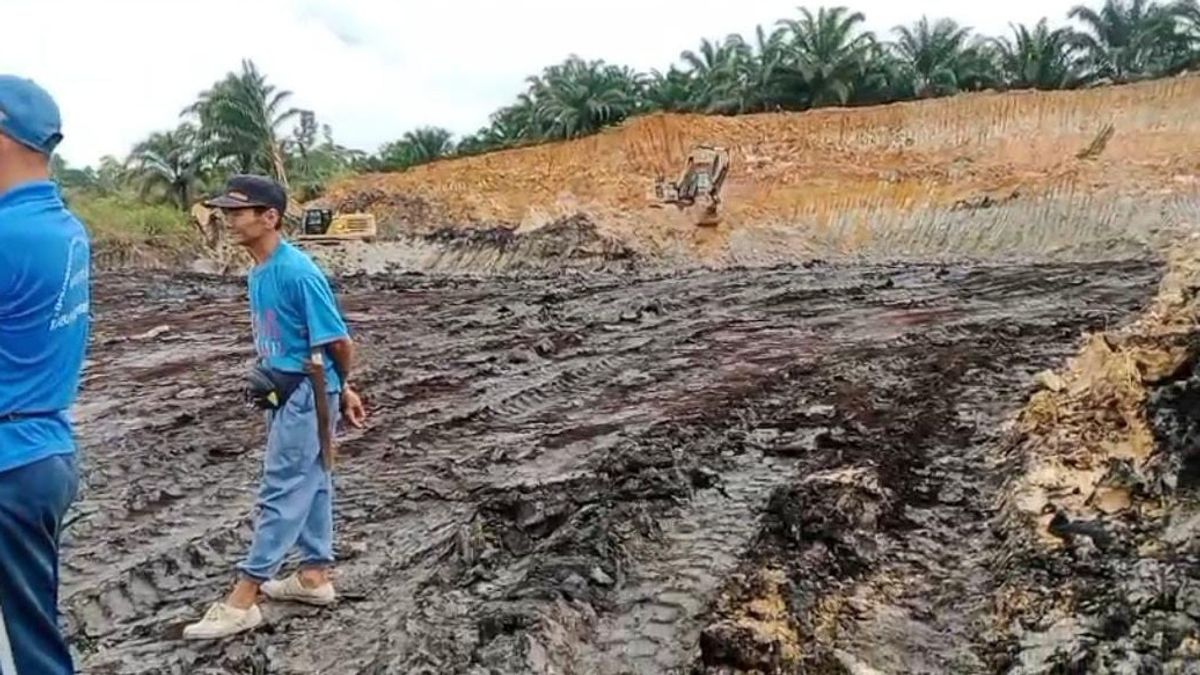


BULUNGAN - Mining activities at Km 4 Tengkapak Village, Tanjung Selor District, Bulungan Regency, North Kalimantan (Kaltara) triggered tension after hundreds of productive oil palm trees in the plasma land were cut down.
The area of about 20 hectares (ha) is part of a 400 ha expanse managed by the Bangen Tawai Cooperative since 2015.
Ironically, the oil palm plantation, which is the mainstay of the economy of hundreds of local residents from the villages of Jelarai, Tengkapak and Teras, is now flat with the ground due to the felling of oil palm carried out by the coal mining company owned by PT Benamakmur Selaras Sejahtera (BSS).
The deputy chairman of the Bulungan DPRD, Tasa Gung, emphasized that this protest from the residents was due to the lack of understanding with the residents of the plasma land owners and the clarity of the status of the land that was mined.
"We ask that this mining activity be temporarily stopped to prevent the escalation of social conflicts," Tasa Gung said when confirmed on Thursday, January 29.
"The potential for this conflict is already visible, so it must be stopped until there is clarity on the status of the land and a mutually agreed solution," he continued.
He explained that in the Bulungan DPRD Hearing (RDP) meeting with the community and the Borneo Raya Workers' Union - KASBI, it was revealed that the management of PT Abdi Borneo Plantations (ABP) plasma together with the Bangun Tawai Cooperative was considered not transparent.
"In the midst of this controversy, there is a difference in claims regarding the status of the land in question. Residents say the area is agricultural land that has been worked on for a long time, not part of the HGU," he explained.
The regional government is urged to immediately mediate between the parties to prevent the conflict from spreading. Until now, there has been no official statement from PT BSS and PT ABP regarding the issue at the location.
Tasa said the dispute between the community and PTABP and KoperasiBangenTawai was triggered by the lack of transparency in the distribution of palm oil plasma results to the community. Strangely, there is a debt that must be borne by the land owners.
"There is a debt of around Rp. 40 billion which is now charged to the public, but there is no clarity regarding the emergence of the debt. Even though the oil palm plantation has been running for decades, ironically, the owner of one hectare of land only receives around Rp. 150 thousand per month," he said.
The English, Chinese, Japanese, Arabic, and French versions are automatically generated by the AI. So there may still be inaccuracies in translating, please always see Indonesian as our main language. (system supported by DigitalSiber.id)
Most Popular Tags
#Prabowo Subianto #donald trump #Febrie Adriansyah #8791 #giias 2026Popular


