

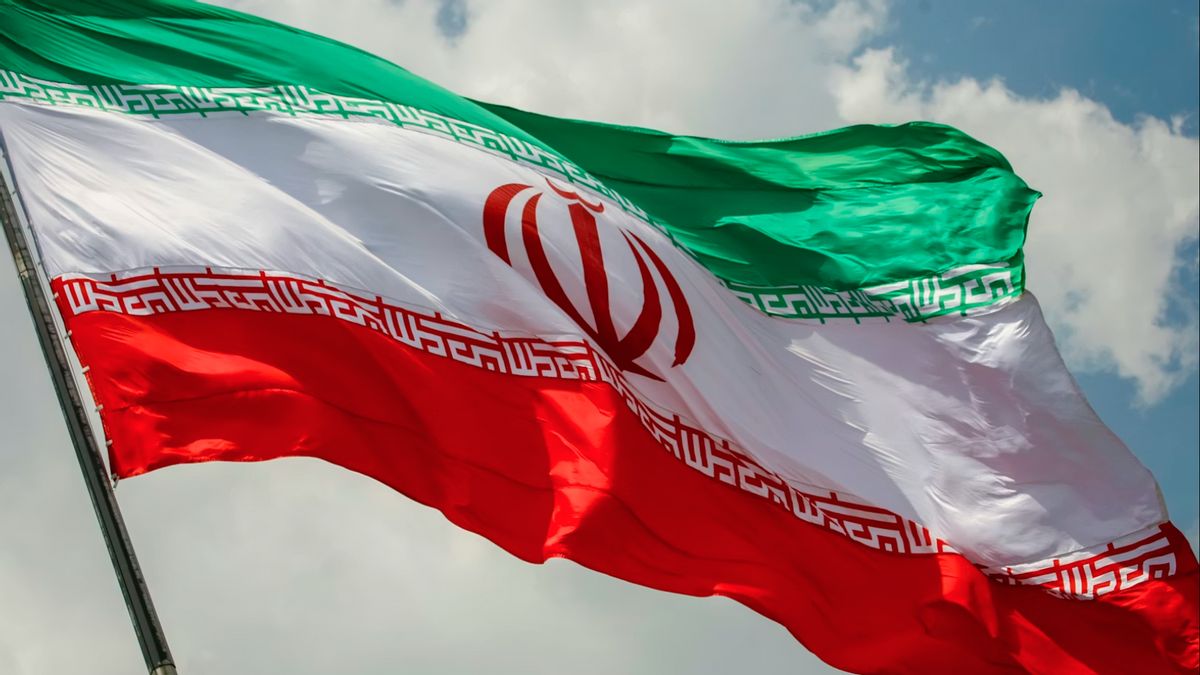


JAKARTA - Arab countries bordering the Persian Gulf urged the United States (US) not to launch a military attack against Iran.
They warned that the attack could potentially trigger economic and political instability in the region.
Saudi Arabia, along with Oman and Qatar, is said to have lobbied behind closed doors with the administration of President Donald Trump after the White House warned them to prepare for possible action against Tehran. The information was reported by The Wall Street Journal.
Although these countries chose to remain silent in the public sphere when Iran continued to be hit by a wave of massive protests, they are said to have actively pressured US officials behind the scenes to reconsider military options.
Gulf Arab officials believe that any military effort to overthrow the Iranian government could seriously disrupt global oil shipments through the Strait of Hormuz. The strategic waterway is used by about 20 percent of the world's oil supplies.
They are also concerned about the impact it will have on the country, economic losses, and the potential for retaliation if US forces act.
Saudi officials reportedly told Tehran that the kingdom would not be involved in any conflict nor allow the use of its airspace by the US. The move is intended to keep distance from direct confrontation.
"The president listens to various views on every issue, but in the end he makes the decision he thinks is most appropriate," a White House official said, quoted by ANTARA from Anadolu, Wednesday, January 14.
US President Donald Trump has not made a final decision. However, on Tuesday he wrote on social media, "Help is on the way to Sana," while calling on Iranian protesters to persevere.
Gulf leaders expressed concern over the uncertainty of the post-Ayatollah Ali Khamenei Iranian situation, including the possibility of a power shift to the Islamic Revolutionary Guard Corps or the emergence of regional chaos.
"They have no sympathy for the Iranian regime," said former US Ambassador Michael Ratney, "but they also very much avoid instability."
Saudi Arabia, which is focusing on implementing the Vision 2030 program to diversify the economy, considers regional stability to be crucial. A number of analysts assess that the most desirable outcome for the Gulf countries is domestic reform in Iran, not the collapse of the government.
Iran has been rocked by waves of protests since last month, which began on December 28 in Tehran's Grand Bazaar. The action was triggered by the collapse of the Iranian rial exchange rate and the worsening economic conditions, before spreading to a number of other cities.
The Iranian government has accused the US and Israel of being behind what they call "riots" and "acts of terrorism."
No official death toll was released by the government. However, the Human Rights Activists News Agency, a US-based human rights monitoring agency, estimates that the death toll has exceeded 2,550 people, including security forces and protesters, with more than 1,134 people injured.
The agency also reported that at least 10,721 people were detained and 18,434 people had been secured in 585 locations across the country, including 187 cities in 31 provinces.
Source: Anadolu
The English, Chinese, Japanese, Arabic, and French versions are automatically generated by the AI. So there may still be inaccuracies in translating, please always see Indonesian as our main language. (system supported by DigitalSiber.id)
Popular


