

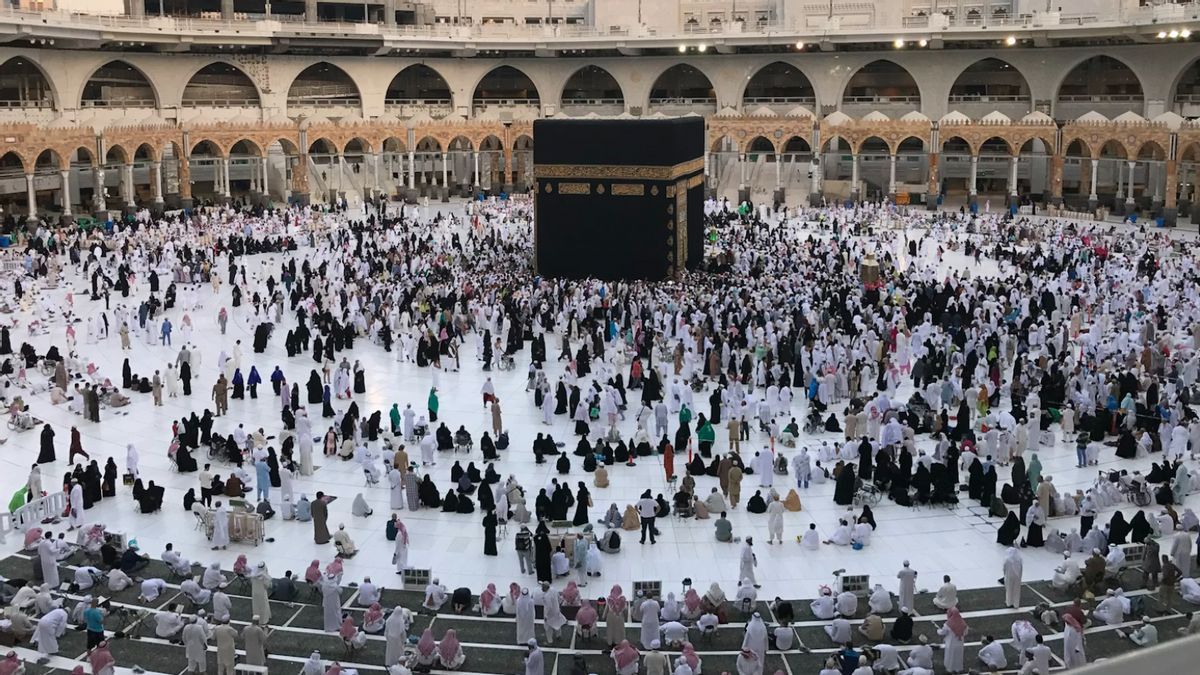


JAKARTA - Ahead of the 2026 Hajj pilgrimage, the Special Hajj Organizers (PIHK) voiced serious concerns. A total of 13 PIHK associations signed a joint statement regarding the risk of failure of the departure of pilgrims due to the unpreparedness of the system and the tight timeline from the Government of the Kingdom of Saudi Arabia.
The General Chair of AMPHURI (Association of Muslim Haji and Umrah Organizers of the Republic of Indonesia), Firman Muhamad Nur, emphasized that Saudi Arabia's policy is very strict on the schedule that has been set.
"The government of the Kingdom of Saudi Arabia is very strict with the timeline that has been set. If you ignore it, the consequences will be fatal. They will give punishment or punishment as experienced by Pakistan and India last year, where both countries experienced a significant reduction in quotas," said Firman when contacted on January 1, 2026.
Risk of Failure to Depart and Liquidity Problems
The implementation of the Special Hajj 2026 is now at a crossroads. The risk of failure is triggered by the unpreparedness of the payment system and the unliquidated return of funds (PK) of pilgrims to the PIHK account.
In fact, all the funds for the pilgrims' deposits (as much as USD 8,000 per pilgrim) are currently in the account of the Hajj Finance Management Agency (BPKH). This hinders PIHK in fulfilling its obligation to pay the contract for service in Saudi Arabia.
Based on the latest rules, the following are the crucial deadlines (deadlines) that cannot be postponed:
4 January 2026: Deadline for the determination and payment of the Armuzna service package. 20 January 2026: Deadline for the transfer of funds for the accommodation and ground transportation contract in Saudi Arabia. 1 February 2026: Deadline for the completion of all service contracts.If it passes the date, PIHK cannot make accommodation contracts in the Masar Nusuk system. The impact is that the hajj visa cannot be issued and the departure of the congregation is guaranteed to fail.
The inconsistency of the RI Ministry of Hajj Timeline
Firman regretted the slow adjustment of the timeline by the Ministry of Hajj and Umrah RI. The Saudi Arabian authorities have actually issued an operational schedule since June 8, 2025.
However, the repayment process for the Special Hajj pilgrims only began on November 25, 2025. Meanwhile, the Ministry of Hajj and Umrah RI has been formed since the enactment of Law Number 14 of 2025 in August.
"The PK mechanism from BPKH to PIHK through the Siskopatuh system is considered premature and not in sync with operational needs. This creates liquidity pressure and service uncertainty for the congregation," added Firman.
This condition is very risky to cause the Hajj quota not to be absorbed optimally. This is certainly a bad precedent, considering that the Indonesian Special Hajj quota is usually always absorbed 100%. Ironically, there are still hundreds of thousands of people on the waiting list. "This could be the first test for the Hajj Ministry in organizing the Hajj," he said.
13 PIHK Association demands
In response to this crisis, 13 PIHK associations demanded three emergency steps from the government:
Acceleration and simplification of the disbursement of PK after the settlement of pilgrims. Synchronization of financial policies with the official timeline of the Kingdom of Saudi Arabia. Emergency measures and concrete technical dialogue between the Ministry of Hajj and Umrah of Indonesia, BPKH, and PIHK associations.This statement is supported by 13 official associations, namely: AMPHURI, AMPUH, ASHURI, ASPHIRASI, ASPHURI, ASPHURINDO, ATTMI, BERSATHU, GAPHURA, HIMPUH, KESTHURI, MUTIARA HAJI, and SAPUHI.
The English, Chinese, Japanese, Arabic, and French versions are automatically generated by the AI. So there may still be inaccuracies in translating, please always see Indonesian as our main language. (system supported by DigitalSiber.id)
Most Popular Tags
#Prabowo Subianto #donald trump #Febrie Adriansyah #8791 #giias 2026Popular


