

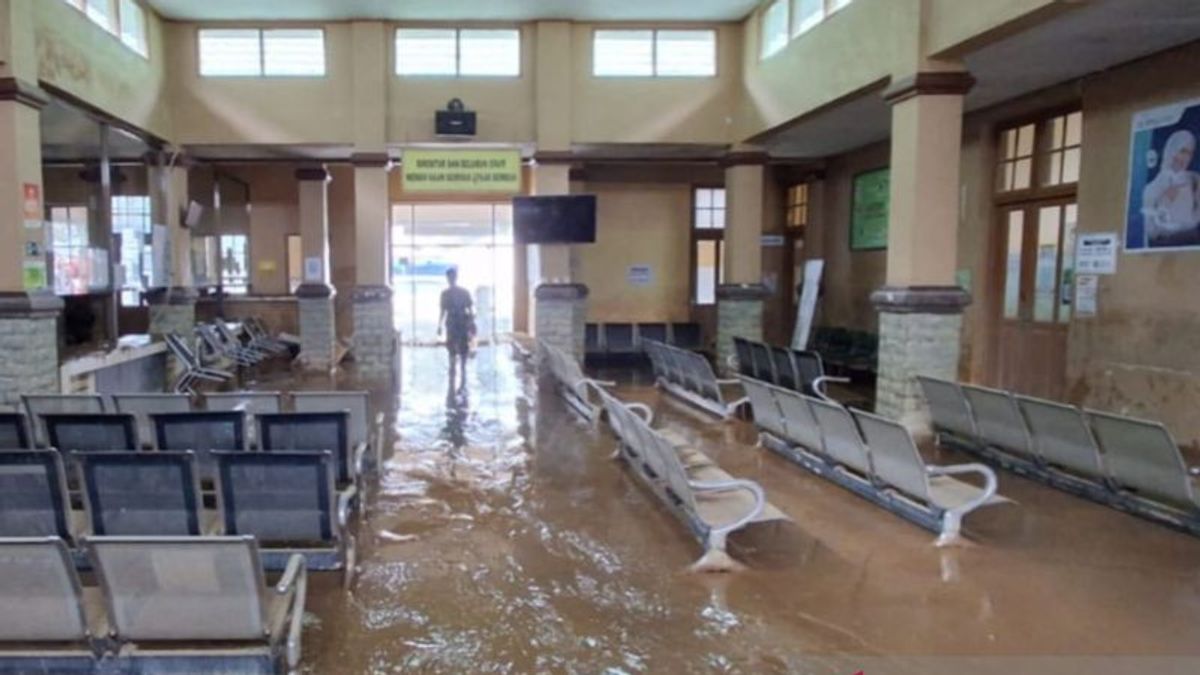


ACEH TAMIANG - A volunteer and health worker from the Faculty of Medicine, University of Indonesia (FKUI), dr Yogi Prabowo, revealed that the thickness of the mud was one of the main obstacles in efforts to restore access to health services for people affected by floods in Aceh Tamiang Regency.
"The biggest medical challenge is cleaning the mud that hits the health facilities. Because the mud is so thick, even four weeks ago, many of these health facilities are still muddy and not clean," said Yogi, quoted by Antara, Wednesday, December 31.
According to Yogi, the cleaning of health facilities cannot be carried out separately without restoring access to the surrounding area. The reason is that patients and refugees who come to seek treatment come from various regions whose road conditions are still covered with mud.
"Even if it is cleaned, the road is still muddy, so it will still be dirty again, because patients will come and go and the refugees who will be treated will also be dirty again," he explained.
The Chairman of the Community Service and Disaster Assistance Division of the FKUI Alumni Association (Iluni) added that another challenge faced was the large number of medical equipment in health facilities that were damaged by being submerged in mud.
This condition, said Yogi, makes the recovery process in terms of health facilities and infrastructure impossible to do in a short time and requires gradual handling.
Apart from infrastructure issues, Yogi highlighted environmental health as another serious challenge. The limited supply of clean water and food in affected areas increases the risk of the emergence of various environmentally based diseases.
"So, in addition to refugees or affected people, we are also at risk of getting diseases such as diarrhea and it has already happened to some of our volunteers. There are two people who have diarrhea, but thank God it is not heavy," said Yogi.
Therefore, Yogi emphasized the importance of maximum efforts from health workers in various disaster-affected areas in Sumatra to continue to provide health services to the community, even though they are faced with limited facilities and difficult field conditions.
He hopes that the recovery of health access can go hand in hand with the improvement of the environment and infrastructure, so that the health conditions of the community in the disaster location can immediately recover completely.
The English, Chinese, Japanese, Arabic, and French versions are automatically generated by the AI. So there may still be inaccuracies in translating, please always see Indonesian as our main language. (system supported by DigitalSiber.id)


