
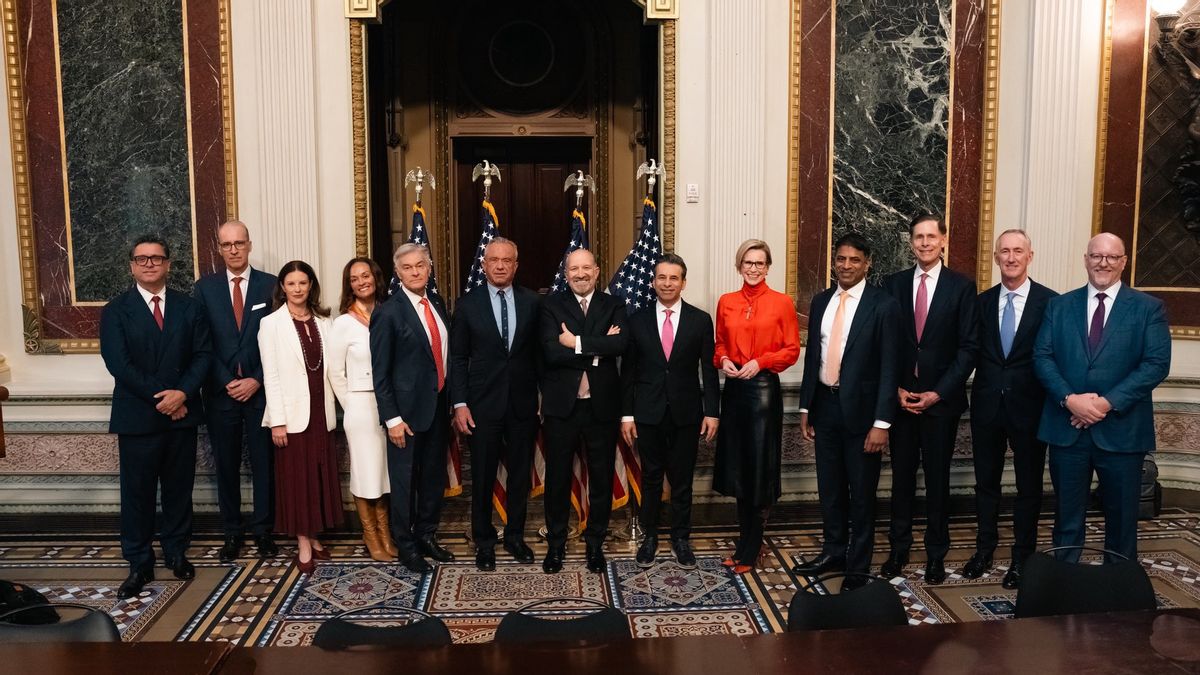


JAKARTA - US President Donald Trump has officially announced a major deal with nine giant pharmaceutical companies, including Merck, Bristol Myers Squibb, and Sanofi, to drastically cut drug prices.
The move, taken on Friday, December 19, US time, aims to align the cost of treatment in the US with other developed countries, while ending the practice of "global subsidies" in which US citizens have paid up to three times more for medical prescriptions.
In this deal, reported Reuters, Saturday, December 20, the government will launch the official TrumpRx.gov website that allows patients to pay cash directly to manufacturers with discounts of up to 70 percent of the base price. Some popular drugs such as Januvia diabetes treatment from Merck and Aimovig migraine medicine from Amgen will be available at a much cheaper price. In fact, Bristol Myers Squibb has committed to providing the Eliquis blood thinner for free for the Medicaid program as part of their contribution.
In return for this price cut, the pharmaceutical company received a guarantee of import tariff exemption for three years from the Trump administration. In addition, drug manufacturers are committed to launching new products in the future at prices no higher than the price in the international market. This step is considered a "win-win" strategy that provides legal certainty for investors while easing the burden on the community.
In addition to price cuts, the nine companies pledged to invest more than 150 billion US dollars in research, development (R&D), and manufacturing in the country. Merck alone contributed the largest share with an investment commitment of 70 billion US dollars. Not only that, several companies also agreed to donate drug raw materials to the US strategic reserve to strengthen national health resilience in the face of future emergencies.
Although this policy sounds revolutionary, the market responded positively with a rise in pharmaceutical company shares of around 1 percent to 3 percent. Analysts assess that this deal has managed to dampen investor concerns about extreme price controls, as pharmaceutical companies prefer to collaborate to secure their economic stability rather than face more damaging trade tariff threats under the Trump administration.
The English, Chinese, Japanese, Arabic, and French versions are automatically generated by the AI. So there may still be inaccuracies in translating, please always see Indonesian as our main language. (system supported by DigitalSiber.id)
Most Popular Tags
#Prabowo Subianto #donald trump #firearm #8791 #giias 2026Popular


