



JAKARTA - The government is preparing budget needs of up to tens of trillion rupiah in 2026 to solve the fundamental problem of religious teachers, which is considered a strategic investment in human resources, not a fiscal burden.
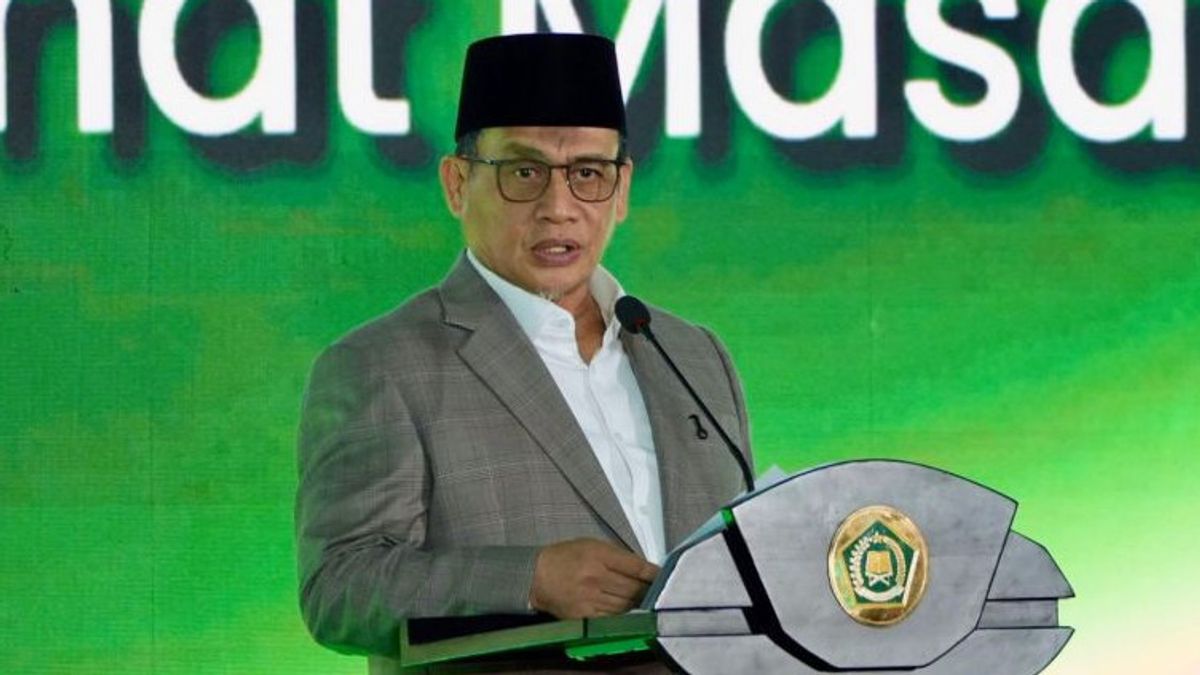
"The problems faced are structural and perennial. Inequality of well-being, certification delays, uncertain status of employment, and limitations on professional career paths. If this is left unchecked, the quality of religious education will stagnate," said Deputy Minister of Religion, Romo Muhammad Syafii, at the closing of the 2025 National Working Meeting of the Ministry of Religion in Tangerang, Wednesday, quoted by Antara.
He said, there was an urgent need to be completed in the 2026 budget year to answer the crisis. These needs include Teacher Professional Education, Teacher Professional Allowance, incentives for non-ASN madrasah teachers, as well as the appointment and appointment of PPK for non-ASN madrasah teachers.
To answer the education crisis, there is an urgent need that must be completed in the 2026 fiscal year.
First, the education of the teacher profession is IDR 225.6 billion. Second, the teacher profession allowance is IDR 13.52 trillion. Third, the incentive for non-ASN teachers of Madrasah is IDR 649.5 billion. Fourth, the impassing of IDR 73.638 non-ASN teachers after the appointment of IDR 31.629 PPPK teachers of Madrasah.
"These figures are not a fiscal burden. But rather an investment in Indonesia's human resources strategy. Without meeting these needs, teachers will continue to be in a vulnerable state," he said.
Romo Syafii revealed that based on data from the Ministry of Religion's EMIS (Education Management Information System) in 2025, the number of Islamic Religious Education teachers in public schools reached 250,151 people.
A total of 151,236 people were appointed by the interim regional government, while those appointed directly by the Ministry of Religion were only around 7,076 people.
"This composition shows that the appointment of religious teachers is very fragmented. If this is left unchecked, it has the potential to record uncontrolled recruitment. And it does not necessarily guarantee quality," he said.
He added that in the future, it is necessary to arrange the recruitment policy for religious teachers so that it is in line with the direction of national development. This arrangement is considered important to maintain the standard of quality of religious education on an ongoing basis.
"Therefore, in the future, it is necessary to decentralize the policy of recruiting religious teachers within the framework of the National Long-Term Development Plan (RPJPN). In line with the revision of the regional government law and the national education system law. This decentralization is not bureaucratic but the standardization of national quality standards," he said.
The English, Chinese, Japanese, Arabic, and French versions are automatically generated by the AI. So there may still be inaccuracies in translating, please always see Indonesian as our main language. (system supported by DigitalSiber.id)
Most Popular Tags
#Prabowo Subianto #donald trump #firearm #8791 #giias 2026Popular


