
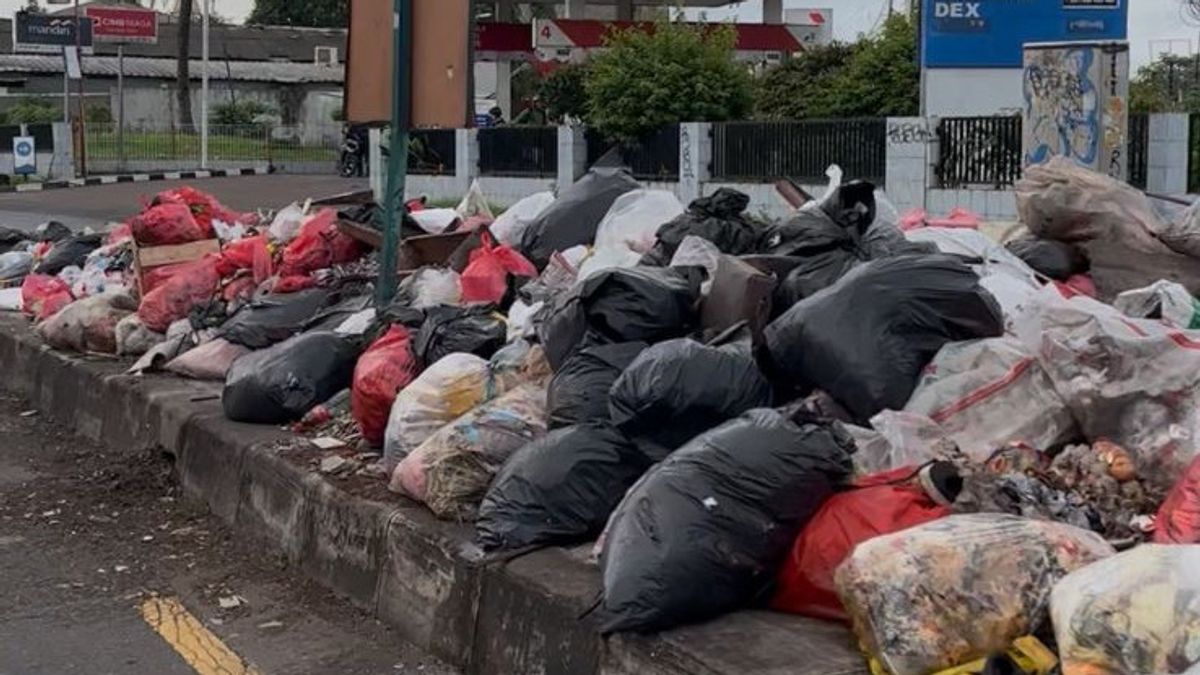


JAKARTA - Garbage piles are now the daily faces of many cities in Indonesia. Every year, the national waste generation is estimated to exceed 70 million tons, while most still end up in full landfills and rely on open dumping practices.
This situation is increasingly urgent in line with the government's plan to close all open dumping landfills in order to reduce the impact of environmental pollution and health risks.
Amid this pressure, the government is encouraging waste to energy technology as part of the transformation of national waste management. The Waste to Energy (PSEL) project is prioritized as a solution to reduce landfill loads while utilizing waste as an energy source.
Environmental academic at the University of Indonesia, Ir. Louis Fransiscus Yuniarto, assessed PSEL as a strategic step that is relevant to current challenges. According to him, PSEL should not be seen as an instant solution, but as part of a comprehensive waste management system from upstream to downstream.
English:
"PSEL is important in the circular economy framework because it is able to significantly reduce waste volume and generate energy. However, its success depends heavily on governance, transparency, and the readiness of the supporting ecosystem," said Louis Fransiscus Yuniarto in his statement, Monday, December 15, 2025.
Louis emphasized that without sorting from the source, certainty of technology, as well as monitoring emissions and residues, PSEL risks creating new problems. He emphasized that PSEL must go hand in hand with public education and waste reduction policies.
"If it is designed and supervised seriously, PSEL is not only a technical solution, but a reflection of the seriousness of the state in managing waste in a modern and responsible manner," he concluded.
English:
The English, Chinese, Japanese, Arabic, and French versions are automatically generated by the AI. So there may still be inaccuracies in translating, please always see Indonesian as our main language. (system supported by DigitalSiber.id)


