
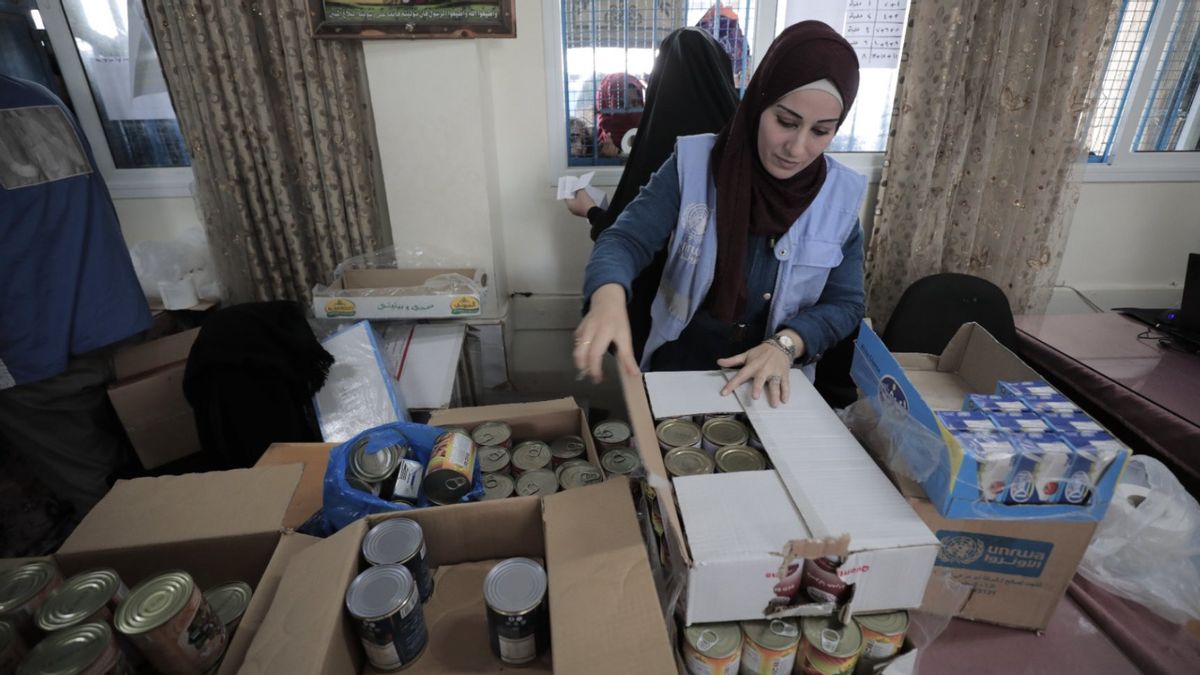


JAKARTA - Tens of thousands of people in the occupied West Bank have been barred from returning to their homes for nearly a year since Israel launched a massive military operation in the region, according to the United Nations agency for Palestinian refugees.
Of the 40,000 people forced to leave refugee camps in the northern part of the Palestinian territories earlier this year, 32,000 people have not been allowed back amid the "systematic destruction" of civilian housing and infrastructure, Roland Friedrich, director of UNRWA affairs in the West Bank, told The National.
"This is clearly a case of forced transfer," he said, quoted by The National (8/12).
In January, Israel launched Operation Wall Iron which was described as one of the largest military attacks in the recent history of the West Bank.
The Israeli military sent tanks, snipers and special forces to Jenin City, days after a ceasefire was imposed in Gaza, storming refugee camps that already had difficult living conditions.
According to a UN report, the military attack resulted in the longest and most widespread refugee crisis since Israel seized the territory in 1967.
"This is a new level of escalation that has never happened before," said Friedrich.
"The three trapped refugee camps in Jenin are still empty," he told The National.
"You are in a situation where people are actively prevented from returning (to their homes)," Friedrich said.
"This causes a lot of human suffering. This is clearly a violation of international law. And this creates a situation where you feel more despair, more anger, and more frustration on the pitch," he explained.
The fragile ceasefire that took effect in Gaza in October did little to help reduce violence in the West Bank.
On November 26, the Israeli military launched another large-scale attack on the northern West Bank, named the Five Stones, which it described as a "operation of counterterrorism".
UNRWA has recorded the use of "war tactics" in the attack, which includes land invasions, raids, home destruction, and airstrikes.
In addition to the surge in "aggressive and militarized Israeli security operations", the West Bank is witnessing unprecedented levels of settlers' violence without accountability, Friedrich said.
Separately, the United Nations humanitarian office recorded the highest number of settlers' attacks in the West Bank for October, coinciding with annual olive harvests, since it began documenting such incidents in 2006. June witnessed the highest number of injuries sustained by settlers to Palestinians in two decades, according to UNRWA data.
Local staff working with UN agencies in the occupied West Bank and East Jerusalem were also heavily affected by the violence.
SEE ALSO:
-
 | BERITA
Kelompok Militan Hamas Siap "Menyimpan' Senjata untuk Kemerdekaan Palestina
08 Desember 2025, 06:00 -
 | BERITA
Indonesia Bersama Negara Arab-Islam Kritik Pembukaan Satu Arah Penyeberangan Rafah
06 Desember 2025, 13:37 -
 | BERITA
Hamas Tidak Ingin Memerintah Gaza, Setujui Pembentukan Badan Teknokratis
06 Desember 2025, 05:00 -
 | BERITA
Kantor HAM PBB Desak Tekanan Internasional Terhadap Israel untuk Akhiri Serangan di Gaza
06 Desember 2025, 04:00 -
 | BERITA
Kedutaan Besar Palestina di London Dirusak Demonstran Bertopeng Pro-Israel
05 Desember 2025, 21:30
"They often pay very high prices for the jobs they do," Friedrich said.
"More than 70 of our own staff in the northern West Bank are displaced, and 18 of their homes are destroyed," he said.
Meanwhile, UNRWA's main headquarters in Sheikh Jarrah District, East Jerusalem, are empty.
"It is too dangerous for our Palestinian counterparts to work from there as they have witnessed a series of attacks by extremists," Friedrich said.
The English, Chinese, Japanese, Arabic, and French versions are automatically generated by the AI. So there may still be inaccuracies in translating, please always see Indonesian as our main language. (system supported by DigitalSiber.id)


