
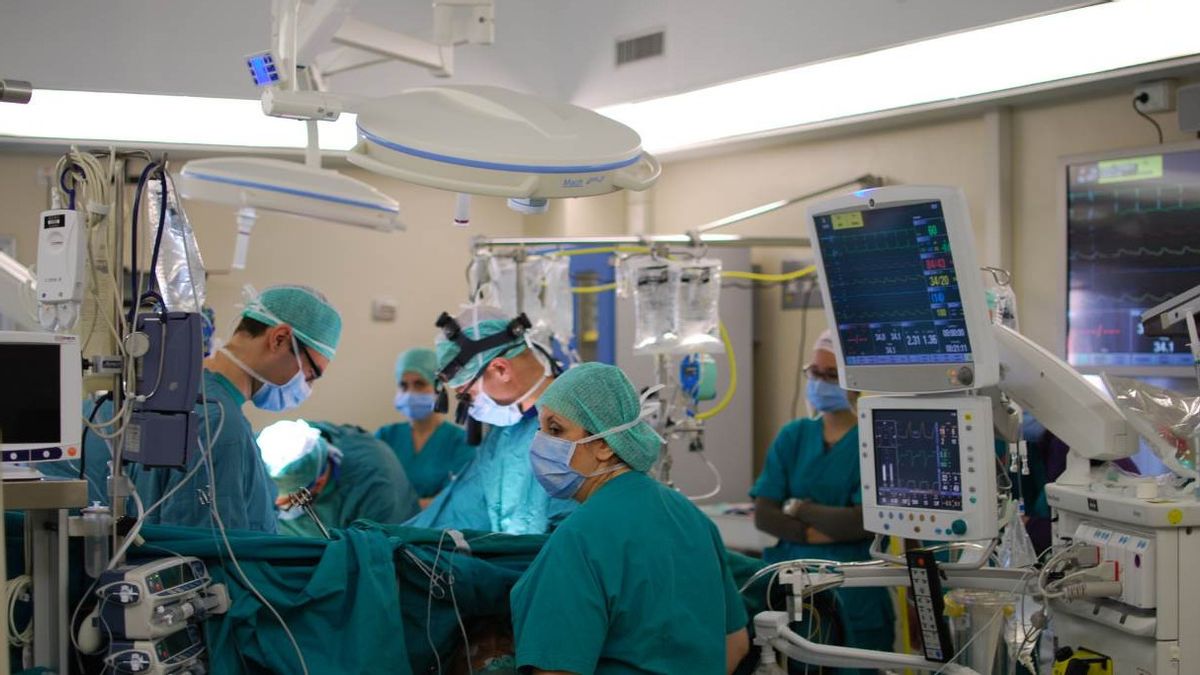


JAKARTA - Surgeones from Scotland and America Serikar managed to perform what is believed to be the world's first long-range stroke operation using robotic technology, the BBC reported Monday.
Professor Iris Grunwald of the University oftensively carried out a long-distance trombektomi lifting of blood clots after a stroke in a human cadver who was donated to medical science. Grunwald underwent surgery from Ninewells Hospital in fact, while his body was placed at the university across the city.
Hours later, Ricardo Hanel, a Florida-based neurosurgeon, carried out the first transatlantic robotic procedure from his office in living on a human body in fire, more than 6,400 kilometers away.
The team described this achievement as a potential "game changer" if approved for clinical use, saying it could revolutionize stroke treatment by allowing specialists to treat patients remotely.
It is known, delays in reaching special care centers can significantly affect recovery results. Experts say robotic systems can help close the gap, especially in remote or underserved areas.
"It feels like we're watching a glimpse of the future. Previously it was considered science fiction, but we showed that every step of the procedure can already be done," said Professor Grunwald, launching Anadolu from BBC Nov. 12.
University ofturbation, a global training center for the World Federation for Interventional Stroke Treatment, is the only institution in the UK where doctors can operate cadvers with fluids circulating through blood vessels to mimic human blood flow.
"This is the first time we have been able to carry out an entire mechanical trombektomi procedure on a real human body to show that all procedural steps can be taken," explains Professor Grunwald.
Meanwhile, Chief Executive of the Stroke Association Juliet Bouveerie called this transatlantic operation an "extraordinary innovation."
SEE ALSO:
-
 | BERITA
Indonesia Terpilih Sebagai Anggota Dewan Eksekutif IOC dan Komite MOST UNESCO
15 November 2025, 09:00 -
 | BERITA
Rusia Tidak akan Melupakan Bantuan Korea Utara dalam Membersihkan Ranjau di Kursk
15 November 2025, 05:00 -
 | BERITA
Dmitry Medvedev Sebut Pengepungan Pasukan Rusia akan Merugikan Ukraina
15 November 2025, 04:00 -
 | BERITA
FSB Gagalkan Rencana Serangan Teroris Terhadap Pejabat Tinggi Rusia
14 November 2025, 20:00
"It's been too long, people living in remote and rural areas have lost access to the trombektomi," he said.
"Robotika like this can rebalance the gaps that exist in stroke treatments across the UK," he said.
The researchers said the success of this trial could pave the way for the adoption of long-distance stroke treatments globally, allowing patients in remote areas to receive life-saving treatments without having to travel long distances.
The English, Chinese, Japanese, Arabic, and French versions are automatically generated by the AI. So there may still be inaccuracies in translating, please always see Indonesian as our main language. (system supported by DigitalSiber.id)
Popular


