
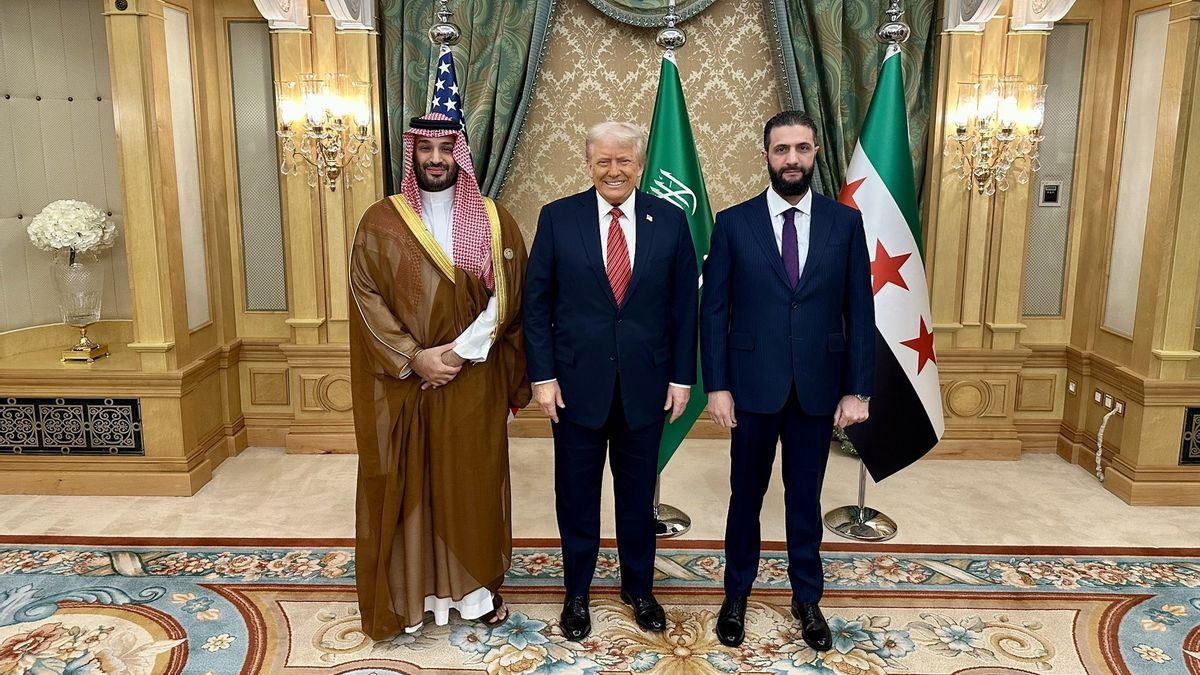


JAKARTA - Syrian President Ahmed al-Sharaa's meeting with US President Donald Trump at the White House on Monday local time marks an extraordinary year for the former rebel who is now the ruler.
Al-Sharaa toppled the long-held autocratic leader and has since traveled the world in his bid to end Syria's international isolation.
Trump will welcome Sharaa during the Syrian president's inaugural visit to the White House, six months after the two first met in Saudi Arabia and just days after Washington stated the former al Qaeda member is no longer a "Specially Appointed Terrorist".
Sharaa, 42, took power last year after its Islamist fighters launched a lightning strike from their pockets in northwestern Syria and toppled Syrian President Bashar al-Assad a few days later, on December 8.
Syrian regional restructuring has since moved at a confusing pace, moving away from major allies of Assad, Iran, and Russia, and is heading towards Turkey, the Gulf and Washington.
Security is likely to be the main focus of the meeting on Monday, November 10.
The US is intermediary to negotiations between Syria and Israel regarding a possible security pact. Reuters reported that the US plans to establish a military presence at the Damascus airbase.
Syria will also join the US-led coalition to fight ISIS, which is likely to be officially announced at a meeting at the White House on Monday.
Days before the meeting, Trump told reporters at the White House that "a lot of progress has been made" related to Syria.
"I think he (Sharaa) did a very good job. His environment is tough, and he's tough, but I get along very well with him," Trump said.
After Sharaa and Trump met in Riyadh in May, Trump announced he would lift all sanctions against Syria.
However, the toughest action, known as the Caesar Sanctions Act, requires a revocation of Congress. The White House and the State Department publicly supported the lifting of the sanctions before 2025 ended, but experts say the government's closure could affect the period of time.
Sharaa is expected to strongly fight for the revocation, which will help spur global investment in a war-destroyed country for 14 years and which the World Bank estimates will need more than $200 billion to rebuild.
Syrian social structure has recently been tested. A new series of sectarian violence has killed more than 2,500 people since Assad's fall, deepened civil war wounds and questioned the ability of new rulers to rule all Syrian citizens.
The English, Chinese, Japanese, Arabic, and French versions are automatically generated by the AI. So there may still be inaccuracies in translating, please always see Indonesian as our main language. (system supported by DigitalSiber.id)


