

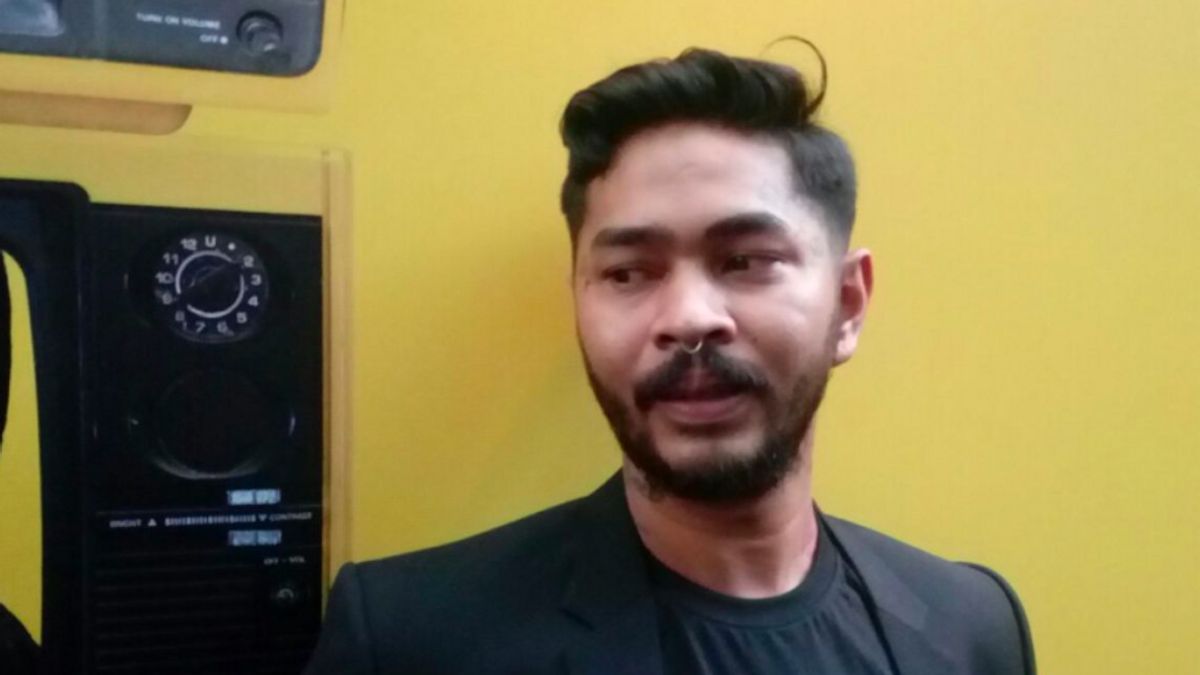


JAKARTA - The arrest of singer Onadio Leonardo Arya alias Onado Leonardo, because cases of drug abuse have reopened old discussions about the vulnerability of the entertainment world to irregularities.
Criminologist Haniva Hasna assessed that the recurrence of similar cases shows that there are structural problems that have not been seriously touched, both at the social level and in the entertainment industry itself.
From the criminology glasses, this repeated pattern shows the existence of learning processes in celebrity subculture. Previous cases did not fully cause a deterrent effect because social punishment and stigma were not accompanied by the transformation of their social environment," he told VOI, Sunday, November 2, 2025
Haniva explained that the entertainment world has characteristics as a 'closed social circle' that is permissive to deviant behavior. According to him, in this environment, negative behavior is often considered normal as long as it still supports productivity or public image.
"Many artists actually learn from other people's cases, not to avoid, but to find ways not to get caught," he said.
Haniva views that the pressures and lifestyles in the entertainment world have a major influence on the trend of drug use. Referring to the theory of strain Robert K. Merton, he explained that irregularities are often born out of tension between social goals and the ways available to achieve them.
"Artis is required to always appear perfect, productive, and please the public. Psychological pressure, extreme work schedules, and the need to maintain performance make some of them seek instant escape through addictive substances," he said.
SEE ALSO:



Haniva also highlighted the effectiveness of the rehabilitation program that is often carried out by public figures. According to him, many rehabilitation processes do not really touch the root of the problem.
"Rehabilitation for public figures often turns into image rehabilitation. The effectiveness is low as long as the legal system and the media still treat artists with different standards from ordinary people," he explained.
Furthermore, in the context of Onadio's case, Haniva said that the artist's involvement in drug abuse is often related to supplier networks that are also related to the entertainment industry.
"There are many cases of artists who do not stand alone, but are connected to supply networks that involve parties in the entertainment industry themselves, ranging from managers, promoters, to permissive social environments," he said again.
As a precautionary measure, said Haniva, the importance of an integrative approach that involves all parties in the entertainment ecosystem is important.
Prevention is not enough with public campaigns. There must be sustainable education, mental assistance for art workers, as well as control mechanisms from the agency or artist management. And most importantly, law enforcement must be fair and transparent without special treatment for public figures," he said.
Haniva emphasized that drug abuse is not just a matter of individual morals choosing the wrong path.
"This is a reflection of a social system that fails to provide a safe space for them to fight without substance," he concluded.
The English, Chinese, Japanese, Arabic, and French versions are automatically generated by the AI. So there may still be inaccuracies in translating, please always see Indonesian as our main language. (system supported by DigitalSiber.id)
Most Popular Tags
#Prabowo Subianto #donald trump #Febrie Adriansyah #8791 #giias 2026Popular


