



JAKARTA – When Kim Jong Un launched a cruise missile test coinciding with Donald Trump's visit to South Korea and the lead-up to APEC 2025, the question arose: was this merely a routine military exercise or an overt political commentary on the international order?
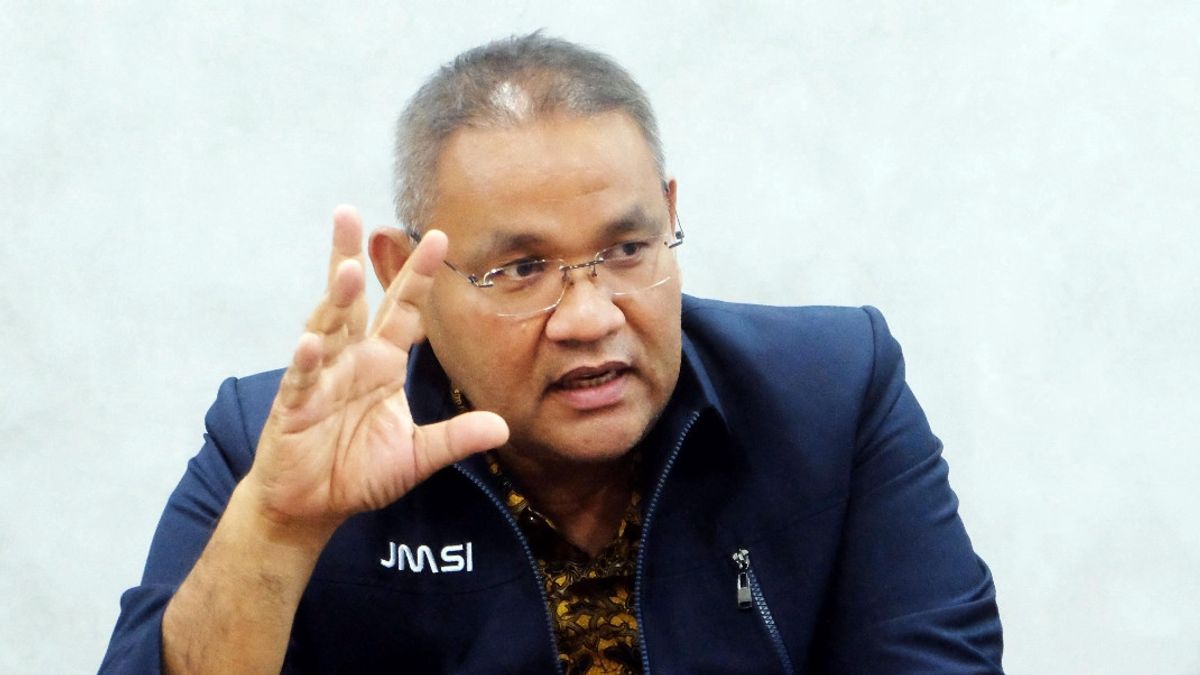
According to Dr. Teguh Santosa, an international observer specializing in North Korea, when asked for his response in Jakarta on Thursday, October 30, the test was not directly related to Trump's trip or the KTTAPEC. Although "the two events occurred at relatively the same time," Teguh said it was difficult to claim a direct causal link. However, politically, "it is legitimate for some to view this as a deliberate show of force by North Korea."
Furthermore, Teguh, who is also a lecturer in International Relations at UIN Syarief Hidayatullah Jakarta, analyzed the two main functions of this military maneuver. First, technically, every country—including those still officially in conflict, such as North and South Korea—has the right and obligation to maintain military capacity as a deterrent to threats. Teguh stated that military armament for a country like North Korea is not just about aggression, but about maintaining its position so as not to become a "sitting duck" in the regional power competition.
Second, from an external diplomatic perspective, the test serves as a means of communicating Pyongyang's foreign policy. By calling its maneuvers part of its "practical nuclear combat posture" and "combat readiness," North Korea is sending a strong signal to the world that it remains relevant, despite the ongoing blockade of economic sanctions and political isolation. Teguh emphasized that while provocation is often cited as a long-standing North Korean strategy to pressure concessions from the US and South Korea, in his view: "What they are doing is normal and natural." Considering the US military deployment on and around the Korean Peninsula—including United States Forces Korea (USFK) and the THAAD system—North Korea has its own argument about who is actually carrying out the provocation.
This senior journalist, who frequently visits North Korea, further discusses the prospects for reunification of the Korean Peninsula. made a surprising statement: North Korea is no longer interested in that agenda. He stated that in January 2024, North Korea formally requested that the term "reunification" be removed from its constitution and that the institutions that had been working towards reunification be dismantled. The Director of the Great Institute for Geopolitics firmly stated: "North Korea is no longer interested in the reunification of the Korean Peninsula as long as South Korea remains dependent on US interests in the region."
From an East Asian perspective, North Korea's maneuvers add a layer of complexity to the strategic competition between the US, South Korea, and Japan, as well as China's growing influence. However, Teguh believes that North Korea's military capacity—and its frequent tests—serve minimally as a negative peace guarantee. If North Korea weakens without adequate defense, it becomes vulnerable. In his view: "Peace is the period between two wars. It depends on the capacity of each warring party."
Therefore, North Korea's cruise missile tests are not simply about weapons or hardball diplomacy. They are part of the political and security narrative Pyongyang is pursuing. Namely, maintaining relevance, asserting positions, and transforming old texts into new conditions on the Korean Peninsula and the wider region.
What makes this issue relevant or important? Because it has real implications. If the idea of reunification is increasingly abandoned, the political map of East Asia will change. If military force continues to be used as a diplomatic tool, the strategy of isolation against North Korea may no longer be effective. One thing is clear: Kim Jong Un is not simply conducting military exercises—he is reshaping the power landscape in the region.
The English, Chinese, Japanese, Arabic, and French versions are automatically generated by the AI. So there may still be inaccuracies in translating, please always see Indonesian as our main language. (system supported by DigitalSiber.id)


