

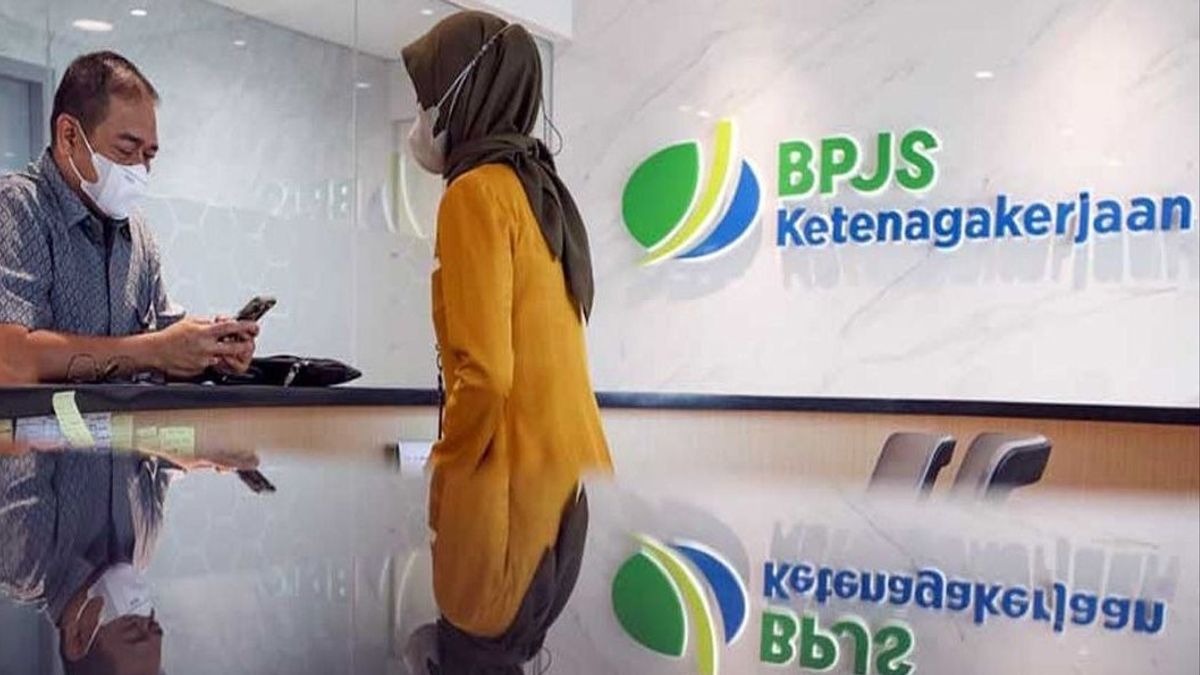


JAKARTA The Audit Watch Initiative (IAW) highlighted allegations of irregularities in the 2025 BPJS Selection Committee (Pansel) recruitment process which was considered administratively flawed and weak in supervision. In fact, BPJS manages public funds of more than Rp600 trillion and supports life and health insurance for 278 million Indonesians.
IAW's Founder Secretary, Iskandar Sitorus, said that the process of uploading the selection participants' files was problematic, ranging from unuploaded documents, failed to confirm, to the absence of a clarification mechanism for administrative completeness.
"The participants have uploaded the complete file, but it was declared a failure because the system did not record it. There was no objection channel or re-verification, and DJSN did not make any corrections," he said, Sunday, October 27.
In fact, according to Iskandar, regulations that have regulated selection must be transparent and accountable. Law no. 40/2004 on SJSN and Law no. 24/2011 on BPJS requires the selection process of the Supervisory Board and Board of Directors to be carried out openly. Presidential Regulation No. 81 of 2015 even detailed the DJSN monitoring mechanism and the responsibility of the relevant ministries.
IAW also cited the findings of the Supreme Audit Agency (BPK) over the past decade showing the weakness of the BPJS verification and evaluation system. In 2019 the financial deficit reached IDR 125 trillion, although it fell to IDR 32.4 trillion in 2023. The data of problematic participants also reached millions of people due to dual NIK and non-synchronous data.
"This problem is not just technical, but a weak bureaucratic culture and minimal layered control. DJSN passively follows up on BPK's recommendations," said Iskandar.
IAW assesses that administrative defects in recruitment can have serious legal and fiscal impacts. Article 38 of Law 40/2004 even regulates, if the deficit occurs due to management errors, the state must cover it through the state budget.
According to IAW, the impact of the weak governance is now felt directly by the participants. A number of hospitals began to delay services because BPJS claims were slow to pay, the queues of participants were elongated, and the risk of a decrease in public trust increased.
SEE ALSO:
-
 | OLAHRAGA
Kalahkan Barcelona di El Clasico, Real Madrid Kukuh di Puncak Klasemen
27 Oktober 2025, 05:13

For this reason, IAW recommends five corrective steps: a full audit of the 2025 Pansel recruitment process; the obligation of the DJSN public surveillance report; revision of Presidential Decree 81/2015 with sanctions for negligent parties; judicial review to the Supreme Court to clarify the authority between institutions; as well as full digitization and public openness of all selection processes.
"BPJS is not just a financial institution, but a constitutional promise so that people live a healthy and protected life. If the recruitment is not accountable, how can services in the field be fair," concluded Iskandar.
The English, Chinese, Japanese, Arabic, and French versions are automatically generated by the AI. So there may still be inaccuracies in translating, please always see Indonesian as our main language. (system supported by DigitalSiber.id)


