

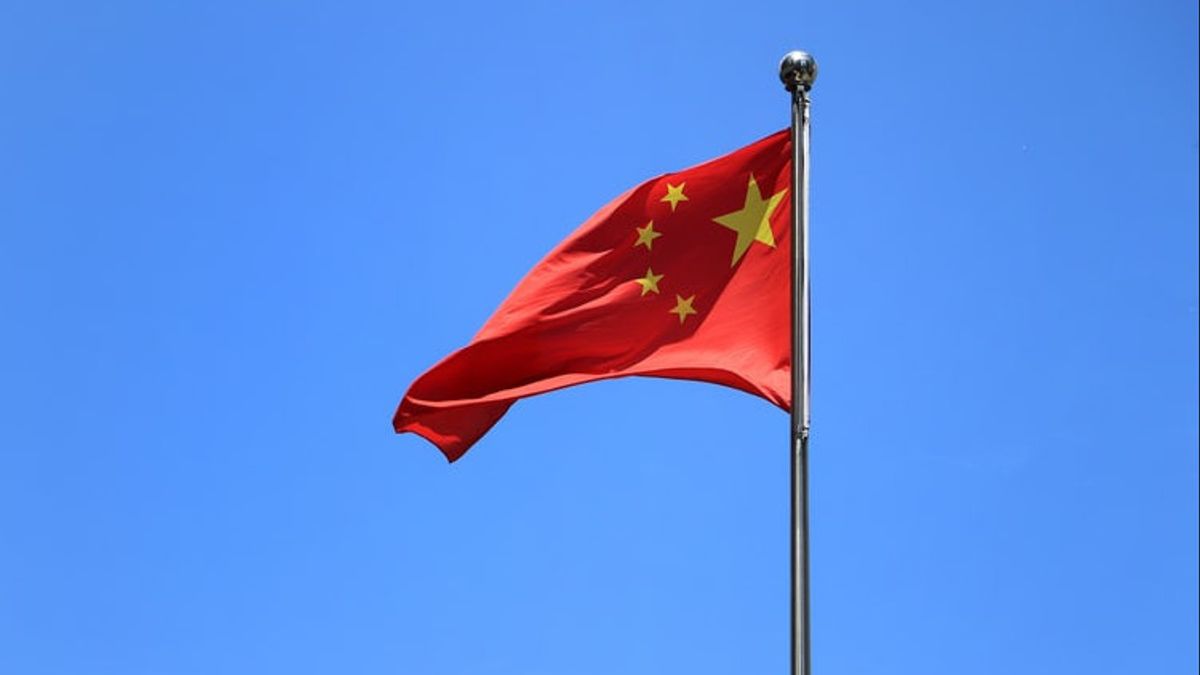


JAKARTA - China's Ministry of Foreign Affairs explained the collision between the Chinese coast guard ship and the Philippines in disputed waters in the South China Sea.
"Recently, the Philippines has taken organized and coordinated steps to send large numbers of ships to provocation and create problems in waters related to Nansha Qundao, China," Chinese Foreign Ministry spokesman Lin Jian said at a press conference in Beijing, Monday, October 13.
The Philippine Coast Guard said the Chinese ship "deliberately crashed" a Philippine government-owned ship on Sunday (12/10) near Thitu Island, part of the disputed island group Spratly in the South China Sea.
The Philippines said China's coast guard ship "fired its water cannon" at a ship belonging to the Philippine Fisheries Bureau BRP Datu Pagbuaya at 09.15 local time.
Three minutes later, according to the Philippine coast guard, the Chinese-owned ship accidentally crashed into the stern of the Philippine ship "corresponding to minor damage to the hull but no crew members were injured".
"Despite these intimidation and aggressive actions ... we will not be intimidated or expelled," the Philippine Coast Guard said in a statement.
"The Philippines' official ships sailed dangerously more than once and some of them entered the waters off the coast of Zhubi Jiao, which resulted in a collision between the ships of both sides," said Lin Jian.
The actions of the Philippines, said Lin Jian, seriously violate China's sovereignty, rights and interests, threaten the safety and security of Chinese ships and personnel, as well as undermine peace and stability at sea.
"They are provocateurs responsible for the situation at sea. China's steps to protect territorial sovereignty and its own maritime rights and interests are necessary, legitimate, by law, and not despicable," added Lin Jian.
Lin Jian accused the collision of what occurred indicating intentional violations and provocations by the Philippines.
"This attitude is the root cause of tension. China urges the Philippines to immediately stop its violations, provocations and slander, and refrain from challenging China's strong determination to protect our maritime sovereignty and rights and interests," explained Lin Jian.
Lin Jian also emphasized that the Zhongye Dao, Tiexian Jiao, and Zhubi Jiao areas are part of the Nansha Qundao area of China.
Similar confrontations between Chinese ships and the Philippines have become increasingly common in recent years.
China is known to oppose arguments over the 2016 arbitration decision that won the Philippines over China and affirm the Philippines' Exclusive Economic Zone (EEZ) and determine features in the West Philippine Sea as its own territorial waters to include Huangyan Dao or Beting Scarborough in the Philippine EEZ region.
SEE ALSO:
-
 | BERITA
Trump Desak Presiden Israel untuk Ampuni Netanyahu yang Diadili Kasus Korupsi
13 Oktober 2025, 20:12

China claims sovereignty over islands in the South China Sea and jurisdiction over waters bordering the South China Sea which includes Spratlys (Nansha), Paracel (Xisha), Pratas (Dongsha), Macclesfield Bank (Zhongsha).
Paracel Islands consist of Woody Island, Lincoln Island, Duncan Island, Money Island, Pactle Island and Triton Island.
The Spratly Islands consist of Fiery Cross reefs, Subi corals, Mischief corals, Johnson South reefs, Gaven reefs, Hughes corals and Cuarteron corals.
The islands also contain oil as well as sea trade routes and are rich in fish.
Karang Scarborough or Huangyan Dao is the only island that has surfaced between the Zhongsha Islands (Macclesfield Bank).
China says most of the Nansha Qundao (Spratlys Islands) islands and related waters into the Philippine maritime zone belong to China.
It is known that countries claiming some areas in the South China Sea other than China are Malaysia, the Philippines, Brunei Darussalam, and Vietnam.
The English, Chinese, Japanese, Arabic, and French versions are automatically generated by the AI. So there may still be inaccuracies in translating, please always see Indonesian as our main language. (system supported by DigitalSiber.id)
Most Popular Tags
#Prabowo Subianto #donald trump #Febrie Adriansyah #8791 #giias 2026Popular


