
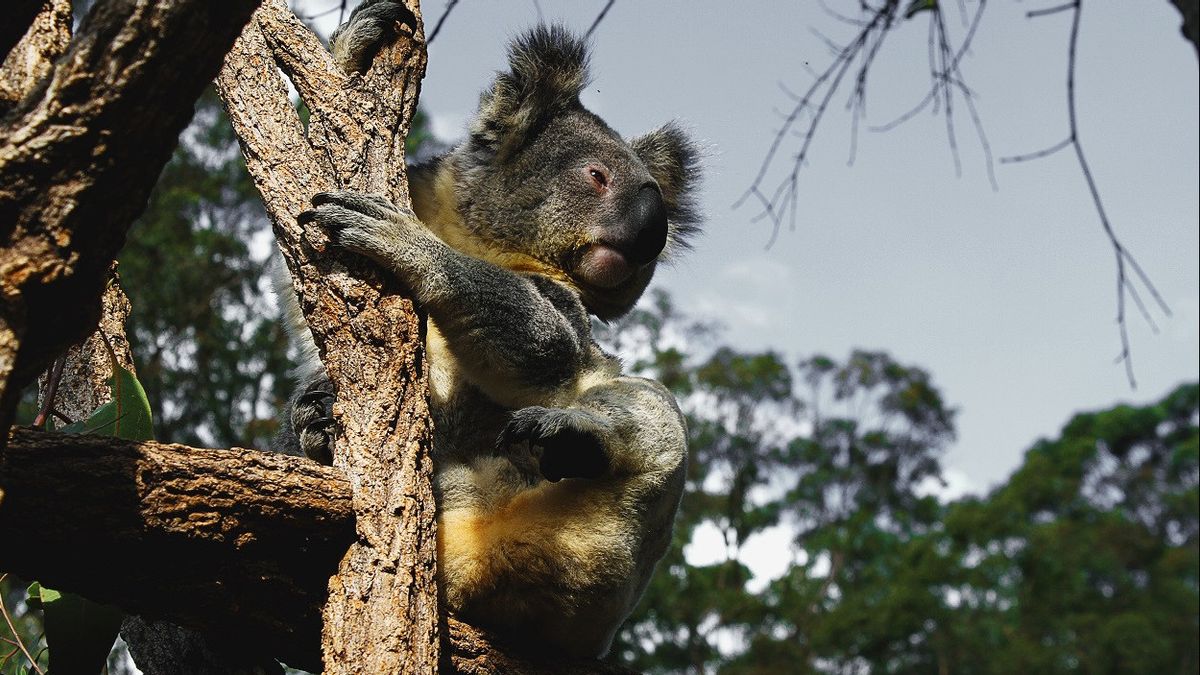


JAKARTA - Approved by the first vaccine to protect Australian koalas from climia, it is believed scientists can stop the spread of deadly diseases that have destroyed this endangered pet population.
Klamidia, which also attacks humans, causes up to half of all koala deaths in the wild.
"Some individual colonies are getting closer to local extinction every day," said Professor of Microbiology at the University of the Sunshine Coast Peter Timms in a statement.
He and his team spent more than a decade developing this single dose of vaccine.
Transmitted through direct contact such as marriage and sometimes to offspring at birth, climia can cause infertility and blindness in koalas as well as severe urinary tract infections, in which these hanging animals become dehydrated so they cannot climb trees to get food.
In some of the populations in Queensland and New South Wales, infection rates are often around 50 percent and sometimes 70 percent, Timms said.
This vaccine can reduce the chances of koala developing symptoms of clamia during marriage and reduce the death rate of wild koalas by at least 65 percent.
"This vaccine offers three levels of protection - reducing infection, preventing the development of clinical diseases, and, in some cases, reversing existing symptoms," he explained.
Meanwhile, microbiologist Samuel Phillips, who worked with Timms in developing the vaccine, said it would take 15 years to complete the formula, incorporating three target proteins of clemia and an adjuvants into one dose.
That means "we don't have to catch koalas many times and take them back to the hospital," he said.
Phillips said up to 500 doses were being made to launch early next year, but more funding was needed to increase production.
"We have received a call from a wildlife hospital asking for a vaccine," he said.
"We estimate they need at least 1,000 to 2,000 doses per year, and that doesn't include a program to protect the koala population," Phillips explained.
The development of this vaccine is supported by funds of US$749,000 from government funds of US$76 million to save koalas. Most of the remaining funds have been allocated to large-scale habitat restoration projects and national monitoring programs.
It is known that koalas are listed as endangered species in 2022 in Queensland, New South Wales, and the Australian Capital Territory.
SEE ALSO:
-
 | BERITA
Peringatkan Risiko Lonjakan Kematian Anak, UNICEF Desak Aliran Penuh Bantuan ke Gaza
10 Oktober 2025, 19:55


Australia's national koala monitoring program estimates that between 95,000 and 238,000 koalas remain in the region.
About 129,000 to 286,000 other koalas are estimated to live in the states of Victoria and South Australia.
The number of koalas has decreased by half in the last two decades due to infectious disease, habitat loss, climate change, and forest fires, according to the World Wide Fund for Nature (WWF).
The English, Chinese, Japanese, Arabic, and French versions are automatically generated by the AI. So there may still be inaccuracies in translating, please always see Indonesian as our main language. (system supported by DigitalSiber.id)
Most Popular Tags
#Prabowo Subianto #donald trump #2026 World Cup #Febrie Adriansyah #8791Popular


