

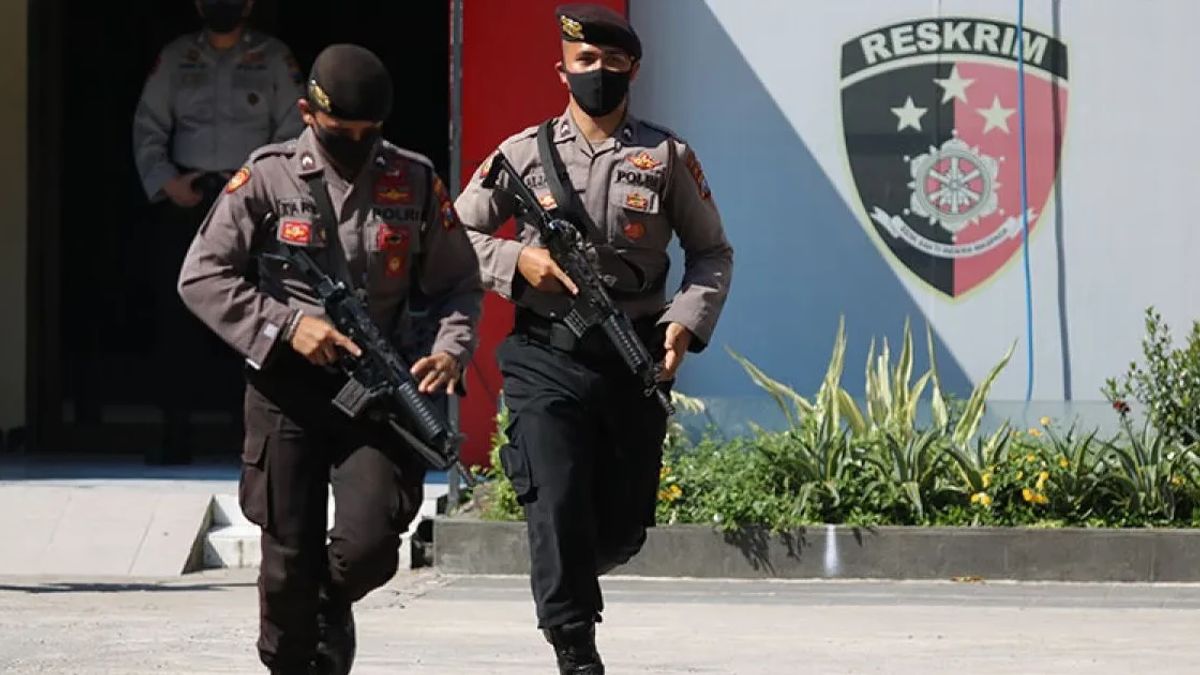


JAKARTA - Member of Commission III of the Indonesian House of Representatives, Sarifudin Sudding, responded to President Prabowo Subianto's plan to inaugurate nine members of the National Police Reform Committee next week. He hopes that the Police Reform Committee will be able to change the culture of the police organization.
"The National Police Reform Committee must be an effective control instrument, close the historical gap in the 1998 reform history which has not been completed. And of course it must be able to ensure that the Police are able to carry out the functions of protecting, protecting, and serving the community professionally," said Sudding to reporters, Tuesday, October 7.
Sudding assessed that the President's move to formalize the National Police Reform Committee was an important momentum to strengthen external supervision of police institutions, which have been facing public criticism regarding transparency, accountability, and professionalism.
Even so, Sudding emphasized that reforms would only be achieved if the committee was given real authority to evaluate Polri's policies, organizational culture and operational practices, not just a symbol of formality.
"Police reform must be more than just documents or administrative reports. The public demands transparency of performance, accountability, and independent supervision that can encourage real changes in the culture of police organizations," said Sudding.
Sudding also highlighted the potential for dualism in supervision due to the formation of the Internal Police Reform Transformation Team by the National Police Chief General Listyo Sigit Prabowo.
"That currently there are 2 teams with the same vision and mission that must be ensured there is no overlap. Do not let there be dualism in the process of monitoring Polri reform which can cause new problems," he said.
On the other hand, Sudding assessed that the transformation of internal Police Reform, which consists of active police officers, risks becoming a 'tameng' that reduces public criticism and minimizes structural and cultural reforms.
"Therefore, internal evaluation must be combined with strong external control, so that reform does not stop at an administrative level," said the legislator from the Central Sulawesi electoral district.
SEE ALSO:
-
 | BERITA
Senat Rapat Lagi Hari Ini Demi Loloskan RUU Anggaran Pemicu Shutdown AS
06 Oktober 2025, 18:18 -
 | BERITA
Eropa Dihantui Kekurangan Minyak dan Gas, Rusia Bakal Jadi Solusinya
06 Oktober 2025, 17:45 -
 | BERITA
Pemprov DKI Targetkan Semua Dapur MBG di Jakarta Kantongi Sertifikat Dua Pekan ke Depan
06 Oktober 2025, 13:21 -
 | BERITA
Listrik Mati Total Usai Ukraina Serang Belgorod Rusia, 40.000 Warga Terdampak
06 Oktober 2025, 12:49 -
 | BERITA
Trump Umumkan AS Bangun Kapal Selam Tenaga Nulir Baru Mulai Desember 2025
06 Oktober 2025, 12:07
Therefore, Sudding reminded the importance of transparency and internal accountability. He emphasized that the public must have clear access to performance data, member violations, and enforcement mechanisms.
"Second, demilitarization and depolitization. The National Police needs to get rid of the militaristic practices and practical political involvement that have remained since the ABRI era," he said.
Sudding also mentioned strengthening the external control mechanism. According to him, Kompolnas, independent institutions, and judicial scrubs (supervision mechanism by the court for the actions of law enforcement officers in the criminal justice process) at the new Criminal Procedure Code must have real authority over the authority of the investigation.
"Then organizational cultural changes. Reform must target educational patterns, public service ethics, and the attitude of the apparatus towards the community, especially vulnerable groups," concluded Sudding.
The English, Chinese, Japanese, Arabic, and French versions are automatically generated by the AI. So there may still be inaccuracies in translating, please always see Indonesian as our main language. (system supported by DigitalSiber.id)
Most Popular Tags
#Prabowo Subianto #donald trump #2026 World Cup #venezuela #Bhayangkara hut #konflik timur tengahPopular


